HIGHLIGHTS
- Chery joins China’s rapidly expanding eVTOL developer ecosystem, competing alongside Li Auto, XPeng, and dozens of other manufacturers in the world’s most active advanced air mobility market.
- The automaker’s electric vehicle expertise, battery technology capabilities, and existing manufacturing infrastructure position it to accelerate eVTOL development faster than many Western competitors.
- Established automakers entering eVTOL signals industry maturation, shifting development from startup-dominated phase toward incumbent manufacturer participation with significant capital and resources.
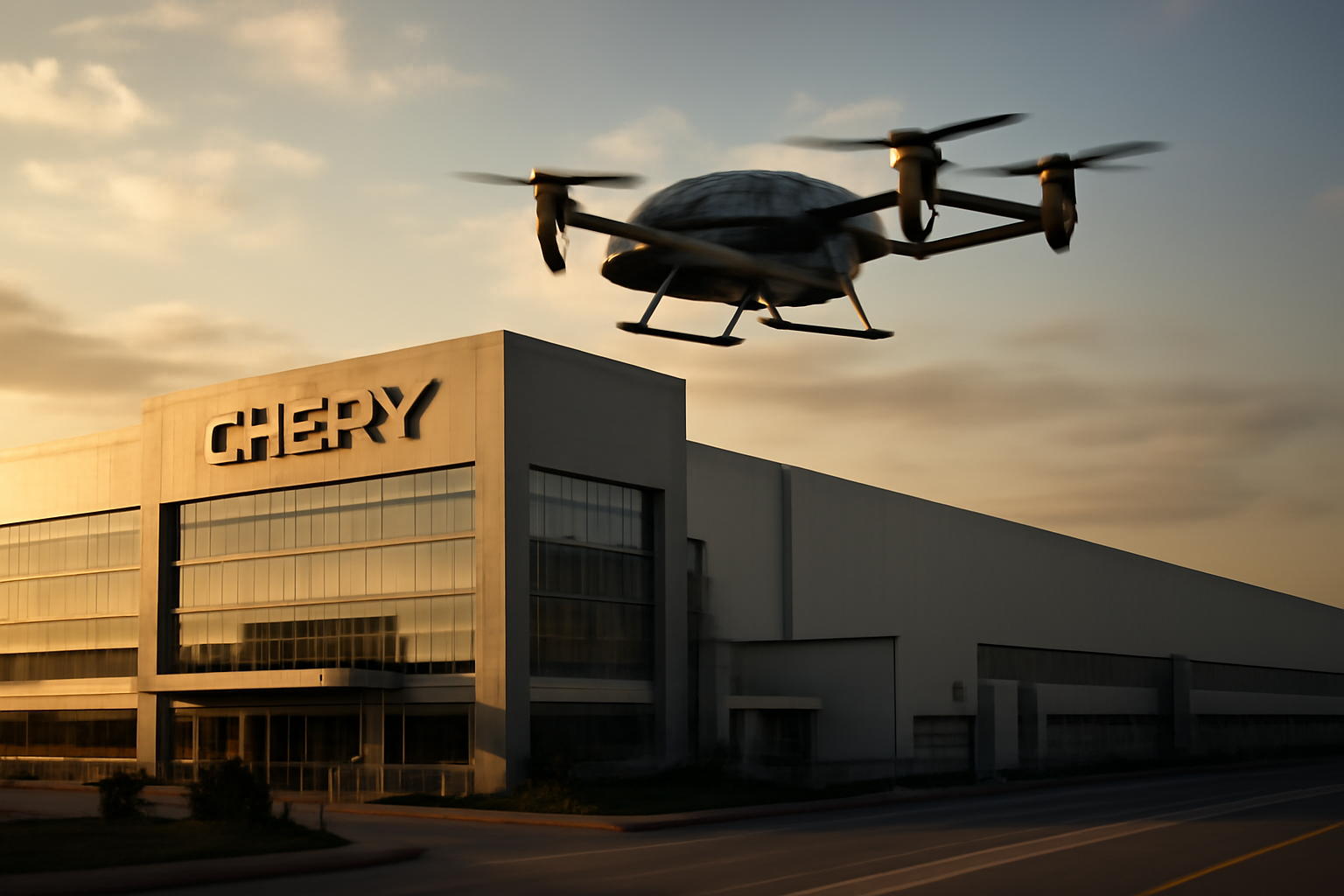
Chinese automaker Chery has officially joined the rapidly expanding ecosystem of electric vertical takeoff and landing (eVTOL) developers in China, marking another significant milestone in the country’s pursuit of personal air mobility solutions. This move underscores the intense competition and investment flowing into the advanced air mobility sector, as established automotive manufacturers recognize the strategic importance of transitioning into next-generation transportation technologies.
Chery’s Entry Into the eVTOL Market
Chery, one of China’s most prominent independent automakers, has announced its commitment to developing electric vertical takeoff and landing aircraft. The company’s decision to enter this space reflects broader industry trends where traditional automotive manufacturers are diversifying their portfolios to capture emerging mobility segments. By leveraging its expertise in electric vehicle development and manufacturing infrastructure, Chery positions itself to accelerate its eVTOL program and bring competitive products to market.
The company’s entry into eVTOL development is not isolated within the Chinese automotive sector. Chery joins a crowded field that already includes major players such as Li Auto, XPeng, and numerous other Chinese manufacturers who have announced or are actively pursuing eVTOL projects. This consolidation of talent and resources within the industry signals strong market confidence in the viability and potential profitability of personal air mobility solutions.
Chery’s automotive engineering capabilities, particularly in electric drivetrain technology and battery management systems, provide a solid foundation for eVTOL development. The company’s existing manufacturing networks and supply chain relationships also offer operational advantages that could accelerate the commercialization timeline for its air mobility vehicles. Industry analysts suggest that Chery’s entry could expedite innovation cycles and competitive pricing in China’s eVTOL market.
China’s Expanding eVTOL Ecosystem
China has emerged as the global epicenter of eVTOL development, with dozens of companies at various stages of aircraft design, prototyping, and certification. The government’s supportive regulatory environment, significant venture capital investment, and strategic emphasis on advanced manufacturing have created ideal conditions for rapid innovation in personal air mobility. Chery’s participation adds critical mass to an already dynamic ecosystem.
The competitive landscape in China includes both established automotive manufacturers and specialized aerospace startups. Companies like XPeng (known for electric vehicles) have already conducted successful test flights of their eVTOL prototypes, demonstrating that Chinese manufacturers can move from concept to hardware quickly. Chery’s involvement introduces yet another competitor with substantial financial resources and manufacturing expertise, intensifying the race for market leadership.
International observers note that China’s approach to eVTOL development differs from Western markets, where regulatory caution and fragmented certification processes have slowed commercialization. China’s more unified regulatory framework and government backing have enabled faster iteration and testing cycles. Chery’s entry into this environment suggests the company is well-positioned to benefit from these systemic advantages and potentially achieve earlier commercial operations than many international competitors.
Strategic Implications for Global Air Mobility
Chery’s commitment to eVTOL development signals that established automotive manufacturers view personal air mobility not as a speculative venture but as a core business opportunity. The company’s scale, capital resources, and manufacturing discipline could accelerate the transition from proof-of-concept demonstrations to real-world operational networks. This shift from startup-dominated development to incumbent manufacturer participation typically signals industry maturation.
The company’s entry also raises competitive pressure on international eVTOL developers. While Western companies like Joby Aviation, Archer Aviation, and Lilium have secured significant funding and regulatory pathways toward certification, Chinese competitors may achieve operational deployments in their domestic market first. This first-mover advantage in the world’s largest potential eVTOL market could provide Chinese manufacturers with irreplaceable operational data, cost optimization opportunities, and revenue streams during critical development phases.
Global supply chain dynamics may also shift as Chery’s participation expands. The company’s existing relationships with battery suppliers, electric motor manufacturers, and aerospace component makers could accelerate sourcing for eVTOL programs. Additionally, Chery’s involvement may spur additional investment rounds and partnerships within the Chinese air mobility ecosystem, further consolidating China’s leadership position in this emerging transportation sector.
Technical and Commercial Challenges Ahead
Despite Chery’s considerable advantages as an established manufacturer, the company faces substantial technical hurdles in bringing eVTOL aircraft to market. Battery energy density, noise reduction, autonomous flight systems, and safety certification remain complex engineering challenges that require specialized expertise. While Chery’s electric vehicle experience provides relevant knowledge, aircraft development introduces entirely new regulatory, aeronautical, and operational complexities.
Commercial viability also remains uncertain across the entire eVTOL industry. The business models that could sustain profitable eVTOL operations—including air taxi services, cargo logistics, and emergency transport—require resolution of regulatory frameworks, landing infrastructure, and passenger demand projections. Chery’s entry does not automatically guarantee commercial success; the company must demonstrate that its aircraft can operate safely, efficiently, and profitably within evolving regulatory environments.
Furthermore, Chery will need to establish specialized talent pools in aeronautics, avionics, and autonomous systems. While the company’s automotive engineering teams provide a foundation, eVTOL development requires domain expertise in aircraft systems, certification processes, and aviation operations. The company may need to hire specialized personnel, acquire technology from aviation specialists, or establish partnerships with established aerospace firms to overcome these knowledge gaps and accelerate certification timelines.
Key Takeaways
- Chery joins a crowded field of Chinese manufacturers pursuing eVTOL development, reflecting intense competition in the personal air mobility sector and strong market confidence in the technology’s commercial potential.
- As an established automaker with electric vehicle expertise and manufacturing infrastructure, Chery possesses structural advantages that could accelerate its eVTOL program and potentially enable earlier commercialization than international competitors.
- Chery’s entry signals industry maturation as incumbent manufacturers move beyond speculation to commit significant capital and resources toward personal air mobility, potentially reshaping global competitive dynamics in emerging aviation markets.
Chery’s announcement to develop electric vertical takeoff and landing aircraft represents a pivotal moment in China’s leadership of the personal air mobility revolution. By combining the company’s automotive manufacturing expertise with the innovative energy of the global eVTOL ecosystem, Chery is positioned to contribute meaningfully to the advancement of this transformative transportation technology. As competition intensifies and development accelerates, the coming years will reveal whether Chery’s entry accelerates the timeline toward widespread eVTOL commercialization or creates redundancy within an already crowded market. What remains certain is that China’s continued dominance in manufacturing innovation extends clearly into the airspace above its cities.