HIGHLIGHTS
- DeltaQuad launches Evo-LE, a hybrid-electric eVTOL drone combining extended range with zero-emission flight capabilities
- Modular payload design enables rapid reconfiguration for infrastructure inspection, emergency response, and commercial delivery
- Evo-LE validates hybrid propulsion approach and positions Dutch manufacturer as competitive force in global eVTOL market
DeltaQuad, a leading Dutch unmanned aerial vehicle (UAV) manufacturer, has officially launched the Evo-LE drone, a significant advancement in electric vertical takeoff and landing (eVTOL) technology. This new platform represents a substantial leap forward in the capabilities and potential applications of autonomous aerial systems, combining innovative design with practical engineering to address real-world operational demands. The Evo-LE’s introduction marks an important milestone for the company and the broader personal air mobility and commercial drone sectors.
Revolutionary Design and Engineering Innovation
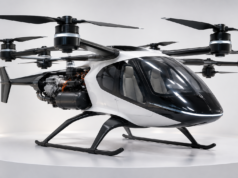
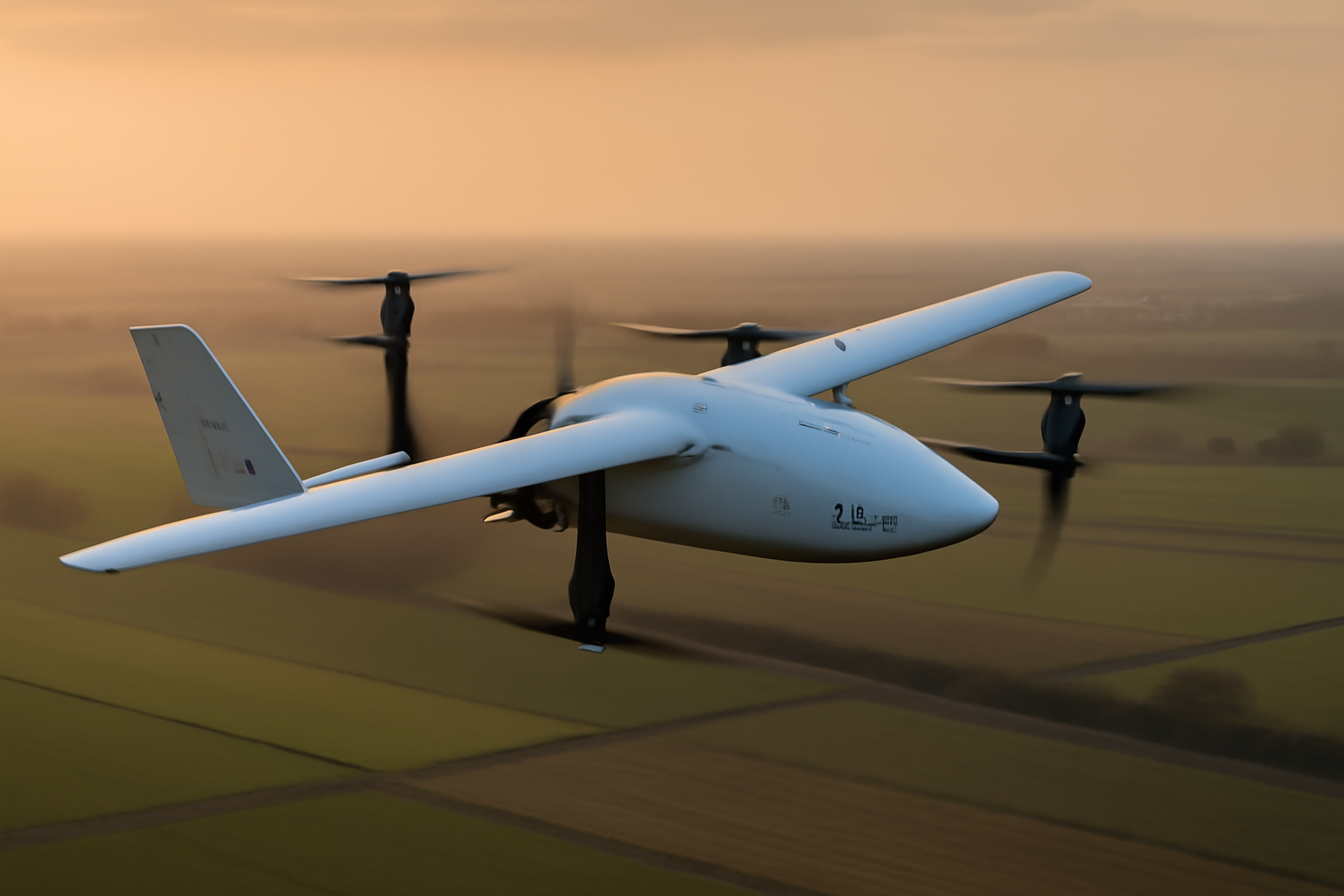
The Evo-LE drone showcases DeltaQuad’s commitment to cutting-edge aerospace engineering and sustainable aviation solutions. The aircraft incorporates hybrid-electric propulsion technology that extends operational range while maintaining zero-emission flight capabilities during critical phases of operation. This intelligent power management system allows the drone to transition seamlessly between vertical takeoff and forward flight modes, optimizing energy consumption across the entire mission profile.
The vehicle’s modular design philosophy enables operators to reconfigure payloads and systems based on specific mission requirements, from surveillance and mapping to delivery and emergency response applications. This adaptability reduces the need for multiple specialized aircraft, lowering operational costs and environmental impact for commercial operators. Engineers at DeltaQuad have refined the aerodynamic properties to achieve exceptional stability and control authority in challenging environmental conditions.
Build quality and materials science represent another pillar of the Evo-LE’s engineering excellence. The aircraft utilizes lightweight composite structures that maintain structural integrity while minimizing mass—a critical factor in extending flight endurance and payload capacity. Every component has been tested rigorously to ensure reliability and safety in demanding operational scenarios.
Commercial Applications and Market Opportunity
The Evo-LE platform opens new possibilities across multiple commercial sectors eager to leverage autonomous aerial technology. Infrastructure inspection and maintenance become more efficient and safer with the drone’s extended range, high-resolution sensor payload capacity, and precise hovering capabilities. Utility companies can monitor power lines, cell towers, and renewable energy installations without deploying costly manned helicopter operations.
Logistics and last-mile delivery represent another compelling use case for the Evo-LE. The drone’s hybrid-electric architecture enables longer delivery routes than purely battery-powered competitors, expanding the serviceable geographic area from distribution hubs. Time-sensitive deliveries for pharmaceutical products, emergency supplies, and technical components can now reach remote or congested areas with unprecedented speed and reliability.
Emergency response and disaster management agencies also stand to benefit significantly from the Evo-LE’s capabilities. Search and rescue operations, damage assessment following natural disasters, and medical supply delivery to inaccessible locations all become faster and more effective. The drone’s robust design can operate in diverse weather conditions and challenging terrain where traditional helicopter operations face constraints.
Environmental and Regulatory Advantages
Electric propulsion represents a fundamental shift toward sustainable aviation practices, and the Evo-LE embodies this transition with measurable environmental benefits. By eliminating direct fuel consumption and emissions during flight, the aircraft contributes to decarbonization goals across industrial and commercial sectors. The hybrid-electric system further optimizes this advantage by minimizing auxiliary power requirements during ground operations and transition phases.
Regulatory approval pathways for electric and hybrid-electric UAVs continue to evolve favorably across Europe and beyond. The Evo-LE’s design aligns with emerging certification standards, positioning DeltaQuad to rapidly scale production and deployment across multiple regulatory jurisdictions. This proactive engineering approach reduces time-to-market delays and enables early adoption by forward-thinking operators.
Noise reduction capabilities represent an underappreciated advantage of electric propulsion systems. The Evo-LE’s quiet operation compared to traditional combustion-powered aircraft opens new operational windows in urban and peri-urban environments where noise regulations previously restricted drone activity. This quiet profile enhances community acceptance and enables operations during early morning or evening hours when manned aircraft cannot operate.
Competitive Positioning and Industry Impact
DeltaQuad’s launch of the Evo-LE demonstrates the company’s strategic vision for the eVTOL and autonomous aerial systems market. While several competitors pursue similar technologies, the Evo-LE’s unique combination of hybrid propulsion, modular payload systems, and proven flight performance distinguishes it within the current market landscape. The drone addresses genuine operational gaps that customers have identified across multiple sectors.
The release of the Evo-LE reinforces the Netherlands’ position as a global hub for advanced aerospace technology and innovation. Dutch engineering expertise, combined with a supportive regulatory environment and strong engineering talent pool, has enabled DeltaQuad to develop competitive solutions faster than many international competitors. This geographic and institutional advantage positions the company to capture significant market share during the critical growth phase of commercial drone adoption.
Industry observers recognize the Evo-LE as a benchmark technology that will influence competitive responses from established manufacturers. The drone’s successful launch validates the hybrid-electric propulsion approach and demonstrates that practical, commercially viable eVTOL solutions are now achievable. This validation effect accelerates investment and development across the entire ecosystem of suppliers, integrators, and operators.
Key Takeaways: DeltaQuad Evo-LE Impact
- Hybrid-electric propulsion extends operational range and payload capacity while eliminating direct emissions during flight operations
- Modular design enables rapid reconfiguration for diverse applications including infrastructure inspection, emergency response, and commercial delivery
- Platform addresses regulatory compliance requirements and represents a benchmark technology driving industry-wide advancement
The launch of DeltaQuad’s Evo-LE drone represents a watershed moment for the personal air mobility and commercial UAV sectors. This sophisticated platform combines proven engineering principles with innovative technology to deliver practical capabilities that customers demand. As the aerospace industry transitions toward electric and autonomous systems, vehicles like the Evo-LE provide the technical foundation and market validation necessary to accelerate adoption across commercial sectors. DeltaQuad’s achievement demonstrates that European manufacturers can compete effectively in this rapidly evolving market, positioning them for significant growth as regulations mature and customer demand accelerates.