HIGHLIGHTS
- Russia recruiting up to 25,000 North Korean workers for drone assembly, exposing severe labor shortages in military manufacturing
- Deepening Russia-North Korea military-industrial alliance risks technology transfer that could accelerate Pyongyang’s autonomous weapons programs
- Unconventional labor sourcing reveals supply chain vulnerabilities while demonstrating Russia’s commitment to sustaining intensive drone production under sanctions
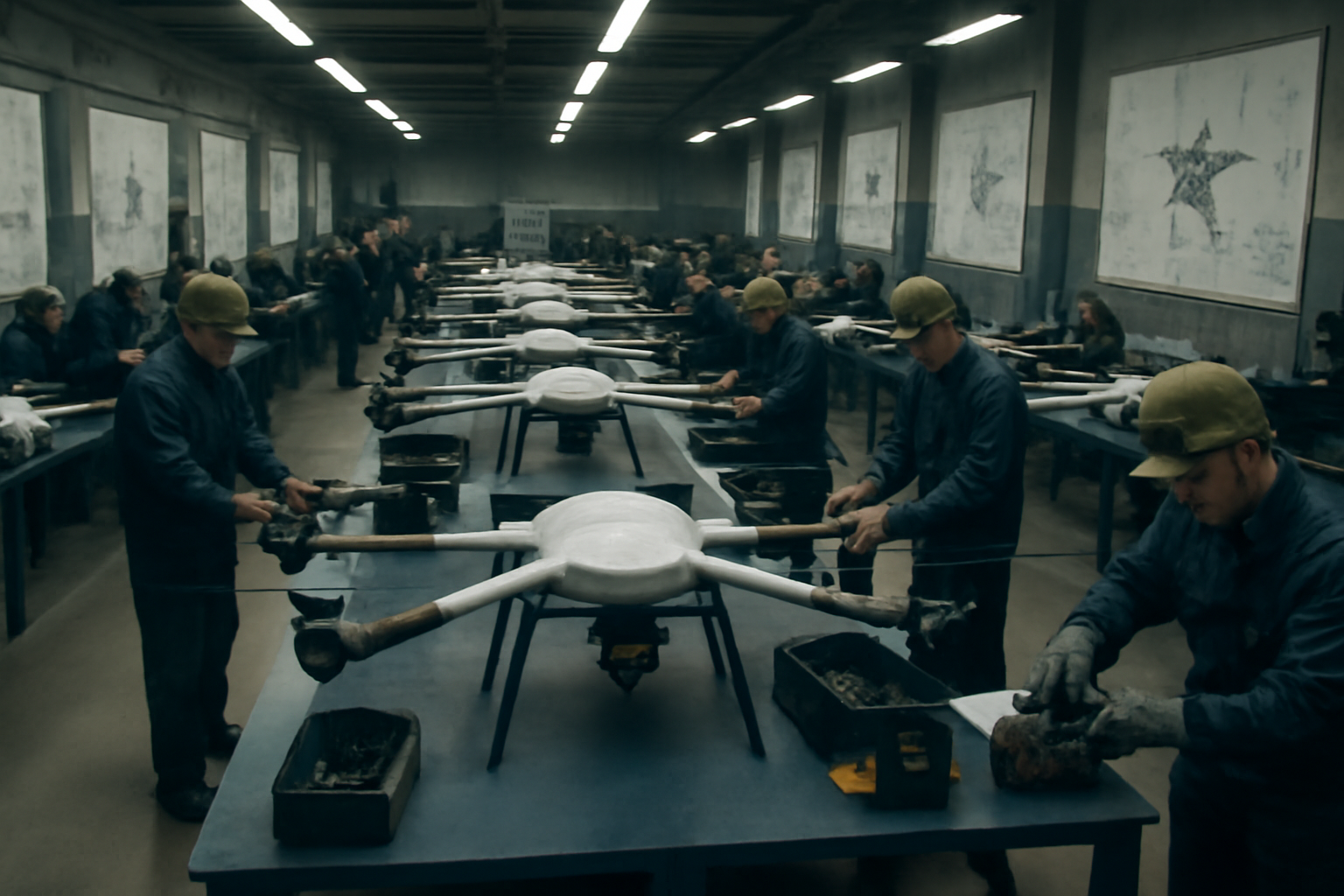
Recent intelligence reports indicate that Russia is recruiting up to 25,000 North Korean workers to support drone assembly operations, a development that highlights significant labor shortages and supply chain pressures within Russia’s drone manufacturing sector. This unprecedented scale of foreign workforce deployment underscores the critical challenges facing Russia’s military-industrial complex as it sustains intensive drone production for ongoing operations. The recruitment effort reveals both the scope of Russia’s drone ambitions and the structural vulnerabilities that have forced the nation to seek labor support from one of the world’s most isolated economies.
The Scale of Russia’s North Korean Worker Recruitment
The recruitment of up to 25,000 North Korean workers represents one of the largest documented labor movements between Russia and North Korea in recent history. Intelligence data suggests these workers are being funneled into manufacturing facilities dedicated to drone assembly and component production. The sheer magnitude of this recruitment effort indicates that Russia is facing acute labor constraints that domestic sources cannot adequately address, forcing Moscow to explore unconventional recruitment channels.
The logistics of moving such a large workforce across international borders—from North Korea through China and into Russian facilities—requires substantial organizational infrastructure and diplomatic coordination. This supply chain arrangement suggests a deepening economic and military alignment between Russia and North Korea, with labor mobility becoming another dimension of their strategic partnership. The scale also indicates that Russia’s drone production goals are far more ambitious than previously understood by Western analysts.
The timing of this recruitment aligns with Russia’s sustained and intensive drone operations across multiple theaters. As casualties and equipment losses mount, the demand for continuous drone assembly and repair escalates. By tapping North Korean labor, Russia gains access to a workforce willing to work under conditions that would be unacceptable in most developed economies, potentially reducing labor costs while increasing production capacity at an accelerated pace.
Geopolitical Implications and International Concern
Russia’s decision to recruit North Korean workers for drone manufacturing carries significant geopolitical implications that extend beyond simple labor economics. The arrangement reinforces the growing military and economic axis between Moscow and Pyongyang, creating new dependencies and shared interests in circumventing international sanctions and isolation. This development strengthens both nations’ ability to pursue military objectives while facing significant international scrutiny and economic pressure.
Western intelligence agencies and international observers view this recruitment as evidence of Russia’s desperation to maintain military production despite economic sanctions imposed following its invasion of Ukraine. The reliance on North Korean labor—a nation itself heavily sanctioned—suggests that conventional recruitment channels and domestic labor markets have been exhausted or rendered insufficient. This dependency also creates potential vulnerabilities; disruption of this labor supply chain could directly impact Russia’s drone manufacturing capacity.
The arrangement raises concerns about knowledge transfer and the proliferation of drone technology. If North Korean workers gain operational knowledge of Russian drone assembly and design, this expertise could be transferred back to North Korea’s own military-industrial complex, potentially accelerating Pyongyang’s autonomous weapons development. The recruitment thus represents a potential multiplier effect for military capability diffusion across sanctioned adversaries.
Manufacturing Capacity and Supply Chain Vulnerabilities
The recruitment effort exposes critical vulnerabilities in Russia’s drone supply chain and manufacturing capacity. Russia’s inability to assemble sufficient drones using domestic labor alone suggests that either domestic labor availability has been decimated by military conscription and emigration, or that manufacturing facilities have expanded beyond the capacity of available skilled workers. The involvement of unskilled North Korean labor also implies that Russia is simplifying manufacturing processes or concentrating on lower-skill assembly tasks that don’t require specialized technical expertise.
This approach to scaling production creates both opportunities and risks for Russia’s military planners. On one hand, by outsourcing labor-intensive assembly tasks to less costly North Korean workers, Russia can theoretically increase throughput and reduce per-unit manufacturing costs. On the other hand, reliance on a large contingent of foreign, potentially unskilled workers could introduce quality control issues, reduce manufacturing efficiency, and create security vulnerabilities within sensitive military production facilities.
The supply chain arrangement also illustrates how Russia is adapting to sustained conflict by tapping non-traditional sources of labor and manufacturing support. This pragmatism demonstrates Moscow’s determination to maintain military production despite isolation, but it also reveals the underlying brittleness of Russian supply chains that forces reliance on unconventional partnerships with equally isolated nations.
Implications for Future Drone Warfare and Technology Competition
The recruitment of North Korean workers for drone assembly reflects broader trends in how modern military conflicts stress manufacturing capacity and labor availability. As drone warfare becomes increasingly central to military operations, the nations capable of sustaining the highest production rates gain significant operational advantages. Russia’s strategy of importing labor suggests a recognition that drone attrition rates in active theaters exceed comfortable domestic replacement rates.
This development raises questions about the future trajectory of drone technology development and proliferation. Russia and North Korea, both operating under international sanctions and isolation, are consolidating their military-industrial cooperation in ways that could accelerate the spread of drone capabilities to other adversarial regimes. The human capital transfer—North Korean workers learning Russian manufacturing techniques—could seed future drone development programs in Pyongyang and potentially elsewhere.
For Western nations and Ukraine, understanding the full scope of Russia’s manufacturing capacity and labor deployment becomes critical for strategic planning. If Russia has secured a stable supply of North Korean labor, it may sustain drone production at higher rates and for longer durations than previously anticipated. This reality necessitates corresponding adaptations in strategy, including potential focuses on disrupting supply chains, targeting manufacturing facilities, and understanding the political and economic leverage points that could affect Russian-North Korean military cooperation.
Key Takeaways From Russia’s North Korean Recruitment Drive
- Russia is recruiting up to 25,000 North Korean workers for drone assembly, revealing acute labor shortages in military manufacturing and signaling escalating production ambitions
- The arrangement strengthens the Moscow-Pyongyang axis and risks technology transfer that could accelerate North Korea’s autonomous weapons development capabilities
- This unconventional labor sourcing exposes vulnerabilities in Russia’s supply chains while demonstrating Moscow’s determination to sustain intensive drone production despite international isolation
Russia’s recruitment of tens of thousands of North Korean workers for drone assembly represents a significant escalation in how adversarial nations are mobilizing resources to sustain modern military operations. The scale and scope of this labor deployment indicate that drone warfare has created unprecedented demand for manufacturing capacity, forcing Russia to seek labor from equally isolated nations. As this trend develops, it will continue to shape the competitive dynamics of technological development, supply chain resilience, and military capability distribution in an increasingly fragmented geopolitical landscape. Understanding these shifts becomes essential for analyzing the future trajectory of modern conflict and the proliferation of autonomous weapons technologies.