HIGHLIGHTS
- Beta Technologies’ A250 aircraft authorization removes regulatory uncertainty and validates eVTOL certification frameworks globally.
- Stock price surge signals investor confidence in real-world eVTOL deployment at scale, not just prototype development.
- Beta’s regulatory success may accelerate approvals for competing manufacturers and establish industry-wide certification standards.
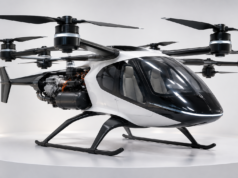
Beta Technologies has achieved a significant regulatory milestone that sent investors and industry watchers to the trading desk. The company’s stock climbed on news of aircraft authorization for its flagship A250 model, signaling strong market confidence in the Vermont-based eVTOL manufacturer’s path toward commercialization. This development underscores the growing maturity of the personal air mobility sector and Beta’s position as a leading contender in the electric vertical takeoff and landing market.
Beta Technologies’ Path to Market Leadership
Beta Technologies has positioned itself as one of the most credible players in the eVTOL space through consistent innovation and strategic partnerships. The company’s A250 aircraft represents years of engineering development and represents a significant investment in proving the viability of electric aviation for cargo and passenger transport. With this authorization milestone, Beta demonstrates that regulatory pathways for novel aircraft are becoming clearer, opening doors for competitors and the broader industry.
The Vermont manufacturer has focused on practical applications from the outset, emphasizing the A250’s capabilities for cargo delivery and emergency medical transport. This pragmatic approach, combined with their ability to secure funding and regulatory approval, has made Beta an attractive prospect for investors seeking exposure to the eVTOL market. The stock price movement reflects growing confidence that the company can move beyond prototype and demonstration phases into actual operations.
Beta’s regulatory achievement also validates the emerging infrastructure and certification frameworks that governments have been developing for electric aviation. The FAA and other aviation authorities have worked with manufacturers to establish clear pathways for type certification, and Beta’s success proves these processes can work effectively. This success story may expedite approvals for other manufacturers currently in development phases.
Market Impact and Investor Sentiment
Stock market movements often signal investor expectations about a company’s future revenue potential and market capture. Beta Technologies’ share price climb reflects optimism about the A250’s commercialization timeline and the broader demand for electric vertical takeoff solutions. As cargo delivery challenges intensify and supply chain pressures persist globally, investors see eVTOL aircraft as solutions to real-world logistical problems.
The authorization news arrives at a critical moment in the eVTOL market’s evolution. Several companies are approaching similar regulatory milestones, creating competitive pressure that can accelerate development cycles and product launches. Investor enthusiasm for Beta’s success may also elevate the entire sector, lifting valuations across multiple eVTOL manufacturers and attracting fresh capital to the space.
Market analysts have noted that successful regulatory approvals reduce investment risk in ways that are immediately quantifiable. Beta’s aircraft authorization removes a significant uncertainty that had weighed on investor confidence, making the company’s business model appear more concrete and achievable. This validation effect can compound over time as other milestones are reached and operations begin generating revenue data.
The A250 Aircraft: Specifications and Capabilities
The A250 represents Beta Technologies’ vision for a practical, electric aircraft capable of meaningful cargo payloads and operational ranges. The aircraft is designed with the needs of real-world operators in mind, balancing performance specifications with the constraints of current battery technology. Early demonstrations have shown the aircraft’s ability to operate efficiently from diverse landing zones, a critical advantage for rural and emergency operations.
The A250’s design emphasizes safety, efficiency, and modular capability. The aircraft can be configured for different mission profiles, whether transporting medical supplies to remote areas or moving cargo in congested urban environments. This versatility has attracted interest from potential customers in the cargo and emergency services sectors, providing Beta with concrete use cases to present to investors and regulators.
Battery technology and range remain central concerns for all eVTOL manufacturers, and Beta has been transparent about the A250’s capabilities in these areas. The aircraft’s authorization suggests it meets or exceeds regulatory standards for safety, reliability, and environmental performance. As battery chemistry continues to improve, operators using the A250 today will benefit from range and efficiency gains without requiring fundamental aircraft redesigns.
Regulatory Approval as Industry Catalyst
The authorization of the A250 represents a watershed moment for eVTOL regulation and certification. Aviation authorities worldwide have been working to develop frameworks that apply existing safety principles to novel aircraft configurations. Beta’s successful navigation through this process demonstrates that these frameworks are functional and that novel aircraft can meet regulatory standards without requiring decades of development.
This regulatory success may have downstream effects on the entire industry’s timeline. Competitors can now point to Beta’s experience as proof of concept, while regulators have real-world data about certification processes and outcomes. The precedent set by the A250’s approval may streamline pathways for other eVTOL designs, reducing both development timelines and regulatory uncertainty across the sector.
International aviation authorities will be watching Beta Technologies’ authorization closely. Countries seeking to establish themselves as leaders in eVTOL innovation and operations will use Beta’s regulatory model as a reference point. This global attention on Beta’s achievement highlights how single company milestones can have ripple effects across international aviation policy and industrial development strategies.
Key Takeaways from Beta’s Authorization Success
- Beta Technologies’ A250 aircraft authorization reduces regulatory uncertainty and validates certification frameworks, directly supporting the company’s path to profitable operations.
- The stock price surge demonstrates investor confidence that eVTOL manufacturers can achieve real-world deployment at scale, not merely produce prototypes.
- Beta’s regulatory success may accelerate approvals for competing eVTOL designs and establish industry-wide standards for electric vertical takeoff aircraft certification.
Beta Technologies’ aircraft authorization milestone represents more than a single company success—it validates the entire eVTOL industry’s maturation and the regulatory frameworks governments have built to support aviation innovation. As the A250 moves toward operational deployment, investors will gain real data about unit economics, customer acquisition, and market demand. The climb in Beta’s stock reflects justified optimism that the personal air mobility revolution is transitioning from speculation to reality, with one company positioned to lead the way in demonstrating the commercial viability of electric vertical takeoff and landing aircraft.