
HIGHLIGHTS
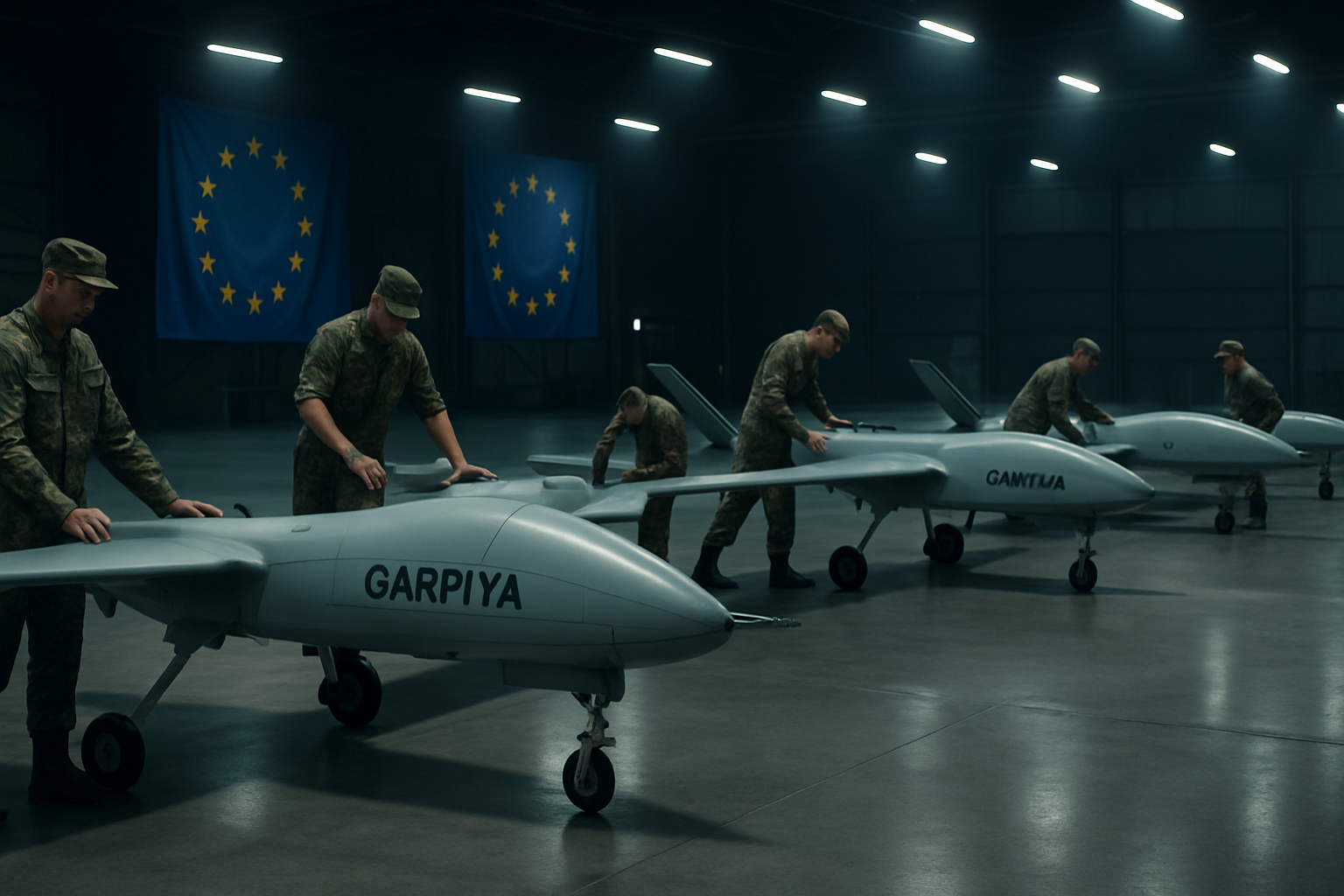
- Europe accelerates development of electric Garpiya drones as a strategic military countermeasure against Russian operations
- European nations pursue Starlink alternatives to ensure secure, independent satellite communications free from external vulnerabilities
- EV drone technology provides eco-friendly, operationally efficient platforms for defense applications with extended flight endurance
Europe is making a decisive strategic pivot toward advanced electric drone technology as part of a comprehensive military modernization campaign. The development of next-generation platforms, including the sophisticated Garpiya drone system, represents a fundamental shift in how European nations are preparing to counter emerging security threats. Simultaneously, European governments are investing heavily in independent satellite communication infrastructure to rival Starlink, ensuring that critical defense operations remain under European control. This convergence of EV drone innovation and telecommunications sovereignty marks a turning point in the continent’s defense posture.
The Garpiya Drone: Europe’s Electric Answer to Modern Threats
The Garpiya drone system represents the cutting edge of European unmanned aerial vehicle development, specifically engineered to address contemporary military challenges. Built on electric propulsion architecture, Garpiya drones offer significant advantages over traditional fuel-based systems, including reduced operational costs, lower thermal signatures, and significantly improved environmental sustainability. European defense contractors have prioritized electric vehicle technology to create platforms that deliver exceptional performance metrics while maintaining strict environmental compliance standards.
Garpiya drones are specifically designed for intelligence, surveillance, and reconnaissance (ISR) missions across multiple operational theaters. Their electric powertrains enable extended flight duration—a critical requirement for monitoring vast territories without frequent battery changes. The reduced noise profile of electric propulsion also provides tactical advantages, allowing these systems to conduct covert surveillance operations that would be impossible with conventional combustion engines. European military planners have recognized that electric drones represent a qualitative leap forward in operational capability.
The strategic importance of Garpiya systems extends beyond individual platform performance. These drones form the backbone of a coordinated European drone strategy designed to establish air superiority over contested regions. By investing in domestically-produced EV drone technology, European nations reduce dependency on American defense systems while maintaining technological parity with global adversaries. The Garpiya program exemplifies Europe’s commitment to strategic autonomy in critical defense sectors.
Building a European Satellite Network: Breaking Free from Starlink Dependency
European governments have concluded that reliance on American commercial satellite networks poses unacceptable strategic vulnerabilities. Starlink’s dominance in global connectivity has prompted serious concerns about data security, operational control, and the potential for external interference during critical moments. In response, the European Union and individual member states have accelerated development of indigenous satellite communication systems designed to ensure complete independence from third-party providers. This initiative represents a fundamental reordering of European technological priorities.
The European satellite alternative project encompasses multiple technical work streams, including constellation design, ground station infrastructure, and integrated command-and-control systems. Unlike Starlink’s commercial focus on global broadband coverage, the European network will prioritize military-grade encryption, guaranteed bandwidth allocation for defense operations, and redundant failsafe mechanisms to ensure uninterrupted service during conflicts. The system architecture reflects lessons learned from recent geopolitical tensions and the critical importance of communications security.
Investment levels in European satellite infrastructure rival those allocated to traditional military hardware procurement. European defense budgets now dedicate substantial resources to ensuring that communications networks remain sovereign and resilient. This commitment demonstrates that modern military superiority depends not only on hardware platforms like drones, but equally on the communications infrastructure that enables their coordination and control. The dual investment in EV drones and European satellites represents a holistic approach to technological independence.
Electric Propulsion: The Strategic Advantage in Modern Warfare
Electric vehicle technology has transitioned from niche environmental innovation to critical military asset. EV drones offer operational advantages that conventional aircraft cannot match, including dramatically improved power-to-weight ratios, precise throttle control, and virtually silent operation. These characteristics translate directly into enhanced mission effectiveness, extended dwell times over target areas, and reduced vulnerability to acoustic detection systems. Military planners across Europe have recognized that electric propulsion represents a decisive technological advantage in contemporary conflicts.
The sustainability profile of EV drones also supports long-term military readiness. Traditional fuel-based aircraft require complex logistics networks for fuel transport, storage, and management. Electric drones dramatically simplify supply chain requirements, allowing forward-deployed units to maintain higher operational tempo with minimal logistical overhead. In extended conflict scenarios, this operational efficiency compounds into significant strategic advantages. European military doctrine now emphasizes electric platforms as force multipliers that improve both combat effectiveness and logistical efficiency.
Thermal signature reduction represents another critical advantage of electric propulsion systems. Modern military adversaries deploy sophisticated infrared detection systems capable of identifying conventional aircraft at extraordinary distances. Electric drones, producing minimal thermal emissions, present significantly smaller infrared signatures, making them inherently stealthier than equivalent fuel-powered platforms. This capability is particularly valuable for operations in environments where air defense systems present existential threats to conventional aircraft.
Geopolitical Implications and Regional Security Dynamics
The European investment in EV drone technology and independent satellite communications must be understood within the broader context of deteriorating relations with Russia. Recent military escalations have exposed critical vulnerabilities in European defense capabilities, particularly regarding autonomous systems and communications infrastructure. European policymakers have responded by accelerating technology development programs that would previously have required decades to complete. The pace of innovation reflects the urgency with which European security establishments view current threats.
The development of European alternatives to American-controlled systems signals a broader strategic realignment within the Western alliance. While NATO cohesion remains fundamentally sound, individual European nations are pursuing technological independence initiatives that reduce reliance on any single external power. This diversification strategy enhances European resilience and ensures that military capability remains under European control, even in scenarios where coordination with American forces becomes impossible. The geopolitical logic supporting these initiatives reflects realistic threat assessments and prudent contingency planning.
Regional security dynamics in Eastern Europe have accelerated these technological shifts. Nations bordering Russia have experienced direct military threats, creating immediate operational requirements for advanced defense systems. These countries are investing disproportionately in EV drone technology and communications infrastructure, establishing themselves as centers of European drone innovation. The geographical distribution of these programs ensures that cutting-edge military technology development occurs across Europe rather than concentrating in a single location, improving overall resilience and ensuring that research capabilities survive even severe physical destruction.
Key Takeaways from Europe’s Defense Technology Revolution
- Garpiya drone systems represent a quantum leap in European unmanned aerial capability, specifically engineered for counter-threat operations with advanced electric propulsion
- Independent European satellite networks will ensure military communications security without dependency on American commercial infrastructure like Starlink
- Electric vehicle technology provides strategic advantages in thermal signature reduction, operational efficiency, and extended flight endurance critical to modern defense operations
Europe’s strategic pivot toward electric drone technology and independent communications infrastructure marks a decisive moment in the continent’s defense transformation. The Garpiya drone program and competing satellite network initiatives demonstrate that European nations are moving beyond dependence on external technology providers, investing in indigenous capabilities that ensure operational control over critical defense systems. As geopolitical tensions continue to escalate, these investments will prove increasingly valuable in protecting European security interests. The convergence of electric propulsion innovation with telecommunications sovereignty creates a resilient, capable defense architecture optimized for 21st-century security challenges. European policymakers and defense planners have correctly identified that modern military superiority depends equally on drone platforms, communications infrastructure, and technological independence—making this multifaceted investment strategy essential for long-term European security.