HIGHLIGHTS
- Electric air taxis could begin flying Dallas-Fort Worth routes between late 2026 and early 2028, with initial aircraft focusing on DFW Airport and downtown business district connections.
- Joby Aviation, Archer Aviation, and Lilium have all identified Dallas-Fort Worth as a target launch market, planning initial deployments of 20-50 aircraft that could scale significantly by 2029.
- The metroplex’s sprawling 9,286-square-mile layout and 7.6+ million population create strong demand for air mobility solutions while generating hundreds of jobs in operations, maintenance, and vertiport management.
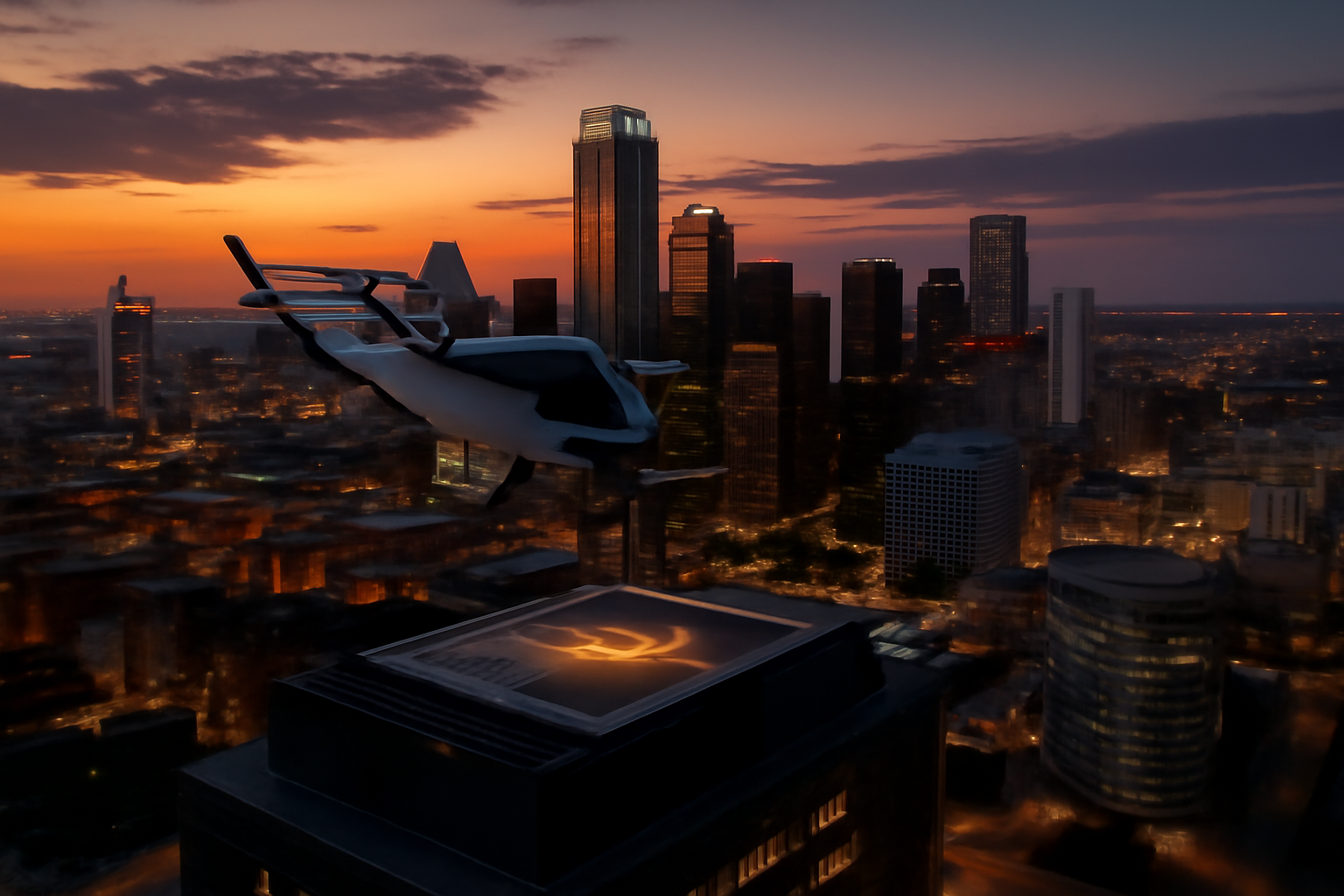
Dallas-Fort Worth is preparing to become one of the next major metropolitan areas to welcome electric air taxis into its transportation ecosystem. The emergence of eVTOL (electric vertical takeoff and landing) aircraft represents a significant shift in how millions of commuters could move through and around one of America’s largest urban centers. With major infrastructure investments, regulatory progress, and industry partnerships accelerating, the Dallas-Fort Worth region is positioning itself as a leader in the urban air mobility revolution.
The DFW Market Opportunity
Dallas-Fort Worth’s sprawling metropolitan area presents an ideal use case for electric air taxi services. The region covers approximately 9,286 square miles and encompasses multiple employment centers, hotels, and transportation hubs spread across a wide geographic area. Traditional ground transportation between these centers often requires 45 minutes to over an hour, making point-to-point air mobility solutions increasingly attractive to business travelers and commuters.
The regional economy’s strength and diversity create substantial demand for premium transportation alternatives. With a population exceeding 7.6 million people and growing tech and corporate sectors, Dallas-Fort Worth has both the affluent customer base and frequency of point-to-point travel patterns that eVTOL operators need for early commercial success. The region’s two major airports—Dallas/Fort Worth International and Dallas Love Field—could serve as anchor hubs for air taxi networks.
Industry analysts project that initial eVTOL operations in Dallas-Fort Worth could focus on high-value corridors connecting downtown Dallas to DFW Airport, the Las Colinas business district, and Arlington’s commercial centers. These shorter routes of 10-30 miles align perfectly with the range and performance characteristics of next-generation electric aircraft currently in development.
Regulatory Progress and Infrastructure Development
The Federal Aviation Administration has accelerated its certification processes for eVTOL aircraft, with several manufacturers on track to receive Part 135 air carrier certification within the next two years. This regulatory momentum creates a concrete timeline for Dallas-Fort Worth to prepare infrastructure, including vertiports (landing pads), charging stations, and operational control facilities.
Texas state government has demonstrated strong support for advanced air mobility initiatives, recognizing the economic development potential and technological leadership opportunities. The state is actively engaged with eVTOL operators and infrastructure developers to streamline permitting processes and identify optimal vertiport locations throughout the Dallas-Fort Worth metroplex. Municipal authorities in Dallas, Fort Worth, and Arlington are already exploring zoning changes and land partnerships to enable vertiport development.
Charging infrastructure represents a critical component of the eVTOL ecosystem. Early planning suggests that vertiports will incorporate fast-charging capabilities, potentially powered by grid connections or renewable energy sources. The Dallas-Fort Worth region’s existing electrical infrastructure and capacity for expansion provide advantages over smaller markets attempting similar transitions.
Industry Players and Fleet Planning
Multiple eVTOL manufacturers have publicly identified Dallas-Fort Worth as a target market for initial commercial operations. Companies including Joby Aviation, Archer Aviation, and Lilium have discussed Dallas-area partnerships and launch plans. These manufacturers are designing aircraft specifically optimized for urban air mobility, with noise levels significantly lower than traditional helicopters and zero direct emissions during flight.
Initial fleet sizes in Dallas-Fort Worth are likely to be modest, with operators starting with 20-50 aircraft during the first operational year. This phased approach allows companies to build operational experience, train crew members, and refine customer service protocols before scaling. As demand grows and additional aircraft receive certification, fleet sizes could expand substantially by 2028-2029.
Partnerships between eVTOL operators and ground transportation providers are emerging, with early discussions suggesting integration between air taxis and ridesharing platforms, corporate shuttle services, and luxury ground transportation companies. These synergies could create seamless point-to-point journey options for Dallas-Fort Worth residents and visitors.
Economic and Environmental Implications
The arrival of electric air taxi services promises significant economic benefits for Dallas-Fort Worth, including job creation in aircraft operations, maintenance, vertiport management, and customer service. Industry estimates suggest that a mature urban air mobility market in a metropolitan area of Dallas-Fort Worth’s size could support hundreds of direct jobs and several thousand indirect employment opportunities across ancillary services.
Environmental benefits position electric air taxis as a progressive transportation solution aligned with Texas’s renewable energy leadership. Zero operational emissions during flight contribute to improved air quality in urban corridors, while the quieter operational profile compared to helicopter services reduces noise pollution concerns in residential and commercial areas. The energy efficiency of electric propulsion systems represents a substantial improvement over fossil fuel-powered aircraft.
Commercial benefits extend beyond direct air mobility operations. The presence of advanced aerospace infrastructure attracts technology companies, research institutions, and high-skilled workforce talent to the region. Dallas-Fort Worth’s position as an aviation hub could strengthen further as eVTOL manufacturing, maintenance, and operational support facilities locate in North Texas.
Timeline and Next Steps
Industry sources indicate that initial electric air taxi operations in Dallas-Fort Worth could commence between late 2026 and early 2028, depending on final FAA certification decisions and local infrastructure readiness. The first operational routes will likely prioritize high-density corridors with established demand, potentially beginning with airport ground transportation applications.
Near-term milestones include vertiport site selection and environmental reviews (2026-2027), FAA Part 135 operator certification (2027), and commercial service launches (late 2027-2028). Parallel to these developments, public education campaigns will inform residents and potential customers about eVTOL services, safety protocols, and booking procedures.
Investment in ground infrastructure, crew training, and customer service platforms is accelerating across Dallas-Fort Worth. Regional stakeholders are actively coordinating to ensure that infrastructure development, regulatory compliance, and community engagement proceed simultaneously, positioning the region for successful eVTOL market entry.
Key Takeaways for Dallas-Fort Worth’s Air Mobility Future
- Electric air taxis could begin operations in Dallas-Fort Worth between late 2026 and early 2028, creating a new premium transportation option for the region’s 7.6+ million residents and visitors.
- Multiple eVTOL manufacturers including Joby and Archer have identified Dallas-Fort Worth as a key launch market, with initial fleets of 20-50 aircraft scaling up as demand grows.
- Initial electric air taxi routes will likely connect downtown Dallas, DFW Airport, and major business districts, supported by vertiport infrastructure and fast-charging facilities currently in planning stages.
Dallas-Fort Worth stands on the threshold of a transportation revolution. As electric air taxi services prepare for commercial launch, the region has an opportunity to lead North America in urban air mobility adoption while creating economic benefits, improving air quality, and enhancing transportation options for millions of residents. The convergence of regulatory readiness, infrastructure investment, and industry commitment makes the Dallas-Fort Worth metroplex an ideal location for this transformative technology’s next chapter.