HIGHLIGHTS
- Lunar lander trajectory algorithms enable eVTOL systems to compute optimal descent paths in real-time, adapting to wind shear, turbulence, and dynamic urban airspace conditions for safer precision landings.
- Space-proven autonomous flight technology simplifies FAA and EASA certification by leveraging already-validated systems rather than requiring extensive validation of entirely novel approaches.
- Technology transfer from lunar programs accelerates eVTOL commercialization while enhancing fault tolerance, emergency response protocols, and distributed autonomy for high-volume urban air traffic management.
The intersection of aerospace engineering and personal air mobility has reached a new frontier. Unmanned aerial systems (UAS) powered by electric vertical takeoff and landing (eVTOL) technology are now leveraging proven lunar landing trajectory algorithms to revolutionize autonomous flight operations. This groundbreaking advancement addresses critical challenges in precision landing, obstacle avoidance, and autonomous navigation that have long hindered the widespread adoption of advanced air mobility solutions.
Lunar Technology Meets Urban Airspace
The application of lunar lander trajectory technology to eVTOL unmanned systems represents a significant leap forward in aerospace innovation. NASA and private space companies have spent decades perfecting landing algorithms for lunar missions, where precision and reliability are literally matters of survival. Now, these battle-tested technologies are being adapted for commercial air mobility applications, creating safer and more efficient autonomous flight paths.
The fundamental principle behind this technology transfer is straightforward: if a system can safely land on the Moon with minimal human intervention, it can certainly manage the far less challenging environment of urban and suburban airspace. The algorithms account for wind conditions, gravitational variations, terrain recognition, and real-time obstacle detection—capabilities that directly translate to improved eVTOL performance in complex urban environments.
Companies developing advanced air mobility solutions have recognized that autonomous precision is not a luxury but a necessity. Regulatory agencies worldwide require that eVTOL aircraft demonstrate exceptional levels of safety and reliability before certification. Incorporating proven lunar landing technology provides an evidence-based foundation that satisfies both technical requirements and safety concerns.
Enhanced Precision Landing Capabilities
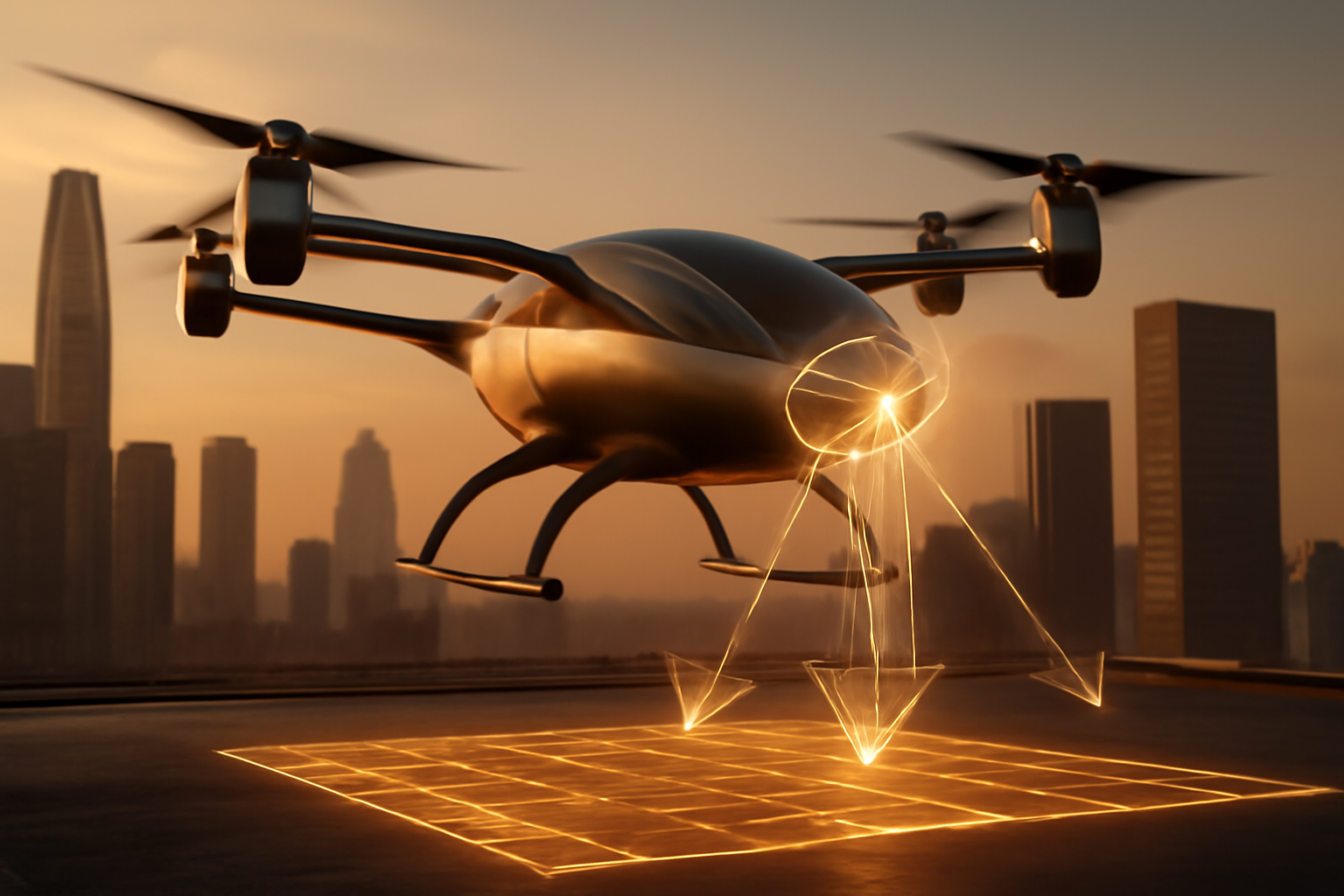
Traditional eVTOL landing systems rely on GPS coordinates and basic sensor fusion to identify landing zones. Lunar lander trajectory technology elevates this capability by computing optimal descent paths in real-time, accounting for dynamic environmental factors such as wind shear, turbulence, and ground effect. This results in significantly smoother landings and reduced stress on aircraft structures.
The trajectory optimization algorithms continuously recalculate the descent path as new sensor data arrives, allowing the aircraft to adapt to changing conditions within milliseconds. This adaptive approach has been proven effective in the unpredictable lunar environment and is proving equally valuable in urban settings where weather patterns and air traffic create constant variables.
For passenger-carrying eVTOL aircraft, landing precision translates directly to passenger comfort and safety. Smoother trajectories mean reduced G-forces during descent, improved structural longevity, and enhanced emergency response capabilities. The technology also enables safe landings in challenging environments such as moving platforms, confined spaces, and areas with irregular terrain.
Autonomous Operations and Safety Integration
Autonomous flight operations represent the ultimate vision for eVTOL air mobility networks. However, achieving true autonomy requires systems that can operate safely and reliably without real-time human control, even in unexpected situations. Lunar lander trajectory technology provides the algorithmic foundation for this autonomous capability by enabling aircraft to make intelligent decisions about flight paths and landing strategies independently.
The integration of these algorithms with onboard sensor arrays—including lidar, radar, and optical systems—creates a comprehensive perception and decision-making framework. The aircraft can identify hazards, evaluate alternative routes, and execute optimal maneuvers without awaiting ground-based instructions. This distributed autonomy is essential for managing high-volume air traffic in urban environments where communication delays could create safety risks.
Beyond trajectory optimization, the technology contributes to improved fault tolerance and emergency response protocols. If primary systems fail, backup algorithms can execute safe landing procedures using degraded sensor data, similar to how lunar landers operate in environments where external assistance is impossible. This redundancy-focused design approach significantly enhances overall system reliability.
Industry Implications and Market Impact
The aerospace industry is responding enthusiastically to this technological convergence. Major eVTOL manufacturers are incorporating lunar-derived trajectory systems into next-generation aircraft platforms. This trend accelerates the timeline for certification and regulatory approval, as agencies gain confidence in proven, well-understood technologies rather than entirely novel systems.
Insurance companies and financial institutions funding eVTOL ventures view this development positively, as proven technology reduces perceived risk and liability exposure. Flight operators can achieve higher utilization rates through improved landing precision, reduced maintenance requirements from gentler flight profiles, and expanded operational windows that include marginal weather conditions previously deemed unsafe.
The integration of space-proven technology into air mobility also strengthens the supply chain and talent pool. Engineers with expertise in aerospace systems can transition between lunar programs and eVTOL development, creating a more robust innovation ecosystem. Companies in the advanced air mobility sector benefit from decades of heritage in space exploration, ensuring that implemented systems meet the highest reliability standards.
Regulatory Framework and Future Standards
Regulatory agencies including the FAA, EASA, and their international counterparts are closely monitoring the adoption of proven aerospace technologies in eVTOL systems. The use of lunar lander trajectory technology actually simplifies certification by leveraging already-validated algorithms rather than requiring extensive validation of entirely new approaches. This could accelerate the path to widespread commercial operations.
Standards bodies are developing frameworks that recognize technology transfer from space programs as an acceptable basis for certification. The argument is compelling: a system proven to function in the unforgiving environment of lunar operations faces substantially less demanding requirements in terrestrial airspace. This logical framework encourages innovation while maintaining rigorous safety standards.
Looking forward, the convergence of space technology and air mobility is likely to accelerate. As the global eVTOL market grows and commercial operations expand, additional technologies from satellite systems, planetary exploration, and microgravity research will find applications in personal and urban air mobility. This cross-pollination drives innovation across all aerospace sectors.
Key Industry Takeaways
- Lunar lander trajectory algorithms enable eVTOL systems to achieve precision landing in dynamic urban environments through real-time path optimization and adaptive descent control.
- Integrating space-proven technologies accelerates regulatory certification and reduces perceived operational risk while enhancing autonomous flight capabilities and safety redundancy.
- Technology transfer from aerospace programs to eVTOL development strengthens the innovation ecosystem and enables insurance, financing, and operational partners to deploy advanced air mobility solutions with greater confidence.
The marriage of lunar landing technology and eVTOL systems exemplifies the innovative potential of cross-sector technology transfer. As personal air mobility matures from concept to commercial reality, leveraging proven systems from space exploration ensures that new aircraft meet the highest standards of safety and reliability. This convergence accelerates the timeline for widespread adoption while building public confidence in autonomous air transportation. The skies above our cities are becoming testbeds for technology perfected on the Moon, promising a future where advanced air mobility is not just feasible but inevitable.