HIGHLIGHTS
- Hanwha Group exits eVTOL market as Vertical becomes primary actuator supplier for advanced air mobility developers.
- Supply chain consolidation reflects aerospace-grade manufacturing barriers and sector transition from R&D toward commercial certification.
- Vertical’s expanded role may accelerate eVTOL timelines but creates supply concentration risk as OEMs depend on single actuator supplier.
South Korea’s Hanwha Group has announced its exit from the electric vertical takeoff and landing (eVTOL) market, marking a significant realignment in the advanced air mobility (AAM) supply chain. This strategic withdrawal comes as Vertical assumes the role of primary actuator supplier for leading eVTOL developers, underscoring the sector’s rapid evolution and the consolidation of critical component suppliers. The move reflects broader industry trends as manufacturers prioritize partnerships with specialized aviation-grade suppliers capable of meeting increasingly stringent certification and performance requirements.
Hanwha’s Strategic Exit from eVTOL Development
Hanwha Group’s decision to exit the eVTOL sector represents a notable retreat for the South Korean conglomerate, which had previously invested in electric vertical mobility development. The company’s exit signals the competitive pressures facing suppliers in an emerging market where only the most specialized and efficient manufacturers can sustain long-term operations. Hanwha’s withdrawal likely reflects challenges in scaling production, meeting certification timelines, and competing against established aerospace suppliers entering the eVTOL space.
The exit comes at a critical juncture for the advanced air mobility sector, where regulatory frameworks are still solidifying and commercial operations remain limited to pilot programs and special flight authorizations. Companies that cannot demonstrate rapid progress toward certification and cost-effective manufacturing are increasingly vulnerable to market pressures. Hanwha’s decision to reallocate resources away from eVTOL development suggests the company may be prioritizing other growth opportunities or reconsidering its timeline for profitability in this emerging sector.
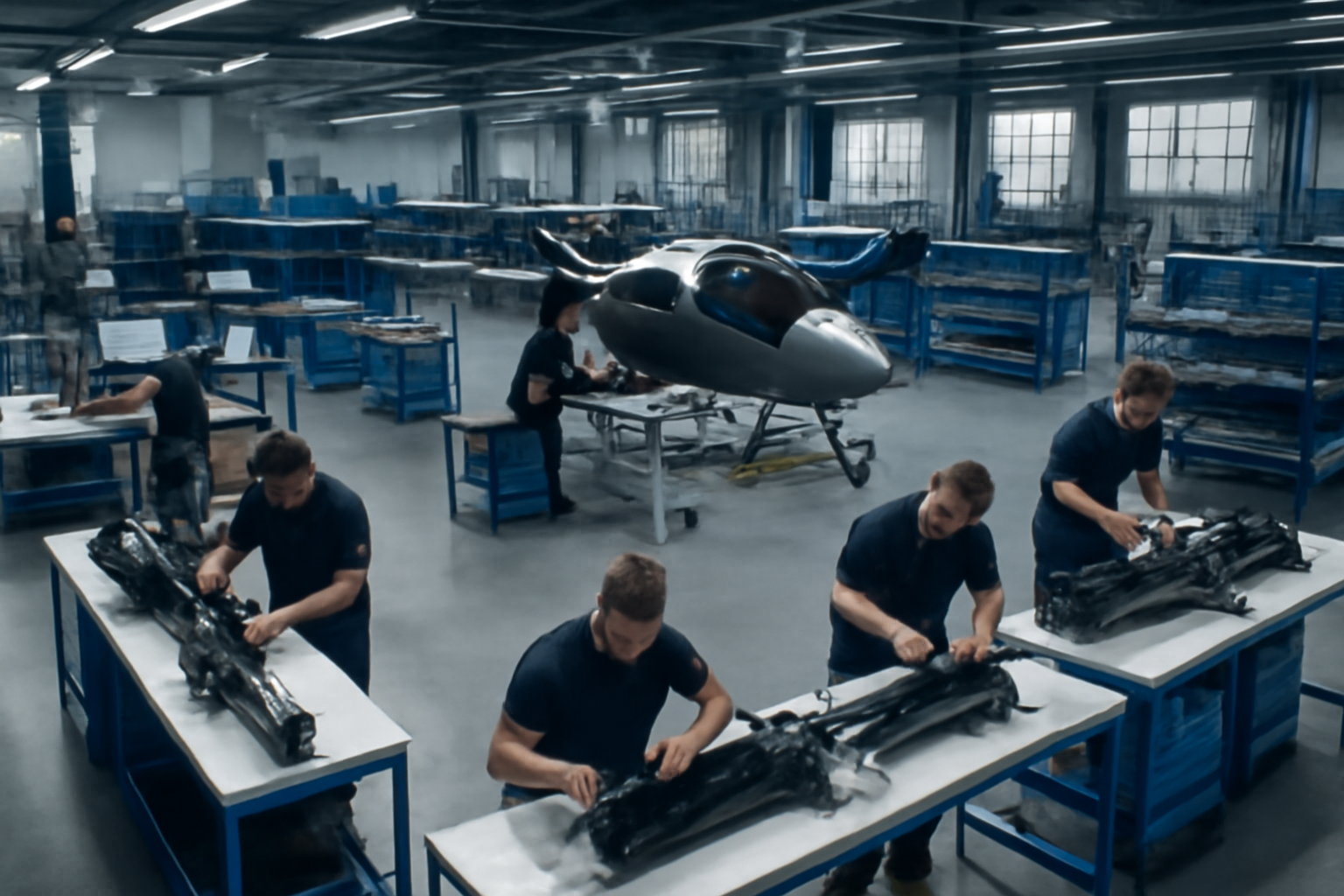
This strategic pivot underscores the high barriers to entry and sustained participation in the AAM supply chain. Component suppliers must invest heavily in research and development, regulatory compliance, and manufacturing infrastructure—often for years before securing commercial contracts. For Hanwha, the economics of maintaining this position may have simply become untenable without guaranteed orders from lead OEMs.
Vertical Ascends as Primary Actuator Supplier
With Hanwha’s departure, Vertical has secured the position of primary actuator supplier for major eVTOL developers, a role that underscores the company’s technical capabilities and competitive advantages in flight control systems. Actuators are critical components in electric vertical takeoff and landing aircraft, responsible for controlling wing surfaces, rotors, and stabilization systems with precision and reliability required for manned flight operations. Vertical’s elevation to primary supplier status indicates industry confidence in its engineering, certification pathway, and manufacturing scalability.
The actuator supply market for eVTOL aircraft is highly specialized, requiring suppliers to meet demanding performance specifications, extreme reliability standards, and aerospace certification requirements set by regulatory authorities including the FAA and EASA. Vertical’s selection reflects successful demonstration of these capabilities, likely including prototype testing, preliminary certification documentation, and partnerships with established OEMs testing advanced air mobility platforms. This supplier consolidation is typical in aerospace development cycles, where early-stage competition gradually yields to partnerships with proven suppliers.
Vertical’s expanded role positions the company for significant revenue growth as eVTOL programs progress toward commercial certification and initial production. Primary supplier relationships typically involve longer development timelines but offer more stable, predictable revenue streams than competitive bidding arrangements. For eVTOL manufacturers, concentrating critical components with a single qualified supplier reduces supply chain complexity and accelerates certification timelines.
Supply Chain Consolidation in the AAM Sector
Hanwha’s exit and Vertical’s ascension exemplify broader consolidation patterns emerging across the advanced air mobility supply ecosystem. As the sector matures from research and development phases toward certification and limited commercial operations, component suppliers face increasing pressure to specialize, achieve scale, and secure long-term partnerships with lead OEMs. This consolidation trend mirrors historical patterns in aerospace, where decades of competition and market forces ultimately concentrate supply of critical components among a handful of specialized, highly qualified firms.
The eVTOL supply chain currently spans hundreds of specialized suppliers providing everything from high-energy-density batteries to avionics systems, structural materials, and flight control components. However, suppliers of mission-critical systems like actuators, flight computers, and powertrains face the highest barriers to entry and most intense pressure to achieve qualification. Companies that cannot reach the technical, financial, and manufacturing milestones required for aerospace certification inevitably exit or pivot to adjacent markets offering faster paths to profitability.
Hanwha’s departure may not be unique—industry observers expect additional consolidation in coming years as eVTOL development programs accelerate toward operational readiness. Suppliers that have invested in specialized capabilities aligned with leading OEM requirements will likely emerge stronger, while generalist suppliers or those pursuing misaligned technical approaches will face increasing commercial pressure.
Implications for eVTOL Development Timelines and Commercialization
The shift to Vertical as primary actuator supplier may actually accelerate eVTOL certification and commercialization timelines by concentrating supply chain focus and enabling deeper technical integration between OEMs and suppliers. When a single supplier takes primary responsibility for a critical system, accountability for performance, certification compliance, and schedule becomes unambiguous. This clarity can streamline design iterations, accelerate qualification testing, and reduce the complexity of supplier coordination that often delays aerospace programs.
However, supply chain concentration introduces risk if the primary supplier encounters unexpected technical challenges or manufacturing constraints. Vertical must now maintain delivery schedules and meet demanding specifications across multiple eVTOL programs, a responsibility that grows with each new OEM partnership. Manufacturing capacity and quality control will become critical success factors as order volume increases. Any production delays or quality issues from Vertical could ripple across multiple eVTOL programs, affecting commercialization timelines for the entire sector.
Looking forward, the stability of eVTOL supply chains will depend on suppliers like Vertical scaling manufacturing capacity, securing component sourcing agreements, and maintaining the technical excellence required for aerospace certification. Hanwha’s exit removes one competitor but also highlights the sector’s ongoing reliance on a limited number of specialized suppliers capable of meeting the exacting demands of manned, electric vertical flight.
Key Takeaways from Hanwha’s eVTOL Exit and Vertical’s Supplier Expansion
- South Korea’s Hanwha Group has exited the eVTOL supply market, with Vertical assuming the role of primary actuator supplier for major advanced air mobility developers.
- Supply chain consolidation reflects the high barriers to entry in aerospace-grade component manufacturing and the sector’s transition from research toward commercial certification and production.
- Vertical’s expanded supplier role may accelerate eVTOL commercialization timelines but introduces concentration risk if the company encounters manufacturing or technical challenges.
The realignment of the eVTOL supply chain exemplified by Hanwha’s exit and Vertical’s ascension demonstrates the sector’s maturation and the increasing importance of specialized, aviation-grade suppliers in enabling commercial advanced air mobility. As eVTOL programs transition from technology development toward certification and initial operations, supply chain stability and supplier reliability will emerge as critical competitive factors. Companies like Vertical that can demonstrate technical excellence, manufacturing capability, and sustained commitment to the sector will likely capture disproportionate value as the advanced air mobility market develops. For industry observers, these supplier dynamics offer important signals about which eVTOL OEMs are progressing toward commercial readiness and which may face extended development timelines ahead.