HIGHLIGHTS
- HayesX officially unveiled the HayesX-250 at SEMA Show, demonstrating industry momentum toward personal electric aircraft commercialization.
- The HayesX-250 represents a significant step in making personal electric flight accessible and practical for everyday consumers.
- SEMA Show debut signals growing intersection between traditional automotive and advanced air mobility industries.
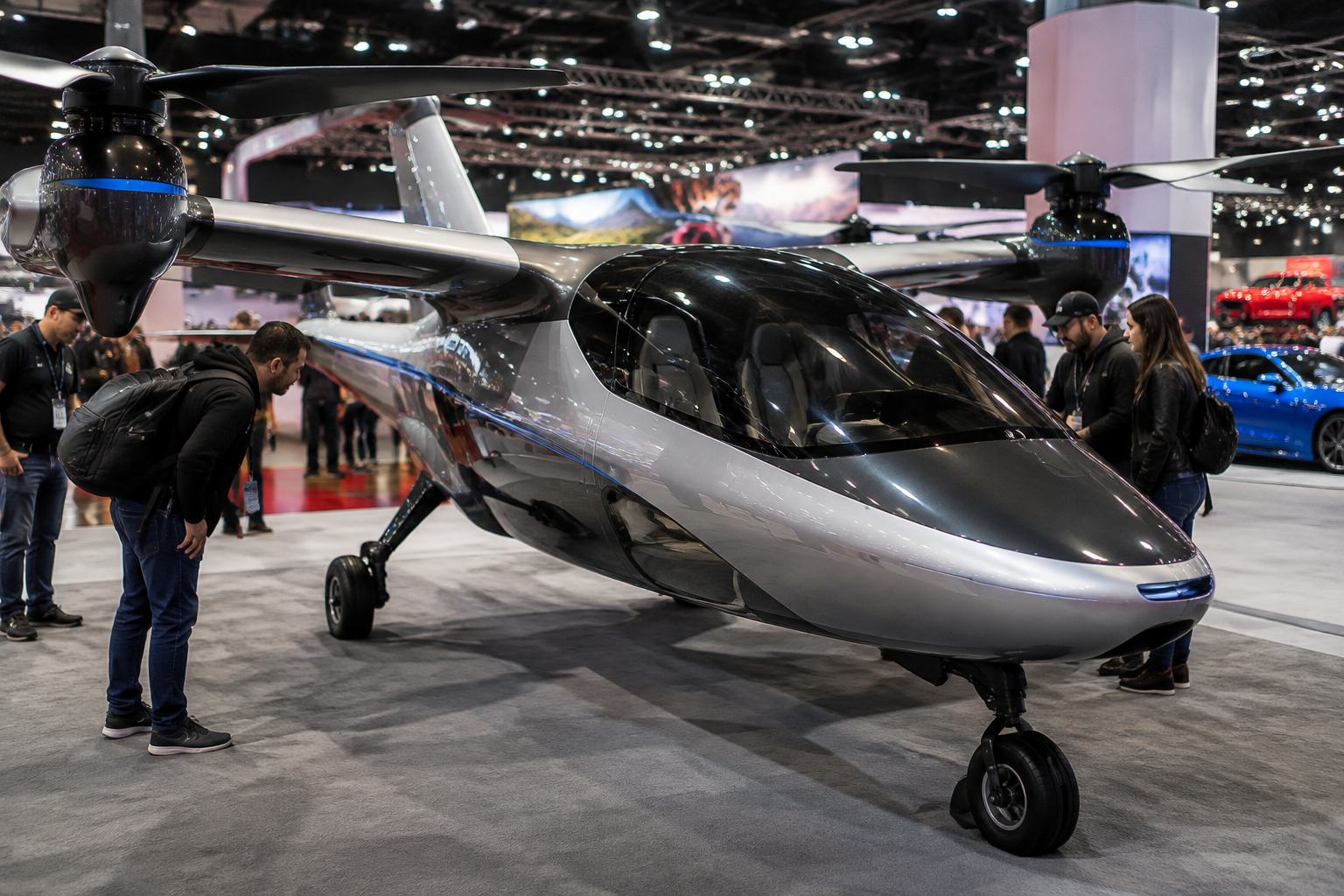
The personal air mobility sector reached a major milestone on November 2, 2026, when HayesX unveiled its groundbreaking HayesX-250 electric vertical takeoff and landing aircraft at the prestigious SEMA Show. This debut represents far more than a product launch—it signals the maturation of electric aviation technology and the rapid convergence between traditional automotive culture and the emerging world of personal air vehicles. The HayesX-250’s appearance at SEMA, a venue historically dominated by ground-based vehicles, underscores how dramatically the transportation landscape is evolving.
HayesX-250: Redefining Personal Aviation
The HayesX-250 stands as a testament to years of engineering innovation focused on making electric flight both practical and accessible to mainstream consumers. This aircraft combines advanced electric propulsion systems with the aeronautical principles necessary for reliable vertical takeoff and landing capabilities. The HayesX-250’s design philosophy emphasizes user-friendly operation while maintaining the safety and performance standards required for civilian aviation.
What sets the HayesX-250 apart in the crowded eVTOL marketplace is its focus on personal use cases rather than purely commercial applications. While many competitors target air taxi services and urban mobility networks, HayesX has engineered a vehicle designed for individual pilots and small teams. This positioning reflects a broader industry shift toward democratizing aerial transportation, moving beyond the exclusive realm of commercial operators.
The aircraft’s electric propulsion architecture leverages cutting-edge battery technology and distributed electric motor systems. These innovations enable efficient vertical lift generation while minimizing noise pollution—a critical advantage over traditional helicopter designs. The HayesX-250 promises to deliver the convenience of helicopter mobility with the environmental benefits and operational efficiency of electric propulsion.
Strategic Significance of the SEMA Show Venue
The selection of SEMA as the launch platform for the HayesX-250 carries profound strategic implications. SEMA (Specialty Equipment Market Association) has long served as the epicenter of automotive aftermarket culture, attracting tens of thousands of industry professionals, enthusiasts, and media representatives annually. By choosing SEMA over traditional aerospace venues or pure aviation shows, HayesX is making a deliberate statement about where personal air mobility fits within the broader transportation ecosystem.
This venue selection suggests that HayesX views the personal eVTOL market as an extension of the enthusiast automotive community rather than a niche aerospace segment. The strategy acknowledges that many potential early adopters of electric personal aircraft are likely to come from ranks of passionate vehicle enthusiasts already engaged with innovation in ground transportation. The crossover appeal of electric propulsion technology—equally relevant to cars, trucks, and aircraft—creates natural synergies that SEMA’s audience deeply understands.
Furthermore, debuting at SEMA positions the HayesX-250 within a cultural moment when electric propulsion has transitioned from futuristic novelty to mainstream technology. Attendees at SEMA are already familiar with electric vehicle innovations, battery technology advances, and the practical realities of charging infrastructure and operational efficiency. This shared context makes the jump to personal electric aviation feel less like science fiction and more like the logical next evolution.
Market Readiness and Industry Momentum
The HayesX-250 debut arrives at a critical inflection point for personal air mobility. Regulatory frameworks in key markets—including the United States, Europe, and selected Asian regions—have progressed toward clearer pathways for eVTOL certification and operation. Governments increasingly recognize the economic and environmental potential of electric aviation, leading to proactive policy development rather than reactive restriction. This regulatory tailwind provides investors and manufacturers with greater confidence in commercialization timelines.
Parallel advances in battery energy density, electric motor efficiency, and lightweight materials have solved many of the fundamental engineering challenges that plagued earlier eVTOL concepts. Battery costs have declined dramatically over the past decade, making electric propulsion economically competitive with traditional aviation engines for short-haul and personal flight applications. These technological foundations provide the HayesX-250 with genuine operational advantages rather than merely theoretical promises.
Industry capital flows reflect this growing confidence. Venture funding for air mobility startups reached unprecedented levels in 2025 and 2026, with major aerospace companies, automotive manufacturers, and technology firms all investing heavily in eVTOL programs. The HayesX-250’s SEMA debut occurs within this broader landscape of accelerating commercialization, suggesting the vehicle enters a market with genuine infrastructure development, pilot training programs, and operational precedents already taking shape.
Technical Innovation and Operational Capabilities
The HayesX-250 incorporates multiple technical innovations that address the core challenges of personal electric aviation. Its electric propulsion system delivers sufficient power for reliable vertical takeoff while maintaining the endurance necessary for meaningful flight ranges. The aircraft’s battery management and thermal regulation systems ensure consistent performance across varying environmental conditions and operating scenarios.
Safety systems embedded within the HayesX-250’s design architecture exceed many existing aviation standards. Redundancy in critical propulsion systems, advanced flight control computers, and automatic recovery capabilities provide multiple layers of protection. These safety innovations reflect HayesX’s understanding that consumer adoption of personal air vehicles depends fundamentally on demonstrated reliability and accident prevention records.
The HayesX-250’s design also prioritizes pilot interface and ease of operation. Intuitive control systems, advanced avionics packages, and automated flight management features make the aircraft accessible to pilots without extensive rotorcraft experience. This accessibility is crucial for market expansion, as it enlarges the potential user base beyond highly specialized aviation professionals.
Path to Consumer Adoption
Key Takeaways for Market Entry:
- Regulatory pathways for personal eVTOL aircraft certification are becoming increasingly defined and achievable in major markets
- Battery technology and electric motor efficiency have reached practical performance thresholds that enable viable personal aviation use cases
- Cultural acceptance of electric propulsion across transportation categories creates broader market readiness for personal air vehicles
The HayesX-250 does not emerge into an untested or speculative market. Rather, it arrives at a moment when the fundamental prerequisites for consumer adoption—regulatory clarity, technological viability, market awareness, and competitive infrastructure—are rapidly coalescing. The SEMA Show venue selection brilliantly communicates HayesX’s recognition that early adopters of personal electric aircraft will likely overlap significantly with the enthusiast and innovation-forward populations already engaged with advanced automotive technologies.
The path from SEMA showcase to widespread consumer ownership will involve multiple phases: initial sales to early adopter pilots, demonstration of real-world operational reliability, expansion of regional flight infrastructure, development of standardized pilot training curricula, and progressive insurance and liability framework maturation. Each phase builds on the others, creating a self-reinforcing cycle of adoption and infrastructure development.
HayesX’s SEMA Show debut represents a watershed moment for personal air mobility. The HayesX-250 transforms electric aviation from theoretical future into present-day reality, displayed alongside vehicles that represent the current state of transportation innovation. As attendees examine this electric aircraft alongside advanced automotive technologies, the convergence of ground and aerial mobility becomes impossible to ignore. The personal air mobility era is no longer approaching—it has arrived, and the HayesX-250 stands as compelling evidence that electric flight is ready for the consumer market.