HIGHLIGHTS
- Florida launches comprehensive aerial rideshare technology trials to establish “highway in the sky” infrastructure and position itself as a national leader in commercial eVTOL operations and regulatory frameworks.
- Real-world testing evaluates critical performance metrics including noise emissions, battery efficiency in subtropical climates, passenger safety protocols, and airspace integration with existing air traffic systems.
- Commercial success could enable 15-minute inter-city flights, create high-skilled aerospace jobs, and eliminate emissions through electric-powered aircraft while reducing ground transportation congestion.
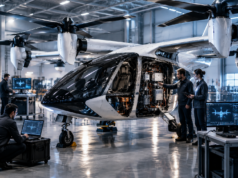
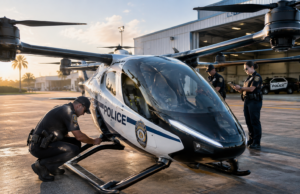
Florida is making significant strides in the personal air mobility sector, launching comprehensive tests of aerial rideshare technology as part of an ambitious initiative to establish what industry leaders are calling a “highway in the sky.” This regulatory and infrastructure milestone marks a pivotal moment for the state’s emergence as a leader in urban air mobility (UAM) innovation, positioning Florida alongside other regions racing to commercialize eVTOL operations and advanced air transportation systems.
Florida’s Strategic Position in Urban Air Mobility
Florida has emerged as a natural hub for aerial mobility innovation, combining favorable year-round flying conditions, dense population centers, and progressive regulatory frameworks. The state’s geography—with major urban corridors like Miami, Orlando, and Tampa separated by manageable distances—makes it an ideal testbed for rideshare eVTOL services that could reduce ground traffic congestion while providing rapid passenger transport between metropolitan areas.
State officials and transportation planners recognize that aerial rideshare technology represents a transformative opportunity to address Florida’s growing traffic challenges. The “highway in the sky” concept envisions dedicated airspace corridors for autonomous and piloted eVTOLs, similar to established flight paths, but operating at lower altitudes and in closer proximity to urban centers. This infrastructure integration could fundamentally reshape how Floridians travel within and between cities.
By positioning itself as an early adopter and testing ground, Florida aims to attract major eVTOL manufacturers, aerospace companies, and tech startups to establish operations within the state. This economic development strategy could create high-skilled jobs in aircraft manufacturing, airspace management, maintenance, and operations, while generating regulatory expertise that positions Florida as a national leader in UAM governance.
Aerial Rideshare Technology Testing Framework
The current testing phase involves deploying rideshare-focused eVTOL systems to evaluate their operational feasibility in real-world Florida conditions. These trials assess critical factors including passenger comfort, safety protocols, noise emissions, battery performance in humid subtropical climates, and integration with existing air traffic control systems. The test flights gather essential data on vehicle performance, passenger demand, and infrastructure requirements necessary for eventual commercial service.
Participating aircraft in Florida’s trials likely include electric vertical takeoff and landing vehicles designed specifically for urban passenger transport, with capacities ranging from two to six passengers. These aircraft undergo rigorous evaluation for regulatory compliance, noise mitigation, energy efficiency, and autonomous operation capabilities. Real-world testing in Florida’s diverse environments—from coastal regions to inland urban centers—provides valuable performance data across different geographical and climatic conditions.
The testing framework also includes comprehensive airspace management trials to develop the operational procedures, communication protocols, and automated traffic management systems necessary for safe integration of dozens or hundreds of simultaneous eVTOL flights. This “air traffic management for UAM” component is essential for scaling from experimental operations to viable commercial services that could transport passengers daily across metropolitan areas.
Infrastructure and Regulatory Roadmap
Florida’s “highway in the sky” initiative requires coordinated development of supporting infrastructure, including vertiports (landing zones), charging stations, maintenance facilities, and digital systems for flight routing and passenger booking. The state is working with local municipalities, the Federal Aviation Administration (FAA), and private sector partners to establish the physical and regulatory infrastructure needed for commercial service launch. This multi-stakeholder approach ensures that eVTOL operations complement rather than conflict with existing aviation infrastructure and ground transportation systems.
Regulatory approval represents a critical path item for Florida’s ambitions. The FAA must establish certification standards for commercial eVTOL operations, airspace procedures for low-altitude urban flights, and safety requirements for autonomous vehicle operation. Florida’s testing initiative generates real-world data that informs these federal regulations while demonstrating state leadership in responsible UAM development. Successful trials strengthen Florida’s position when advocating for favorable federal policy frameworks.
Public acceptance and community engagement are equally important. Florida’s aerial rideshare testing includes noise monitoring, environmental impact assessments, and public communication campaigns to build support for “highway in the sky” operations. Managing community concerns about noise, safety, and privacy—while highlighting mobility benefits and economic opportunities—is essential for long-term viability of large-scale eVTOL services across populated areas.
Economic and Mobility Impact Potential
Successful commercialization of aerial rideshare services in Florida could generate substantial economic value. The urban air mobility market is projected to grow into a multi-billion-dollar industry globally, with personal and commercial air transportation representing a significant portion of near-term revenue. Florida’s early-mover advantage in testing and infrastructure development could capture meaningful market share as eVTOL operators launch commercial services.
For passengers, aerial rideshare offers transformative mobility benefits. A flight between Miami and Fort Lauderdale that takes 45+ minutes by ground transportation could be accomplished in 15 minutes via eVTOL, fundamentally changing commuting patterns and business connectivity. Tourism applications are particularly promising for Florida, where visitors could use aerial rideshare to access theme parks, beaches, and attractions while reducing highway congestion and emissions associated with traditional ground transportation.
Environmental benefits accompany these mobility gains. Electric-powered eVTOLs produce zero direct emissions, supporting Florida’s clean energy goals and reducing air pollution in urban corridors. As electricity grids incorporate more renewable energy sources, the environmental advantage of UAM over gas-powered cars grows exponentially. Additionally, eVTOL operations are quieter than traditional helicopter services, making urban air mobility viable in densely populated areas previously incompatible with aerial transportation.
Key Takeaways: Florida’s Aerial Rideshare Leadership
- Florida is conducting comprehensive aerial rideshare technology trials to establish “highway in the sky” infrastructure, positioning the state as a national leader in urban air mobility commercialization and eVTOL regulatory frameworks.
- Real-world testing evaluates critical operational factors including passenger capacity, noise emissions, battery performance in subtropical climates, and airspace integration—generating essential data for scaling from experimental flights to viable commercial services.
- Successful commercialization could deliver transformative benefits including 15-minute inter-city passenger transport, substantial job creation in aerospace and operations sectors, and elimination of direct emissions through electric-powered aircraft operations.
Florida’s aerial rideshare technology testing initiative represents a defining moment for urban air mobility in the United States. By advancing the “highway in the sky” concept through rigorous real-world trials, infrastructure development, and multi-stakeholder collaboration, Florida is demonstrating that commercial eVTOL operations are transitioning from science fiction to near-term transportation reality. As testing progresses and regulatory frameworks evolve, Florida’s early leadership will likely establish the state as a nexus for personal air mobility innovation, attracting industry investment and positioning the state’s residents and economy to benefit from this transformative transportation revolution. The next phase of testing will reveal whether aerial rideshare can achieve the efficiency, safety, and affordability necessary to become mainstream mobility infrastructure for Florida’s growing population and visitor economy.