HIGHLIGHTS
- Joby Aviation’s Q2 2026 revenue surge marks a critical turning point, shifting eVTOL from R&D into early-stage commercialization with real customer commitments.
- Market valuation remains conservative relative to revenue growth, reflecting investor concerns about manufacturing scale, regulatory timelines, and competitive market fragmentation.
- Success hinges on translating revenue momentum into capital-efficient production and margin expansion—with profitability and unit economics as the ultimate valuation drivers.
Joby Aviation’s second-quarter 2026 financial results reveal a critical inflection point for the electric vertical takeoff and landing (eVTOL) industry. The company’s revenue surge demonstrates growing commercial traction, yet market valuation metrics tell a more nuanced story about investor confidence, scaling timelines, and the path to profitability in advanced air mobility.
Joby’s Q2 Revenue Growth and Market Significance
Joby Aviation reported a substantial increase in Q2 2026 revenue, marking one of the most significant milestones in the company’s journey toward commercial operations. This growth reflects accelerating demand for electric vertical takeoff and landing aircraft, as certification pathways clarify and near-term deployment plans move from concept to reality. The revenue momentum underscores that early adopters and potential operators are beginning to commit capital and resources to eVTOL infrastructure and fleet planning.
The revenue surge arrives at a critical moment when the broader air mobility sector is transitioning from R&D-heavy phases into production and operational readiness. Joby’s financial performance provides a quantifiable signal that the technology has matured sufficiently for paying customers—whether government agencies, airport operators, or service providers—to make near-term purchasing commitments. This contrasts sharply with earlier skepticism about whether eVTOL would remain perpetually pre-commercial.
Industry observers note that Joby’s revenue expansion outpaces most competitors, positioning the company as a frontrunner in the race to establish commercial eVTOL networks. However, absolute revenue figures remain modest compared to traditional aerospace, reinforcing that the sector is still in early innings despite rapid progress and billion-dollar valuations.
Valuation Dynamics and Investor Sentiment
Despite impressive Q2 revenue growth, Joby’s market valuation reflects a more cautious investor posture than some might expect. This disconnect between operational momentum and market value suggests that Wall Street remains focused on profitability timelines, competitive threats, regulatory hurdles, and the capital requirements to scale manufacturing and operations. Investor sentiment appears to distinguish sharply between “revenue growth” and “path to sustainable profitability.”
Valuation metrics indicate that the market has already priced in significant execution risk. Analysts highlight that eVTOL companies must overcome manufacturing scale, supply chain stability, certification delays, and market adoption challenges. Joby’s valuation, while substantial, reflects skepticism that revenue growth alone guarantees successful long-term business models. The company must demonstrate that margin expansion and cash flow generation are achievable within realistic timeframes.
The gap between revenue momentum and valuation growth also reflects competitive dynamics. As more eVTOL players advance toward certification and commercialization—including Boeing’s subsidiary Aurora Flight Sciences, Archer Aviation, Lilium, and regional contenders—investor capital is increasingly distributed across multiple bets rather than concentrated on a single leader.
Certification, Regulatory Approval, and Market Readiness
Q2 2026 represents a period when eVTOL certification is accelerating across major regulatory jurisdictions. Joby’s revenue growth is inextricably linked to progress with the Federal Aviation Administration (FAA), European Union Aviation Safety Agency (EASA), and other authorities. Regulatory approvals serve as gate-keepers for commercial operations, and investors carefully monitor certification milestones as leading indicators of near-term revenue potential.
The company continues to work with regulators on special conditions and certification specifications tailored to electric vertical takeoff architecture. Each regulatory milestone—from preliminary airworthiness criteria to special flight authorization approvals—incrementally increases the credibility of projected deployment timelines. Q2 results suggest that Joby’s certification activities are translating into customer confidence and pre-commercial contracts.
However, regulatory uncertainty persists regarding noise limits, airspace integration, vertiport infrastructure standards, and pilot certification requirements. Any regulatory setbacks or prolonged approval timelines could dampen near-term revenue projections and weaken investor confidence. The market appears to be pricing in moderate regulatory risk while assuming that major jurisdictions will ultimately clear the pathway for commercial eVTOL operations.
Manufacturing Scale and Capital Requirements
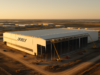
Joby’s Q2 revenue growth necessitates urgent attention to production capacity and supply chain fortification. Transitioning from prototype and low-rate initial production to high-volume manufacturing represents an existential challenge for eVTOL companies. The capital required to establish dedicated manufacturing facilities, secure long-term component supply contracts, and scale assembly operations is enormous—and this burden directly impacts investor sentiment toward valuation.
The company has invested heavily in manufacturing infrastructure and supply chain partnerships, but scaling production while maintaining cost control and quality standards remains unproven. Investors scrutinize whether Joby can produce aircraft at unit costs that enable competitive pricing and acceptable margins. Q2 revenue strength is encouraging, but the market will ultimately judge success based on manufacturing efficiency metrics and unit economics.
Capital requirements for scaling manufacturing also influence valuation multiples. If Joby must undertake significant additional equity raises or take on debt to fund production expansion, shareholder dilution and financial leverage become material concerns. The market appears to be hedging against the possibility that revenue growth will require increasingly expensive capital, thereby limiting upside valuation potential.
Competitive Landscape and Market Share Dynamics
Joby’s Q2 momentum occurs within an intensifying competitive environment. Multiple eVTOL developers are advancing toward certification and commercial operations simultaneously, including well-funded competitors backed by major aerospace primes and venture capital consortiums. This competitive intensity places downward pressure on valuation multiples, as the market must distribute potential market share across numerous credible contenders.
Joby’s advantages include strong backing from Toyota, deep regulatory relationships, demonstrated technology maturity, and early contract momentum. However, competitors like Archer Aviation benefit from different strategic partnerships, alternative financing structures, and unique designs. The competitive field suggests that eVTOL market share will be distributed across multiple winners, limiting the “winner-take-all” narrative that typically justifies premium valuations.
As the competitive field matures, price competition and margin compression become increasingly likely. Investors may be valuing Joby conservatively to account for the long-term possibility that intensifying competition will limit pricing power and profitability potential. Q2 revenue growth is encouraging for the industry broadly, but may not translate to outsized returns for individual companies in a fragmented market.
Key Takeaways from Joby’s Q2 2026 Results
- Joby Aviation’s Q2 revenue surge demonstrates accelerating commercial traction in eVTOL, with customers and operators moving from planning into pre-commercial commitments and early purchases.
- Valuation metrics reflect investor caution about scaling challenges, manufacturing efficiency, regulatory timelines, and competitive pressures—pricing in significant execution risk despite revenue growth momentum.
- The company must translate Q2 revenue gains into margin expansion and capital-efficient manufacturing to justify premium valuations and deliver sustainable long-term profitability.
Joby Aviation’s Q2 2026 financial performance marks a pivotal moment for the eVTOL sector, demonstrating that electric vertical takeoff and landing technology is transitioning from research and development into early-stage commercialization. Revenue growth validates years of investment and engineering effort while signaling to customers and regulators that the industry is ready for operational deployment. However, the modest valuation growth relative to revenue momentum underscores that investors remain focused on profitability, manufacturing scale, and competitive dynamics. The path forward requires Joby to sustain revenue momentum while demonstrating capital efficiency, margin expansion, and the ability to outcompete an increasingly crowded field of well-funded eVTOL developers. Q2 results provide optimism for the broader air mobility ecosystem, but individual company valuations will ultimately reflect execution on manufacturing, regulatory, and commercial fronts over the coming years.