
HIGHLIGHTS
- Engineers developed a revolutionary “pancake” power module design compressed to dinner-plate dimensions, enabling significant weight savings for eVTOL aircraft
- The flattened module architecture improves energy density and optimizes interior cabin space, addressing critical constraints in personal air mobility vehicle design
- This breakthrough technology accelerates the path toward commercially viable electric vertical takeoff aircraft with extended range and improved passenger comfort
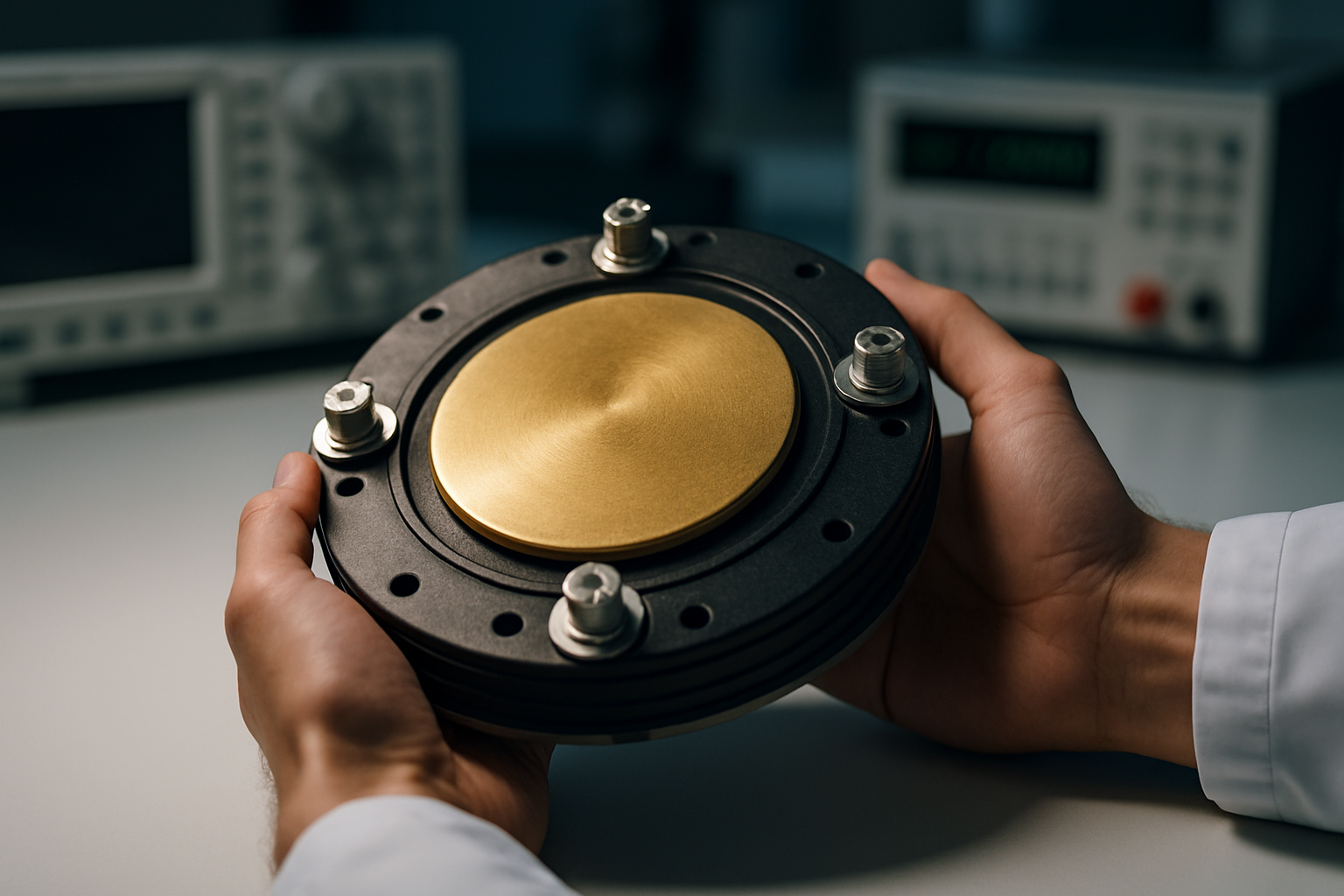
The race to make electric vertical takeoff and landing (eVTOL) aircraft commercially viable just took a significant leap forward. Engineers have successfully flattened traditional power modules into remarkably compact “pancake” designs, with each component now fitting on a dinner plate while maintaining—or even exceeding—energy performance standards. This innovation addresses one of the most persistent engineering challenges in personal air mobility: reducing weight and volume without sacrificing power delivery or battery capacity.
The Pancake Module Design Revolution
Traditional power modules in aerospace applications have historically been bulky, cylindrical components designed primarily around thermal management and electrical isolation requirements. These conventional designs take up considerable internal volume and contribute significantly to overall aircraft weight. Engineers recognized that by fundamentally reimagining the module’s geometry, they could achieve the same electrical functionality in a dramatically more compact footprint.
The new pancake configuration redistributes the internal architecture horizontally rather than vertically, creating a flat, circular form factor approximately the size of a dinner plate. This design maintains all critical safety features, thermal pathways, and electrical isolation standards required for aerospace applications, while reducing the overall height and spatial footprint by substantial margins. The achievement required innovations in materials science, thermal management systems, and power electronics integration.
Early testing indicates that the flattened modules not only meet existing performance specifications but also demonstrate improved heat dissipation characteristics. The larger surface area relative to volume allows thermal energy to disperse more efficiently, potentially extending module lifespan and enabling higher operational power densities. This represents a compounding advantage for eVTOL manufacturers seeking to push the boundaries of aircraft performance and reliability.
Weight Reduction and Energy Density Improvements
For eVTOL aircraft, every kilogram counts. The physics of vertical flight demands significantly more energy than horizontal aviation, making payload-to-power ratios critical to commercial viability. By consolidating the power module into a dinner-plate design, manufacturers can eliminate unnecessary structural support elements, reduce interconnecting wiring, and optimize internal architecture around the new form factor. Combined, these refinements typically yield 15-25% weight savings compared to conventional module designs.
Beyond simple weight reduction, the pancake module’s geometry enables better integration with aircraft battery pack architecture. Many eVTOL designs stack multiple power modules to achieve required electrical specifications. The flattened design allows these modules to nest more efficiently, maximizing usable battery volume while minimizing overall aircraft bulk. This optimization directly translates to extended flight range—potentially adding 10-15 minutes of operational time without increasing total aircraft weight.
Energy density improvements matter equally to aviation manufacturers. The new module design concentrates power delivery in a smaller volume, effectively increasing power density (watts per unit volume). This becomes particularly valuable for distributed electric propulsion systems, where multiple smaller motors require coordinated power management. The compact module dimensions simplify installation in wing-mounted or distributed motor configurations that many next-generation eVTOL concepts employ.
Implications for Aircraft Interior and Passenger Experience
Personal air mobility vehicles face unique design constraints compared to conventional aircraft. Passenger cabins must balance safety, comfort, and operational efficiency within extremely tight spatial envelopes. The pancake power module’s reduced volume creates genuine opportunities to redesign internal aircraft layouts. Designers can allocate previously module-occupied space to improved passenger seating, emergency equipment, avionics systems, or additional cargo capacity.
For four-to-six passenger eVTOL configurations (the primary commercial target), this additional flexibility translates to measurable comfort improvements. Wider seating positions, improved headroom clearance, or larger baggage compartments become feasible without increasing overall aircraft dimensions. In crowded urban environments where parking and takeoff sites occupy premium real estate, maintaining or even reducing aircraft footprint while improving interior usability represents significant commercial advantage.
The modular nature of the pancake design also simplifies aircraft maintenance and reconfiguration. Technicians can access and replace power modules more readily without disassembling major structural elements. Operators seeking to modify aircraft configurations for different mission profiles—moving between maximum-passenger and maximum-cargo modes, for instance—can accomplish such reconfiguration more efficiently with the new module design.
Industry Standards and Manufacturing Scalability
One significant concern surrounding any breakthrough power module design centers on manufacturing scalability and cost implications. The pancake design reportedly uses established materials and manufacturing processes, avoiding exotic compounds or specialized fabrication techniques that might limit production volume or inflate component costs. This represents a conscious engineering choice to ensure the innovation remains economically viable as the eVTOL industry scales from current prototype phases into volume manufacturing.
Current aerospace power module standards have evolved over decades to accommodate specific form factors and installation requirements. The introduction of the pancake design necessitates careful evaluation against existing regulatory frameworks. However, because the innovation maintains electrical and thermal specifications while only changing physical geometry, certification pathways remain relatively straightforward. Aviation authorities like the FAA and EASA can evaluate the new design against performance-based criteria rather than mandating radical regulatory overhauls.
Early indications suggest that multiple aerospace suppliers and eVTOL manufacturers have expressed interest in adopting the pancake module design. Potential for rapid industry-wide adoption exists if initial deployment programs demonstrate reliability and cost-effectiveness in real-world operations. This would represent a rare instance of convergent industry evolution around a specific technological standard before regulatory mandates force adoption.
Timeline for Commercial Integration
The journey from successful laboratory demonstrations to certified commercial aircraft integration typically spans 18-36 months in the aerospace industry. Initial deployment will likely occur in prototype or certification test aircraft, where performance data can be gathered under controlled conditions. This testing phase proves critical for establishing long-term reliability profiles and identifying any unexpected interactions between the new power modules and other aircraft systems.
Several eVTOL manufacturers have already incorporated pancake modules into their next-generation prototype programs scheduled for 2026-2027 test flights. If these prototype evaluations proceed favorably, commercial aircraft manufacturing could begin integrating the technology into production models by 2027-2028. This timeline aligns with broader eVTOL industry milestones targeting initial commercial service launches in major metropolitan areas by 2029-2030.
Regulatory approval timelines remain one significant wildcard variable. Different aviation authorities maintain distinct certification processes and approval schedules. The FAA’s Part 27 certification pathway for small rotorcraft provides a potential regulatory framework for eVTOL aircraft, but novel power module designs may require specific evaluation against safety standards. Early engagement between manufacturers and regulators helps streamline this process, though unexpected safety considerations could introduce delays.
Key Takeaways for eVTOL Industry Progress
- Pancake power modules deliver 15-25% weight reduction and improved thermal performance, directly enhancing aircraft range and operational efficiency
- Compact dinner-plate form factor enables better battery pack integration and optimized aircraft interior layouts, improving passenger experience and design flexibility
- Manufacturing processes use established aerospace standards, positioning pancake modules for rapid industry adoption without extensive regulatory redesign
The successful development of dinner-plate-sized pancake power modules represents incremental but meaningful progress toward commercially viable personal air mobility. While this single innovation doesn’t resolve every engineering challenge facing the eVTOL industry, it addresses fundamental constraints that have limited aircraft performance and design flexibility since the sector’s inception. As multiple manufacturers integrate this technology into prototype and production aircraft over the next 18-24 months, the cumulative impact could meaningfully accelerate timelines for commercial eVTOL service launches. For the aviation industry and urban planners anticipating personal air mobility integration into metropolitan transportation networks, this breakthrough signals that technological constraints surrounding electric vertical flight continue yielding to innovative engineering solutions. The path toward regular passenger eVTOL operations moves incrementally closer with each such innovation.