
HIGHLIGHTS
- Joby Aviation leads the VTOL infrastructure race with aggressive investments in vertiports, charging networks, and operational partnerships ahead of commercial deployment
- Competitors are accelerating infrastructure development timelines, intensifying competition while simultaneously advancing the entire industry toward commercial-scale operations
- Early commercial deployment in 2-3 years will require solutions to regulatory complexity, air traffic integration, and safety certification—factors that will determine which infrastructure investments succeed at scale
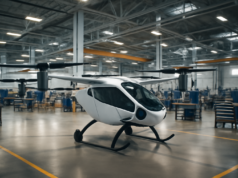
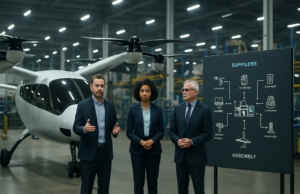
The electric vertical takeoff and landing (VTOL) industry has entered a critical inflection point. While manufacturers have spent years perfecting aircraft designs and securing regulatory approvals, the real competitive battleground is now shifting to infrastructure—the vertiports, charging networks, and operational ecosystems that will determine which companies dominate the commercial air mobility revolution. Joby Aviation, one of the sector’s most prominent players, is making aggressive moves to establish itself as the infrastructure leader, but rivals are not far behind in this high-stakes race.
Joby’s Infrastructure Acceleration Strategy
Joby Aviation has emerged as the most visible contender in the VTOL infrastructure race, moving beyond aircraft development to actively build the ecosystem required for commercial operations. The company is investing heavily in vertiport locations, ground handling systems, and operational partnerships that position it as an end-to-end mobility provider rather than just an aircraft manufacturer.
The company’s strategy encompasses multiple dimensions: securing prime landing sites in major metropolitan areas, establishing charging and maintenance facilities, and forging partnerships with airports and aviation authorities. This diversified approach demonstrates that Joby recognizes commercial success depends on more than building great aircraft—it requires building the entire support infrastructure that will allow frequent, reliable VTOL services to operate at scale.
By moving aggressively on infrastructure, Joby is establishing first-mover advantages that could prove difficult for competitors to overcome. Early infrastructure investments create network effects, operational expertise, and regulatory relationships that become increasingly valuable as the market matures.
The Competitive Landscape Intensifies
Joby’s aggressive infrastructure push has not gone unnoticed by competitors, who are accelerating their own development timelines and infrastructure plans. Companies including Archer Aviation, Lilium, Vertical Aerospace, and others are recognizing that the winner of the VTOL market will likely be determined by infrastructure readiness as much as aircraft capability.
This competitive intensity is beneficial for the overall industry, as it accelerates infrastructure development and brings commercial operations closer to reality. Multiple players building vertiports and charging networks creates redundancy, reduces single points of failure, and provides customers with genuine choice in air mobility providers.
However, the infrastructure race also creates potential consolidation risks. Companies that fail to secure vertiport locations or establish operational partnerships may struggle to achieve the commercial scale necessary for profitability, potentially leading to industry consolidation in the coming years.
Regulatory and Operational Challenges
Beyond the commercial competition, VTOL operators face substantial regulatory and operational hurdles. Vertiports must meet safety standards, noise regulations, and air traffic integration requirements that vary by jurisdiction. Joby’s infrastructure investments position it to navigate these complexities, but regulatory uncertainty remains a risk factor for all industry participants.
Air traffic integration represents another critical challenge. Urban air mobility systems must operate safely alongside traditional aviation, requiring new traffic management systems, pilot training protocols, and operational procedures. Companies that solve these integration challenges first will gain significant competitive advantages.
Insurance, liability, and passenger safety certification also remain open questions that will shape infrastructure requirements. As regulators develop standards for commercial VTOL operations, infrastructure providers will need to adapt facilities and systems to meet evolving compliance requirements.
Market Timeline and Commercial Deployment
While the VTOL industry has achieved significant progress in aircraft certification and regulatory approvals, commercial deployment at meaningful scale remains 2-3 years away for most operators. This timeline provides Joby and competitors with a critical window to establish infrastructure, secure vertiport locations, and build operational expertise before the market fully opens.
Early commercial operations will likely begin in specific use cases—air taxi services in major cities, point-to-point business travel, or airport ground transportation—where customer willingness to pay justifies higher operational costs. These niche markets provide valuable operational data and customer feedback that will inform broader commercial scaling.
The companies that successfully deploy fleets in these early commercial markets will accumulate operational knowledge, build brand recognition, and establish regulatory precedents that facilitate faster scaling afterward. This early-mover advantage could translate into dominant market positions once the market achieves critical mass.
Key Takeaways for the VTOL Industry
- Joby Aviation is winning the VTOL infrastructure race through aggressive investments in vertiports, charging networks, and operational partnerships that competitors are struggling to match
- The competitive intensity of infrastructure development is accelerating the entire industry’s path to commercial operations while creating consolidation risks for underfunded competitors
- Regulatory navigation, air traffic integration, and safety certification will determine which infrastructure investments ultimately prove viable for commercial-scale VTOL operations
The VTOL infrastructure race is reshaping the competitive dynamics of urban air mobility. As Joby and its rivals race to build operational ecosystems, the companies that successfully combine aircraft capability with infrastructure readiness will establish the dominant positions in what could become a multi-billion-dollar market. The next 12-24 months will likely determine which competitors survive to compete in the commercial deployment phase that lies ahead.