HIGHLIGHTS
- Trump’s arch would integrate drone operations and sniper positions into a single monument-military complex, merging civilian architecture with active defense capabilities.
- The project validates drone technology as operationally mature and strategically essential to modern military planning at the highest governmental levels.
- If realized, the arch could establish a new precedent for federal infrastructure projects to incorporate dedicated aerial mobility and surveillance systems into their core design.
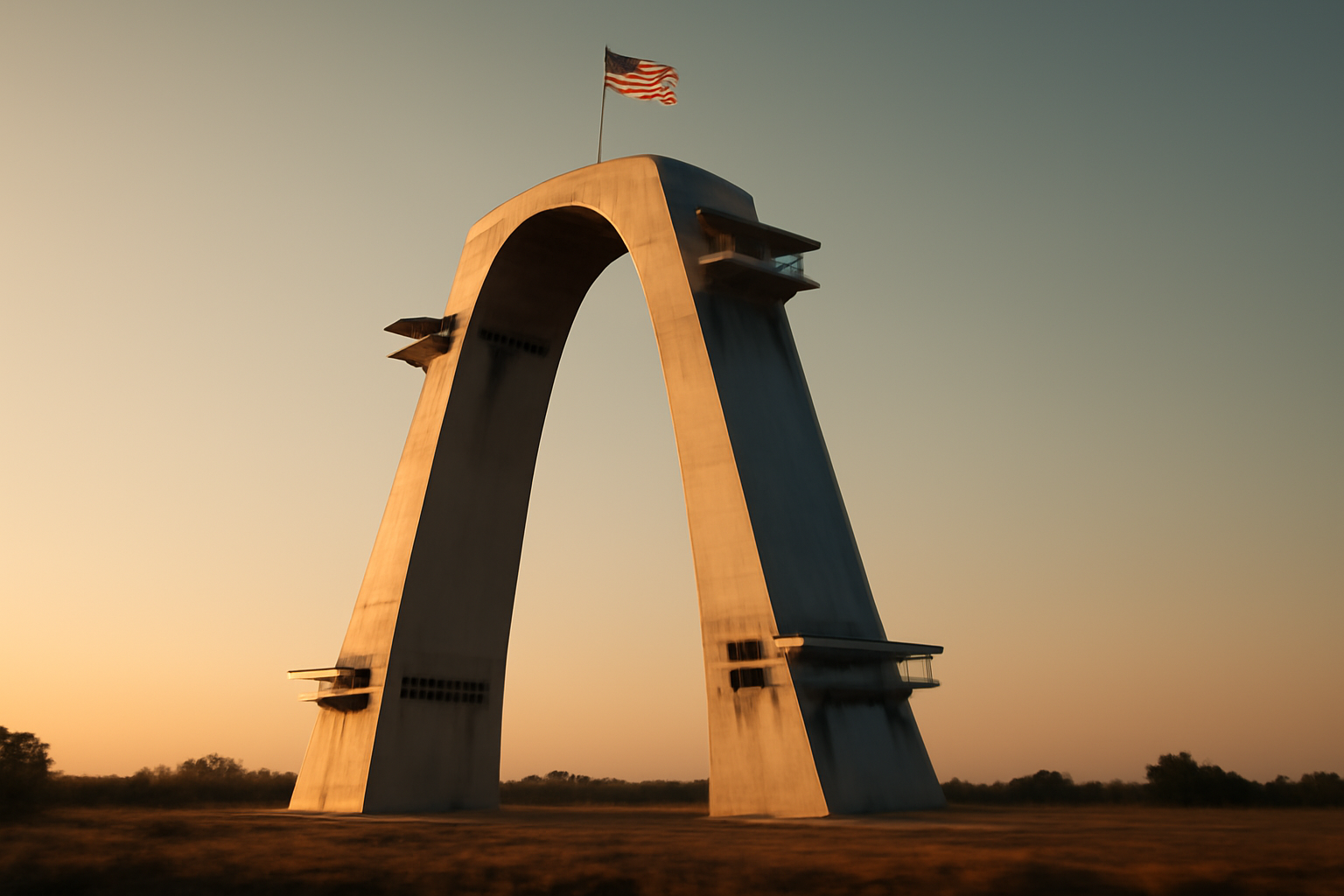
Former President Donald Trump has revealed ambitious plans for a monumental arch that would transcend traditional commemorative architecture by incorporating advanced military infrastructure. According to reports, the proposed structure would function as a “military complex” capable of supporting drone operations and sniper positions—a groundbreaking approach to blending civilian architecture with modern defense capabilities. This development marks a significant moment in how personal air mobility technologies and surveillance systems could be integrated into public-facing infrastructure on a national scale.
Reimagining Public Infrastructure for Modern Defense
The concept of transforming iconic public monuments into functional military installations represents a paradigm shift in architectural planning. Rather than serving purely as a symbol or tourist attraction, Trump’s arch design prioritizes operational capability alongside historical significance. This dual-purpose approach reflects growing interest in maximizing the utility of large-scale construction projects in an era where drone technology has become integral to national security operations.
Modern military infrastructure must balance aesthetic considerations with tactical requirements. By embedding drone operations and surveillance positions within a recognizable landmark, the proposed complex could serve as both a symbol of national pride and an active defense asset. This integration challenges traditional notions of what public monuments should accomplish and opens the door to similar hybrid projects across the country.
The proposal demonstrates how personal air mobility systems, including military-grade drones and aerial surveillance platforms, are increasingly viewed as essential components of modern infrastructure planning. Rather than treating drone operations as separate from civilian spaces, this arch concept suggests a future where advanced aerial systems are seamlessly incorporated into the fabric of public architecture.
Drone Operations Within Urban and Landmark Environments
Hosting drone operations within an iconic structure presents unique engineering and logistical challenges. Designers must account for launch and landing capabilities, power requirements, communication systems, and environmental protection for sensitive equipment. The arch’s elevation and structural integrity would need to support not only the weight of stationed personnel and technology but also the operational requirements of unmanned aerial vehicles conducting surveillance or reconnaissance missions.
Personal air mobility has evolved from experimental technology to operational necessity in both civilian and military contexts. This project represents a significant endorsement of drone technology’s maturity and reliability. By planning dedicated facilities within a high-profile monument, military planners are essentially validating the long-term strategic importance of drone systems in national defense.
The integration of drone bays or launch platforms into the arch structure would require careful architectural consideration. Engineers must ensure that aerial vehicles can operate safely within the monument’s footprint while maintaining the structure’s visual impact and historical significance. This balance between form and function exemplifies the complexities of modern infrastructure design.
Sniper and Surveillance Integration
Beyond drone capabilities, the arch would incorporate sniper positions and observation platforms, creating a multifaceted defensive installation. These elevated vantage points could provide 360-degree surveillance and coverage of surrounding areas, combining traditional security methods with cutting-edge aerial technology. The structure’s height and prominence would make it an ideal platform for comprehensive area monitoring.
Sniper positions integrated into public monuments represent a controversial but strategic approach to security infrastructure. The elevated nature of the arch provides natural advantages for line-of-sight operations and wide-area coverage. Combined with drone surveillance capabilities, such a configuration would create redundant and complementary monitoring systems—drones for persistent overhead observation and snipers for precise, ground-level threat response.
This multi-layered security approach acknowledges the reality of modern threats while leveraging technological advantages. The marriage of traditional sniper operations with advanced drone surveillance systems reflects how contemporary military strategy incorporates both proven methods and emerging technologies. For air mobility enthusiasts and defense analysts, the project underscores growing recognition that unmanned systems are essential components of a comprehensive security architecture.
National Security and Public Infrastructure
Trump’s proposal raises important questions about the future relationship between national security operations and public spaces. As drone technology becomes more prevalent and accepted, future infrastructure projects may increasingly feature military capabilities as a standard design consideration. This shift reflects broader trends in how governments view the intersection of civilian architecture and defense modernization.
The concept of embedding military functions within prominent public monuments is not entirely unprecedented, though Trump’s arch would be notably direct in its stated military purpose. Historical fortifications, bridges, and government buildings have long served dual purposes, but modern technology enables more sophisticated integration of surveillance and operational capabilities than ever before possible.
For the personal air mobility sector, such infrastructure projects represent validation and normalization of drone technology. When high-profile government projects explicitly plan for drone operations, it signals confidence in the technology’s maturity and broad-based integration into multiple aspects of society. This visibility and institutional embrace can accelerate broader adoption of aerial mobility solutions across military, security, and eventually civilian applications.
Future Implications for Aerospace and Defense Integration
Should Trump’s arch project move forward, it could establish a precedent for future national infrastructure to incorporate dedicated drone operations facilities. Other federal monuments, government buildings, and strategic locations might follow suit, creating a distributed network of drone launch and operations facilities. This could streamline military operations while simultaneously utilizing public architecture more efficiently.
The project also signals potential investment opportunities in drone technology, aerial surveillance systems, and the supporting infrastructure needed to operate advanced aerial platforms. Manufacturers and developers of personal air mobility solutions may see increased demand for systems specifically designed for installation in fixed facilities, rather than mobile operations only.
Long-term, Trump’s arch concept could influence how architects, engineers, and military planners collaborate on future projects. Integration of drone and surveillance technology during the design phase—rather than as an afterthought—could lead to more efficient, functional facilities that serve multiple purposes. This holistic approach to infrastructure planning represents a significant evolution in how the U.S. military and government prepare for future security challenges.
Key Takeaways
- Trump’s planned arch would function as a hybrid monument-military complex with dedicated drone operations and sniper positions, representing a new approach to public infrastructure integration.
- The project validates the operational maturity and strategic importance of personal air mobility and drone systems within modern defense planning and national security frameworks.
- If realized, the arch could establish a precedent for future federal monuments and infrastructure to incorporate advanced aerospace capabilities, reshaping how government facilities are designed and utilized.
As drone technology continues to advance and gain acceptance across military and civilian sectors, projects like Trump’s proposed arch signal a future where aerial mobility systems are seamlessly integrated into the built environment. Whether this vision materializes or remains aspirational, it reflects the growing recognition that modern infrastructure must accommodate the operational realities of 21st-century defense and surveillance capabilities. For the personal air mobility industry, such high-profile endorsement underscores the irreversible trajectory toward mainstream adoption and integration of drone technology at the highest levels of national planning.