HIGHLIGHTS
- Volant Aerotech secures firm order for VE25-100 eVTOL aircraft from Sichuan Airlines Low Altitude, a major validation of commercial readiness in Chinese aviation
- Partnership accelerates deployment of electric air mobility across Asia-Pacific and establishes operational benchmarks for regional low-altitude routes
- Order reinforces China’s competitive advantage in eVTOL innovation and signals investor confidence in domestic manufacturers for the growing low-altitude economy
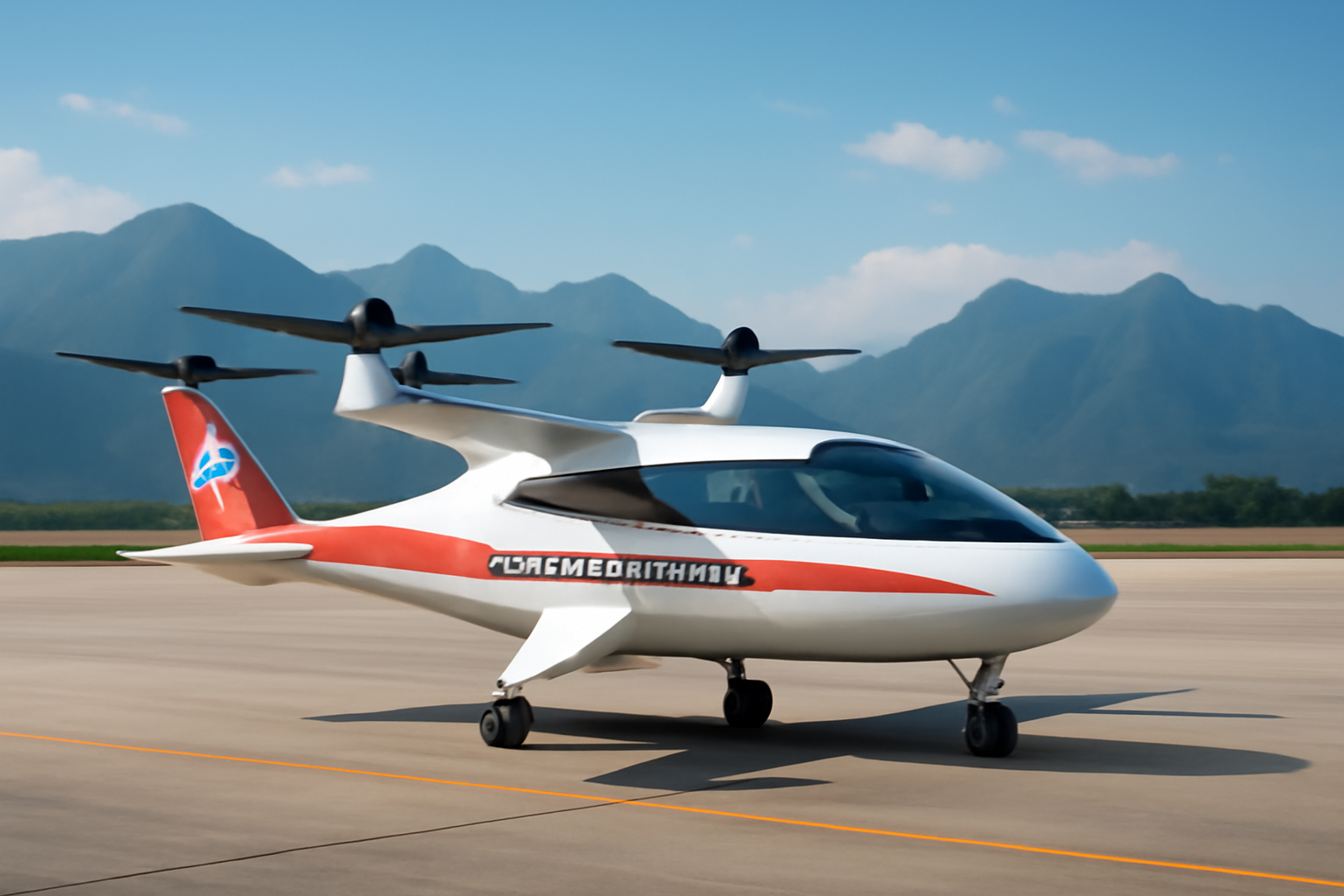
Volant Aerotech has achieved a major milestone in the personal air mobility sector by securing a firm order from Sichuan Airlines Low Altitude for its VE25-100 electric vertical takeoff and landing (eVTOL) aircraft. This strategic partnership marks a significant breakthrough for the Chinese manufacturer and demonstrates growing confidence in commercial eVTOL operations within Asia’s rapidly expanding aviation market.
Volant Aerotech’s Market Position in Global Aviation
Volant Aerotech has established itself as a leading innovator in electric aircraft design, focusing on practical, commercially-viable eVTOL solutions for both passenger and cargo operations. The company’s commitment to developing reliable, efficient electric propulsion systems has positioned it at the forefront of the emerging low-altitude aviation economy in China and beyond. Their engineering approach balances performance, safety, and scalability—critical factors for operators considering investment in next-generation aircraft.
The firm order from Sichuan Airlines Low Altitude represents validation from an established aviation operator with deep expertise in regional transport and operational logistics. Sichuan Airlines’ decision to commit to Volant Aerotech’s technology signals confidence in the VE25-100’s capabilities and market readiness. This partnership also reflects the broader industry trend of traditional aviation operators diversifying their fleets to include eVTOL assets for short-haul, point-to-point connections.
Volant Aerotech’s strategy emphasizes building relationships with credible operators who can provide valuable feedback, operational data, and pathway to larger fleet deployments. The Sichuan Airlines partnership creates a blueprint for similar collaborations with regional carriers across Asia-Pacific, where demand for efficient, lower-cost air mobility solutions continues to accelerate.
The VE25-100 eVTOL Aircraft Specifications and Capabilities
The VE25-100 represents a significant achievement in electric aircraft design, engineered specifically to meet the operational demands of commercial air mobility operators. The designation “25” typically references passenger capacity or payload specifications, while the “100” likely indicates battery energy density or range metrics. This aircraft is designed to perform reliable, repeatable operations across high-frequency regional routes, a critical requirement for commercial success in the eVTOL market.
The VE25-100 incorporates advanced battery technology, electric propulsion systems, and aerodynamic innovations that reduce operating costs compared to conventional turbine-powered helicopters and turboprops. The electric architecture enables quieter operations, reduced maintenance requirements, and lower per-flight fuel equivalents, translating directly to economic advantages for operators like Sichuan Airlines Low Altitude. The aircraft’s design accommodates both passenger transport and cargo configurations, providing operational flexibility for diverse route structures.
Safety systems, redundancy features, and reliability standards embedded in the VE25-100 design reflect strict international certification requirements and Chinese Civil Aviation Administration (CAAC) standards. These specifications are essential for commercial operators who must maintain high dispatch reliability and passenger confidence. The aircraft’s capabilities for all-weather operations and autonomous flight-management systems position it as a modern, future-ready platform capable of sustained commercial deployment.
Sichuan Airlines Low Altitude’s Strategic Investment in eVTOL
Sichuan Airlines Low Altitude’s commitment to ordering VE25-100 aircraft demonstrates strategic foresight in positioning the operator for the emerging eVTOL economy. The subsidiary has been established specifically to explore low-altitude aviation opportunities, including regional air mobility, point-to-point passenger transport, and cargo services. This dedicated entity allows Sichuan Airlines to develop operational expertise, regulatory relationships, and market presence in eVTOL operations without disrupting core airline operations.
The order placement reflects confidence in near-term certification and deployment timelines for the VE25-100. Sichuan Airlines Low Altitude is likely planning specific routes—potentially connecting regional business centers, tourist destinations, or underserved communities in Sichuan province and adjacent regions—where eVTOL performance characteristics and cost structure create compelling commercial value. This targeted approach to route development is typical of successful early eVTOL operators worldwide.
By securing aircraft early in the certification and production cycle, Sichuan Airlines Low Altitude gains competitive advantages including preferred production slots, collaborative design input, operational protocol development, and experience-based learning alongside the manufacturer. This partnership model benefits both parties: Sichuan Airlines gains cutting-edge aircraft and market-first position, while Volant Aerotech benefits from operational validation, customer feedback, and demonstrated commercial demand that attracts additional orders and investment.
Broader Implications for China’s Aviation Ecosystem
This order announcement signals accelerating momentum in China’s low-altitude economy, a strategic priority outlined in national aviation development plans. China’s vast geography, growing urbanization, and traffic congestion in major metropolitan areas create ideal conditions for eVTOL adoption. Government support for research and development, airspace modernization, and regulatory frameworks has created a favorable environment for manufacturers like Volant Aerotech and operators like Sichuan Airlines to invest in commercial eVTOL ventures.
The Volant Aerotech-Sichuan Airlines partnership is positioned within an increasingly competitive landscape featuring domestic Chinese manufacturers, international firms, and hybrid ventures all targeting the Asia-Pacific eVTOL market. This competition drives innovation, reduces costs, and accelerates technology maturation. Additional orders from Sichuan Airlines or other regional operators could establish Chinese manufacturers as leading global players in commercial eVTOL production and operation, rivaling established aerospace leaders.
The successful deployment of VE25-100 aircraft by Sichuan Airlines Low Altitude will generate critical operational data, safety records, and economic performance metrics that influence regulatory policy, investor confidence, and market adoption across Asia. China’s experience with early eVTOL commercial operations will likely inform global best practices in certification, airspace management, safety oversight, and operational protocols for low-altitude aviation.
Key Takeaways from This Development
- Volant Aerotech secures firm order for VE25-100 eVTOL aircraft from Sichuan Airlines Low Altitude, validating commercial readiness and market demand in Asia
- The partnership accelerates deployment of electric air mobility solutions in China and establishes operational benchmarks for regional eVTOL routes across underserved markets
- This order reinforces China’s leadership in eVTOL innovation and signals competitive advantage for domestic manufacturers in the rapidly expanding Asia-Pacific low-altitude aviation economy
The Volant Aerotech and Sichuan Airlines Low Altitude partnership represents a pivotal moment in commercial eVTOL development, combining manufacturer innovation with operator confidence to advance practical, scalable electric air mobility. As this collaboration moves toward aircraft delivery and operational deployment, the industry will be watching closely for performance data, regulatory outcomes, and market expansion signals that validate the eVTOL business model and attract follow-on investments globally.