HIGHLIGHTS
- Volkswagen is achieving significant breakthroughs in electric vehicle innovation across East China, expanding its regional manufacturing footprint and technological capabilities.
- The automaker’s investment in East China positions it as a major competitor in one of the world’s fastest-growing EV markets, with implications for global supply chains and automotive leadership.
- This strategic venture demonstrates how traditional automotive manufacturers are adapting to electric mobility through regional innovation hubs and localized production strategies.
Volkswagen, one of the world’s most recognized automotive manufacturers, is experiencing significant growth and innovation success in East China’s rapidly expanding electric vehicle market. This strategic expansion represents a pivotal moment for the company as it positions itself at the forefront of regional EV development, leveraging local partnerships and cutting-edge technology to capture market share in one of the most dynamic automotive regions globally.
Volkswagen’s Strategic Expansion in East China
The German automotive giant has established a flourishing innovation venture in East China, capitalizing on the region’s robust demand for electric vehicles and its world-class manufacturing infrastructure. Volkswagen’s commitment to this market reflects a broader corporate strategy to accelerate its transition from traditional internal combustion engines to fully electric powertrains across multiple vehicle segments and price points.
East China has emerged as a critical hub for automotive innovation, with cities like Shanghai, Hangzhou, and Suzhou becoming centers of EV manufacturing excellence. Volkswagen’s presence in this ecosystem positions the company at the intersection of global automotive expertise and regional manufacturing prowess, enabling rapid iteration, testing, and deployment of new electric vehicle technologies.
The venture demonstrates Volkswagen’s recognition that success in the EV industry requires localized strategies rather than one-size-fits-all global approaches. By establishing operations in East China, the company gains direct access to raw materials, supply chain networks, skilled labor, and most importantly, a massive consumer base actively seeking premium electric vehicles with advanced features and reliability.
Innovation and Technology Development
Volkswagen’s East China operations are not merely assembly facilities; they represent comprehensive innovation hubs where the company develops next-generation battery technologies, electric propulsion systems, and autonomous driving capabilities tailored to regional consumer preferences and regulatory requirements. The company is investing heavily in research and development infrastructure to accelerate the pace of technological advancement across its EV lineup.
Battery technology stands at the core of Volkswagen’s innovation efforts. The company is collaborating with leading battery manufacturers and materials suppliers across East China to develop more efficient, longer-lasting, and more affordable battery systems. These advancements directly translate to improved range, reduced charging times, and lower costs for consumers—addressing key barriers to EV adoption in the region and globally.
Software and autonomous capabilities represent another critical focus area. Volkswagen is leveraging East China’s expertise in artificial intelligence, machine learning, and smart vehicle systems to enhance its EV offerings with advanced driver assistance systems, over-the-air updates, and connected vehicle platforms. These technologies are increasingly becoming differentiation factors in a competitive market where traditional mechanical performance differences between vehicles are narrowing.
Market Dynamics and Competitive Positioning
East China’s EV market is extraordinarily competitive, with established players like Tesla, local champions BYD and Li Auto, and emerging startups all vying for consumer attention and market share. Volkswagen’s ability to flourish in this environment speaks to the company’s brand heritage, quality reputation, and substantial financial resources dedicated to EV development. The German automaker brings decades of manufacturing excellence and customer trust to a market where reliability and long-term service support matter significantly to buyers.
The regional market is also characterized by rapidly evolving consumer preferences, regulatory standards, and technological capabilities. Volkswagen’s localized innovation venture allows the company to respond quickly to market changes, adapt products to regional tastes, and maintain close relationships with government agencies overseeing EV incentives, charging infrastructure, and emissions standards. This agility is essential for sustained success in a market that evolves on a monthly, not annual, basis.
Volkswagen’s competitive advantage extends to its established dealer networks, after-sales service infrastructure, and customer loyalty programs across East China. While new EV startups may capture attention with cutting-edge designs, Volkswagen’s proven service ecosystem provides consumers with confidence and convenience that matter significantly in long-term vehicle ownership satisfaction and repeat purchasing decisions.
Supply Chain and Manufacturing Excellence
Volkswagen’s East China operations benefit from one of the world’s most sophisticated and efficient manufacturing supply chains. The region produces over 50% of the world’s vehicle batteries and houses numerous Tier 1 and Tier 2 automotive suppliers with capabilities spanning battery cells, power electronics, charging systems, and autonomous driving components. This supply chain density dramatically reduces production costs and accelerates time-to-market for new vehicle platforms.
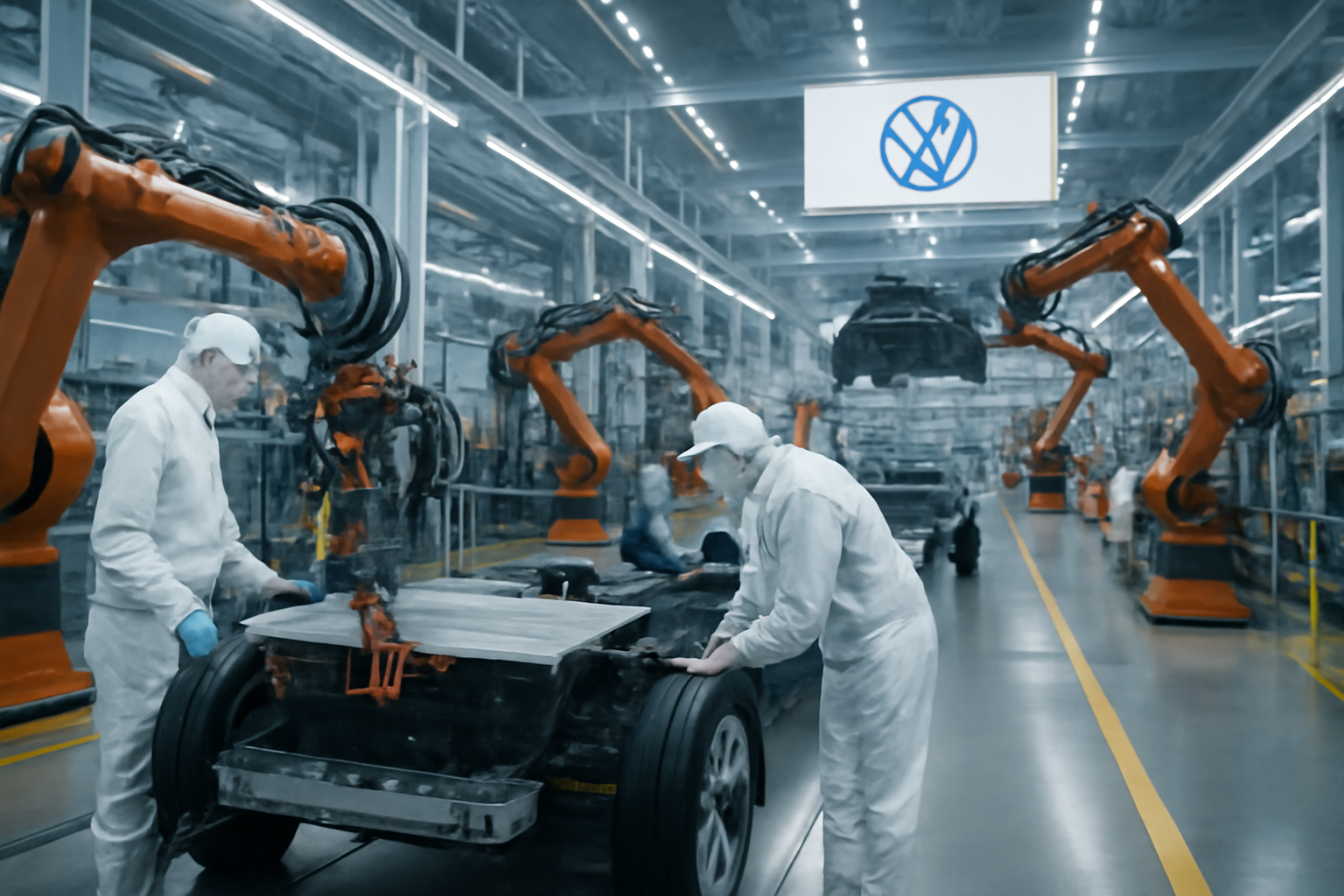
The company’s manufacturing facilities in East China incorporate Industry 4.0 technologies including advanced robotics, artificial intelligence-powered quality control systems, and IoT-enabled predictive maintenance capabilities. These smart manufacturing approaches improve productivity, reduce defect rates, and enable more flexible production scheduling that can quickly adapt to changing consumer demand and model preferences.
Volkswagen is also developing talent and expertise within its East China operations by establishing training centers, partnering with regional universities for engineering programs, and creating career advancement pathways for local engineers and technicians. This human capital investment ensures that innovation capabilities remain embedded within the organization and can be scaled as production volumes increase.
Global Implications and Future Outlook
Volkswagen’s flourishing East China venture has profound implications for the global automotive industry. The company’s success demonstrates that traditional Western automakers can compete effectively against new entrants and Chinese manufacturers by combining global scale advantages with regional localization. This model may become a blueprint for other legacy automakers seeking to establish market presence in high-growth EV regions.
The East China expansion also signals that Volkswagen is serious about achieving its ambitious electrification targets, which include launching dozens of new EV models across price segments and deploying production capacity to serve global markets. Revenue and profits generated from East China operations fund additional R&D investments, technology partnerships, and facility expansions that benefit Volkswagen’s worldwide EV transition strategy.
Looking forward, Volkswagen’s investment in East China positions the company to capture an increasing share of global EV sales, particularly as middle-class consumers in developing markets gain purchasing power and seek reliable, technologically advanced electric vehicles. The knowledge, capabilities, and innovations developed in East China will inevitably find their way into Volkswagen products sold in Europe, North America, and other global markets, accelerating the company’s overall EV competitiveness.
Key Takeaways for Industry Observers
- Volkswagen’s flourishing East China innovation venture represents a major strategic commitment to regional EV leadership and technology development
- The automaker leverages localized supply chains, manufacturing expertise, and talent networks to compete effectively against both new EV startups and established Chinese competitors
- Success in East China provides financial resources and technological insights that accelerate Volkswagen’s global EV transition and product development cycles
Volkswagen’s flourishing expansion in East China underscores the central reality of the modern automotive industry: success in electric vehicles requires not just capital investment, but deep regional commitment, localized innovation, and integration with emerging technology ecosystems. As the global automotive industry undergoes its most profound transformation in over a century, Volkswagen’s East China venture represents a model for how legacy manufacturers can thrive in the electric vehicle era while maintaining their core competitive advantages. The company’s ability to innovate, manufacture, and market competitive electric vehicles in one of the world’s most dynamic and challenging markets will significantly influence the company’s long-term viability and profitability as consumers worldwide transition to electric mobility.