HIGHLIGHTS
- Wingcopter achieves six-hour continuous flight endurance, double the capability of previous-generation tactical eVTOL platforms
- Extended endurance unlocks new applications for ISR missions, border security, emergency response, and critical infrastructure monitoring
- Advanced battery integration and thermal management systems establish Wingcopter as a leader in tactical unmanned systems competing with traditional rotorcraft operators
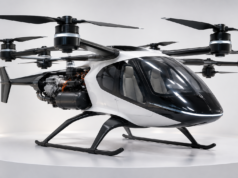
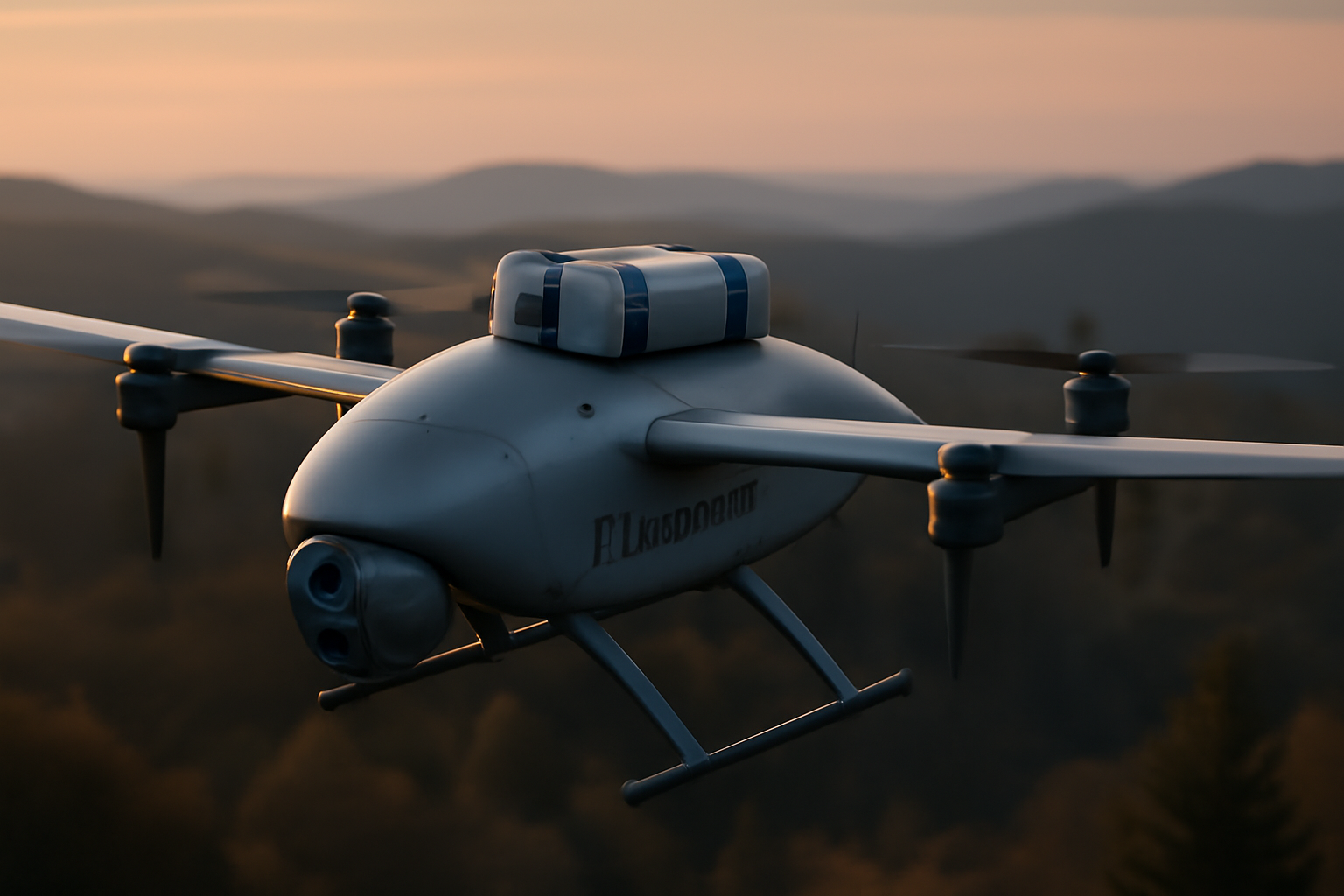
Wingcopter has announced the launch of a groundbreaking tactical reconnaissance drone designed to revolutionize long-endurance surveillance and intelligence operations. With the ability to achieve up to six hours of continuous flight time, this new platform represents a significant leap forward in electric vertical takeoff and landing (eVTOL) technology, challenging traditional limitations that have constrained reconnaissance missions for decades.
The Six-Hour Flight Endurance Breakthrough
The extended flight endurance of six hours marks a watershed moment for tactical drone operations. Previous-generation electric reconnaissance platforms typically achieved flight times between two to three hours, forcing operators to deploy multiple aircraft or accept significant operational gaps in surveillance coverage. Wingcopter’s latest design overcomes these constraints through a combination of advanced aerodynamic optimization and next-generation battery systems that maximize energy efficiency.
This capability transforms mission planning for military, government, and emergency response organizations. Search and rescue teams can now cover vast areas in a single sortie, while tactical units can maintain persistent surveillance over critical zones without the logistical burden of frequent aircraft rotations. The six-hour window provides sufficient duration for complex reconnaissance scenarios where rapid deployment and extended observation windows were previously incompatible with electric propulsion.
Wingcopter’s engineers achieved this milestone by carefully balancing battery capacity with aircraft weight and aerodynamic efficiency. The drone incorporates hybrid hovering and forward-flight modes that optimize energy consumption across different mission phases, allowing operators to transition seamlessly between hovering surveillance and high-speed transit depending on tactical requirements.
Tactical Applications and Operational Advantages
The tactical reconnaissance drone opens new possibilities for intelligence, surveillance, and reconnaissance (ISR) missions across government, defense, and civil sectors. Law enforcement agencies can deploy the platform for large-scale crime scene investigation and suspect tracking, while border security operations benefit from extended surveillance capabilities that reduce response times and improve situational awareness. The electric propulsion system also provides significant acoustic advantages, enabling stealthy reconnaissance operations where noise signatures could compromise mission security.
Emergency management agencies recognize the transformative potential for disaster response and search-and-rescue operations. Following natural disasters, the platform can rapidly assess damage across large geographic areas, coordinate response resources, and locate missing persons without requiring the logistics infrastructure of traditional manned aircraft. The extended flight time means fewer operational delays and more efficient resource deployment during critical first-response windows.
Commercial applications are equally compelling. Infrastructure inspection companies can monitor power transmission lines, pipeline networks, and communications infrastructure with greater efficiency. The platform’s ability to execute six-hour missions reduces operational costs by consolidating multiple inspection flights into single sorties, directly improving return on investment for commercial operators who currently rely on traditional helicopters or shorter-endurance quadcopter systems.
Technical Innovation and Battery Integration
Wingcopter’s achievement in extending flight endurance to six hours stems from technological advances across multiple systems. The aircraft architecture employs distributed electric propulsion with optimization for both vertical takeoff and efficient forward flight, a design philosophy that maximizes range while maintaining rapid deployment capabilities. The tactical reconnaissance platform benefits from years of development experience in commercial delivery applications, where flight efficiency directly impacts operational economics.
Battery technology represents a crucial enabler of the six-hour capability. Modern electric aerial vehicles increasingly rely on advanced lithium-ion chemistries and novel cell configurations that provide higher energy density while maintaining thermal stability during extended operations. Wingcopter’s battery management systems incorporate sophisticated algorithms that optimize discharge profiles, monitor cell health in real-time, and ensure safe operation across diverse environmental conditions ranging from arctic cold to desert heat.
The thermal management architecture deserves particular attention, as extended flight operations generate cumulative heat through battery discharge, motor operations, and aerodynamic drag. Wingcopter’s engineering team incorporated enhanced cooling systems that maintain optimal battery temperatures throughout six-hour missions, preventing the performance degradation and safety risks associated with excessive thermal stress during long-duration flights.
Competitive Positioning in the eVTOL Landscape
Wingcopter’s tactical reconnaissance drone establishes the company as a formidable competitor in the expanding eVTOL market, particularly within the tactical and industrial segments. While commercial cargo delivery applications have received significant media attention and venture capital investment, the reconnaissance and surveillance sector represents an equally substantial market opportunity with distinct technical requirements and customer bases. Wingcopter’s focus on this vertical demonstrates strategic diversification beyond the crowded delivery drone market.
The six-hour endurance specification positions Wingcopter’s platform favorably against competing tactical systems from established aerospace manufacturers and emerging eVTOL startups. The combination of electric propulsion efficiency, rapid deployment from standard prepared surfaces, and extended surveillance duration creates a compelling value proposition for government and commercial customers evaluating alternatives to traditional rotorcraft. Wingcopter’s European heritage and established regulatory relationships in major markets provide additional competitive advantages as global eVTOL markets mature.
The tactical reconnaissance platform also reflects growing market recognition that eVTOL applications extend far beyond autonomous delivery. Military and government customers represent substantial markets with sophisticated requirements, substantial budgets, and multi-year procurement cycles that reward innovation and proven capability. Wingcopter’s strategic focus on tactical applications demonstrates a business model that captures value across diverse customer segments rather than competing exclusively in the price-sensitive commercial delivery sector.
Future Development and Regulatory Pathways
Wingcopter’s announcement of the tactical reconnaissance drone platform signals the company’s commitment to expanding beyond commercial delivery applications into adjacent markets with distinct operational requirements. Future development priorities likely include enhanced payload capacity, advanced sensor integration, and expanded operational envelopes that address evolving customer requirements in defense, emergency response, and critical infrastructure monitoring. The foundation of six-hour endurance provides the operational baseline for introducing additional capabilities without sacrificing fundamental performance characteristics.
Regulatory certification represents the next critical milestone for widespread deployment. Government procurement authorities across North America, Europe, and allied nations maintain stringent requirements for tactical unmanned systems, particularly those destined for defense and border security applications. Wingcopter must navigate these complex regulatory environments, demonstrating airworthiness, cybersecurity compliance, and operational safety across diverse scenarios. The company’s existing regulatory relationships and European certifications provide valuable foundation for expanding into North American and Asia-Pacific markets where tactical eVTOL systems face increasing demand.
The broader eVTOL ecosystem benefits from Wingcopter’s technological breakthroughs in flight endurance and efficiency. As extended-endurance capabilities become standard across tactical platforms, competitive advantages increasingly depend on integrated sensor suites, mission automation software, and ecosystem integration with ground control systems and intelligence platforms. Wingcopter’s position as a leader in tactical eVTOL efficiency establishes the foundation for comprehensive platform evolution that addresses evolving customer requirements.
Key Takeaways from Wingcopter’s Tactical Reconnaissance Breakthrough
- Wingcopter’s new tactical reconnaissance drone achieves up to six hours of continuous flight time, doubling the endurance of previous-generation electric platforms and enabling persistent surveillance operations previously requiring multiple aircraft rotations
- Extended flight capabilities transform applications across defense, emergency response, and infrastructure monitoring, with direct implications for border security, search-and-rescue operations, and critical infrastructure inspection
- The achievement demonstrates advanced battery integration, thermal management, and aerodynamic optimization that positions Wingcopter as a leader in tactical eVTOL systems alongside established aerospace manufacturers
Wingcopter’s tactical reconnaissance drone represents a pivotal milestone in eVTOL market evolution, demonstrating that electric vertical takeoff and landing platforms can achieve extended endurance characteristics previously associated exclusively with traditional rotorcraft and hydrogen-based propulsion systems. The six-hour flight capability opens new operational possibilities for government, defense, emergency response, and commercial customers worldwide, while establishing Wingcopter as a formidable innovator in tactical unmanned systems. As eVTOL technology continues maturing and regulatory frameworks evolve to accommodate increasingly sophisticated autonomous platforms, extended-endurance tactical systems will likely capture substantial market share from legacy helicopter operators, particularly in applications where rapid deployment, reduced noise signatures, and electric propulsion efficiency provide compelling operational and economic advantages.