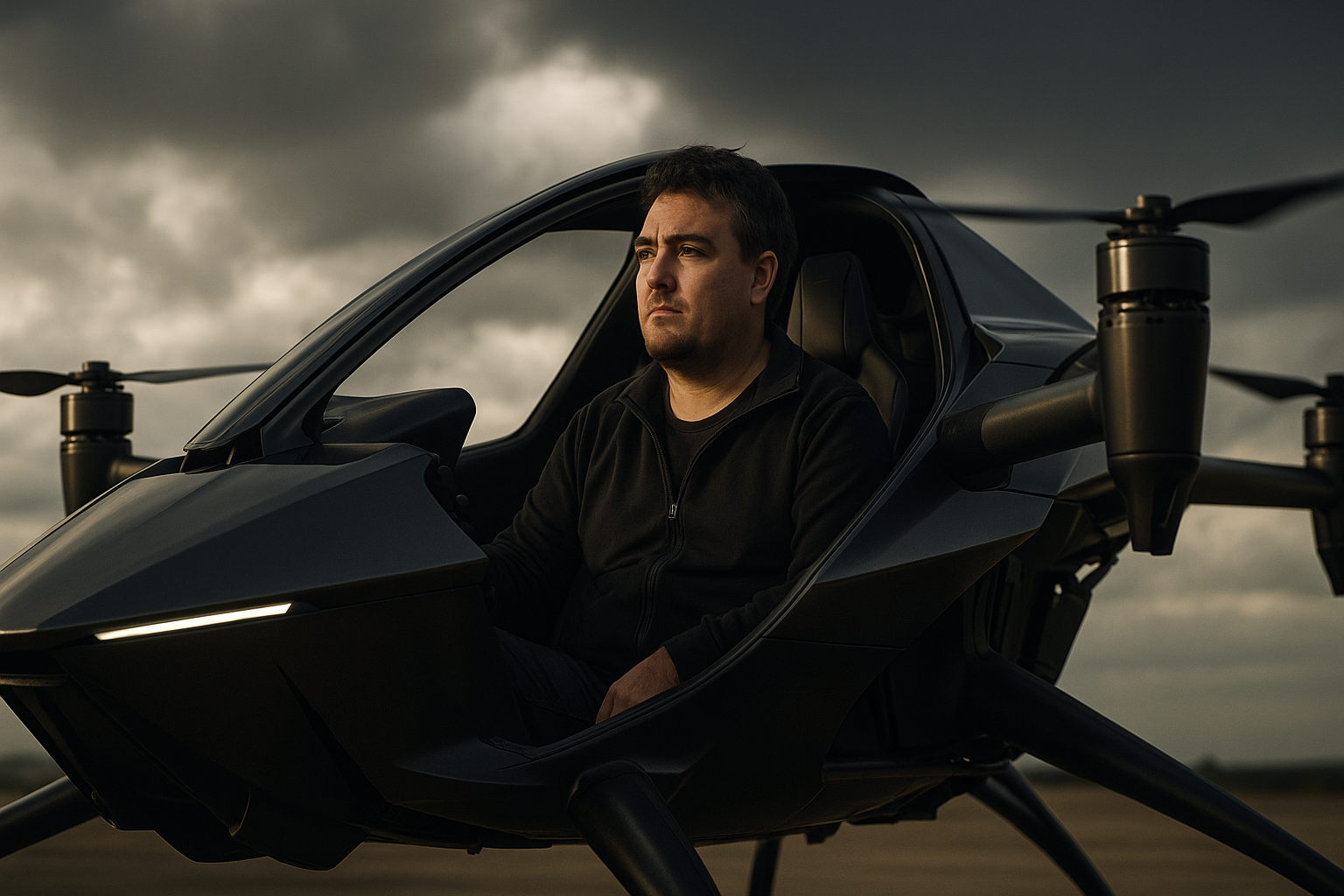

HIGHLIGHTS
- CoolFly’s Dream ST reaches 43 mph, positioning itself as a user-friendly entry point into personal air mobility without requiring advanced piloting skills.
- The Dream ST’s simplified flight controls are engineered to make aerial travel as intuitive as driving a car, democratizing access to personal aircraft.
- This aircraft represents a shift in the PAM industry toward consumer-accessible vehicles that prioritize ease-of-use over performance specifications.
The personal air mobility (PAM) industry continues to evolve with innovations aimed at making flight accessible to everyday consumers. CoolFly’s Dream ST personal aircraft has emerged as a notable contender in this space, achieving a cruising speed of 43 mph while prioritizing simplicity and user-friendly design. This vehicle represents a significant shift in how manufacturers are approaching the democratization of personal aviation, focusing on accessibility rather than raw performance metrics that have traditionally dominated the eVTOL conversation.
The Dream ST’s Design Philosophy: Simplicity Meets Innovation
CoolFly has taken a fundamentally different approach to personal aircraft design with the Dream ST. Rather than chasing maximum speed or complex autonomous systems, the company has centered its development around making flight as intuitive as driving a car. This philosophy reflects a growing recognition within the PAM industry that accessibility is the true barrier to mainstream adoption. The Dream ST’s streamlined construction and straightforward control systems eliminate the learning curve that has historically kept personal flying out of reach for average consumers.
The aircraft’s 43-mph cruising speed, while modest compared to some eVTOL competitors, is deliberate. This velocity range provides sufficient performance for practical urban and suburban air transportation while maintaining safety margins that are critical for new pilots. By calibrating the vehicle’s capabilities to match realistic consumer needs rather than engineering specifications, CoolFly demonstrates an understanding of what actual users want from a personal aircraft: reliability, ease of operation, and accessibility.
The Dream ST’s construction utilizes modern materials and manufacturing techniques that keep the design efficient without unnecessary complexity. This approach not only reduces production costs but also simplifies maintenance and repair processes—factors that directly impact the long-term ownership experience. CoolFly’s commitment to user-centric design extends from the cockpit to the manufacturing floor, ensuring that every aspect of the vehicle supports the core mission of democratizing personal aviation.
Bridging the Gap Between Cars and Aircraft
One of the Dream ST’s most significant achievements is how effectively it bridges the conceptual gap between automobile and aircraft operation. For decades, the barrier to personal aviation has been the extensive training, licensing, and specialized knowledge required to operate an aircraft safely. The Dream ST’s simplified flight controls work to eliminate this psychological and practical barrier. By designing an aircraft that operates on principles familiar to car drivers, CoolFly is expanding the potential pilot pool exponentially.
This accessibility strategy addresses a fundamental challenge in the PAM market: most people are comfortable with automobile controls, but the thought of operating an aircraft feels intimidating and technically demanding. The Dream ST’s intuitive interface and predictable handling characteristics transform flying from a specialized skill into an accessible capability. Early reports suggest that the aircraft’s responsive controls and forgiving flight characteristics make it suitable for a wide range of user experience levels, from curious newcomers to experienced pilots seeking a simplified platform.
The implications for urban air mobility are substantial. If manufacturers can create aircraft that don’t require traditional pilot certification or years of training, the addressable market for personal air mobility expands dramatically. Regulatory bodies are beginning to recognize this potential, with certification pathways emerging for simplified aircraft that meet specific safety criteria. The Dream ST’s design philosophy aligns perfectly with these emerging regulatory frameworks, positioning it as a vehicle that could reshape how regulators and consumers view personal aviation.
Performance Specifications and Practical Applications
The Dream ST’s 43-mph cruising speed may seem modest in the context of high-performance eVTOLs and electric aircraft, but this specification is precisely calibrated for its intended applications. At this velocity, the aircraft can effectively serve urban and suburban transportation needs while maintaining exceptional efficiency and safety margins. The speed range allows for practical commuting within metropolitan areas, neighborhood-level travel, and recreational flights without the range anxiety associated with higher-speed vehicles.
Battery technology and electric propulsion systems benefit significantly from lower-speed design specifications. The Dream ST’s modest performance envelope translates into extended flight duration, reduced energy consumption per mile traveled, and faster charging cycles. These practical advantages directly address one of the primary consumer concerns regarding electric aircraft: real-world utility and convenience. A vehicle that can fly for longer periods and charge more quickly inherently becomes more attractive to potential buyers than a high-performance option with limited endurance.
The aircraft’s specifications also support its positioning within emerging regulatory categories. Many jurisdictions are developing certification frameworks specifically for slower, simpler aircraft that pose minimal risk to third parties and infrastructure. By operating within these parameters, the Dream ST can potentially achieve regulatory approval more quickly than more ambitious designs, accelerating its path to market deployment and consumer availability.
Market Implications and Industry Impact
CoolFly’s Dream ST challenges the prevailing narrative in the PAM industry that success requires maximum speed, range, and autonomous capabilities. Instead, the company is betting that consumers prioritize accessibility, affordability, and ease-of-use above all else. This strategic positioning could prove transformative if it resonates with the target market. The broader aviation and automotive industries have repeatedly demonstrated that simplified, user-friendly products often achieve greater commercial success than technically superior alternatives that demand specialized knowledge.
The Dream ST’s market entry occurs at a critical juncture for personal air mobility. Several high-profile eVTOL startups have faced challenges scaling production and managing costs. By focusing on a simpler vehicle with straightforward manufacturing, CoolFly may have identified a more viable path to sustainable commercial success. The lower technical complexity should reduce development risks, accelerate production timelines, and enable more competitive pricing—all critical factors for mainstream market adoption.
Competitors in the PAM space are likely watching the Dream ST’s performance closely. If the aircraft achieves commercial traction and demonstrates strong consumer demand, it could trigger an industry shift toward simplified, accessible designs over high-performance specialists. This evolution would mark a maturation of the personal air mobility market, similar to how the automotive industry evolved from performance-focused vehicles toward practical, affordable options that captured mass-market appeal.
Key Takeaways: The Dream ST’s Market Significance
- The 43-mph cruising speed is strategically calibrated for practical urban and suburban transportation rather than maximum performance.
- Simplified flight controls eliminate traditional training barriers, potentially expanding the pilot pool from specialists to everyday consumers.
- The accessible design approach may prove more commercially viable than complex autonomous systems favored by competing eVTOL manufacturers.
CoolFly’s Dream ST represents an important inflection point in personal air mobility development. By prioritizing accessibility and simplicity over performance specifications, the aircraft addresses one of the fundamental barriers preventing mainstream adoption of personal aviation: the perception and reality that flying requires specialized expertise. With its 43-mph cruising speed and intuitive controls designed to make flying as easy as driving, the Dream ST demonstrates that the future of personal air mobility may belong to manufacturers who understand that consumer adoption depends on accessibility first, performance second. As the PAM industry continues evolving, the Dream ST’s user-centric design philosophy could prove more influential than any single technical innovation.