HIGHLIGHTS
- India targets 2028 for operational eVTOL air taxi deployment across major cities, marking a pivotal shift in urban transportation infrastructure.
- Aviation Minister Ram Mohan Naidu emphasizes the critical role of air taxis in solving congestion challenges and modernizing Indian metropolitan areas.
- Government leadership is actively advancing regulatory frameworks and infrastructure planning to enable the personal air mobility ecosystem in India.
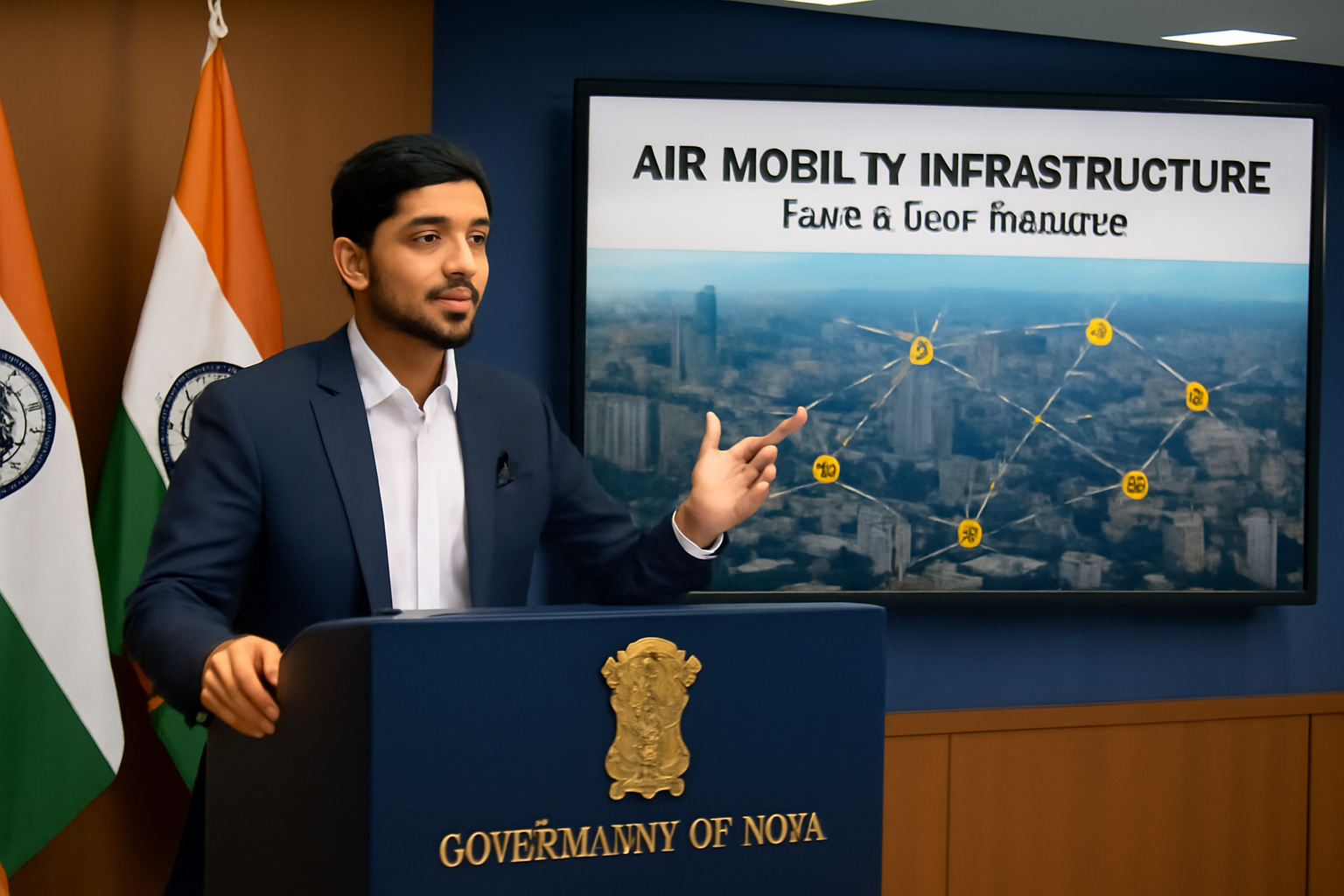
India is positioning itself as a major player in the global personal air mobility revolution. Aviation Minister Ram Mohan Naidu has recently outlined an ambitious timeline for integrating electric vertical takeoff and landing (eVTOL) aircraft into Indian cities, with operational air taxi services targeted for 2028. This announcement marks a significant step forward in addressing urban congestion and modernizing transportation infrastructure across the nation’s major metropolitan areas.
India’s Strategic Vision for Air Mobility
India’s government is recognizing the urgent need to diversify transportation solutions as urban populations continue to surge. With cities like Mumbai, Delhi, Bangalore, and Hyderabad facing severe traffic congestion, air taxis represent an innovative approach to reducing ground-level congestion while improving connectivity between key business and residential zones. Aviation Minister Ram Mohan Naidu has been a vocal advocate for embracing advanced aviation technologies, positioning India not just as a consumer of eVTOL services but as a potential innovator in the sector.
The government’s commitment reflects broader policy shifts toward sustainable urban mobility. As traditional air travel infrastructure reaches capacity and ground transportation becomes increasingly strained, eVTOL aircraft offer a promising alternative that leverages India’s existing aerospace expertise and emerging electric vehicle ecosystem. The 2028 target demonstrates serious intent, suggesting substantial regulatory and infrastructure work is underway behind the scenes.
Minister Naidu’s emphasis on air taxis underscores India’s awareness of the transformative potential of personal air mobility. Rather than viewing eVTOL simply as a luxury option for wealthy travelers, the government appears to be framing it as essential infrastructure for modern Indian cities. This perspective aligns with global trends where major metropolitan areas are prioritizing air taxi integration as a long-term solution to transportation challenges.
Addressing Urban Congestion Through Innovation
Traffic congestion in Indian cities costs the economy billions annually in lost productivity and environmental damage. Traditional solutions—expanding roads, building new metro lines, or increasing bus fleets—require years of planning and construction, often face land acquisition challenges, and have significant environmental footprints. Air taxis offer a faster deployment pathway that could meaningfully reduce ground-level vehicle traffic within a compressed timeframe.
The appeal of eVTOL technology lies in its potential to create a parallel transportation layer that doesn’t compete for ground space or road infrastructure. A single air taxi corridor between a major business district and airport could absorb hundreds of daily commuters, freeing up congested ground routes for essential commercial and public transportation. In densely populated Indian cities where vertical space is underutilized, this approach is particularly compelling.
Beyond congestion relief, air taxis could revolutionize last-mile connectivity. Currently, getting to and from airports in cities like Mumbai or Delhi can consume hours due to traffic. Air taxis promise to collapse these journey times to minutes, making regional air travel more attractive and efficient. This could drive tourism, business travel, and economic activity across India’s tier-1 and emerging tier-2 cities.
Regulatory Framework and Infrastructure Development
Achieving 2028 operations requires accelerated progress on multiple fronts. India’s aviation regulator, the Directorate General of Civil Aviation (DGCA), is likely already developing or refining eVTOL certification standards, airspace management protocols, and safety regulations. These frameworks must balance innovation with safety, ensuring that new aircraft are thoroughly vetted while not creating unnecessary delays.
Infrastructure development is equally critical. Vertiports—specially designed landing facilities for eVTOL aircraft—need to be identified, planned, and constructed in key urban locations. These facilities differ significantly from traditional airports and helipads, requiring specialized ground support, charging infrastructure, and passenger amenities. Cities like Mumbai, Delhi, Bangalore, and Hyderabad will need coordinated planning to deploy vertiports strategically.
The government is also likely working with international partners and manufacturers to ensure technology transfer and local manufacturing capacity. India’s goal should extend beyond simply operating imported eVTOL aircraft to developing indigenous capabilities in design, manufacturing, and maintenance. This approach would create high-skilled jobs and position India as a regional hub for air mobility innovation.
Industry Collaboration and Market Development
Successfully launching air taxi services by 2028 will require close collaboration between government agencies, eVTOL manufacturers, airlines, and ground service providers. Global manufacturers like Joby, Lilium, and emerging Indian aerospace companies are watching the Indian market carefully. A clear regulatory pathway and government backing could accelerate investment decisions and technology localization efforts.
The pricing model for air taxi services will be crucial to market adoption. Initially, services will likely target business travelers and time-sensitive passengers willing to pay premium fares. However, the long-term vision should include services accessible to India’s growing middle class. Volume and scale will ultimately determine whether air taxis become a mainstream transportation option or remain a niche luxury service.
Training and workforce development cannot be overlooked. Pilots, maintenance technicians, vertiport operators, and traffic management personnel will all need specialized training. India’s aviation ecosystem—including flight training organizations and maintenance facilities—will need to adapt to support eVTOL operations at scale. Government support for workforce development will be essential to building capacity.
Global Context and Competitive Positioning
India’s 2028 eVTOL target places it in direct competition with other nations advancing air mobility timelines. Countries like Singapore, the United Arab Emirates, and South Korea are also actively pursuing eVTOL deployment. India’s vast population, multiple megacities, and growing aviation market make it a potentially massive opportunity if the government can execute on its vision.
The Indian market also presents unique advantages and challenges compared to developed economies. India’s younger demographic, rapid urbanization, and lower land availability in city centers make air mobility particularly attractive. However, cost constraints, infrastructure gaps, and workforce training requirements demand pragmatic, phased implementation strategies.
Aviation Minister Ram Mohan Naidu’s public advocacy for air taxis signals that the initiative has high-level political support. This backing is essential for coordinating across multiple government agencies, securing funding, and maintaining policy continuity through changing administrations. Such commitment increases the likelihood that ambitious timelines can be achieved.
Key Takeaways for the Air Mobility Sector
- India’s 2028 eVTOL deployment timeline represents a major commitment to personal air mobility in an emerging market with immense growth potential.
- Urban congestion challenges in major Indian cities create genuine demand for innovative transportation solutions like air taxis.
- Successful implementation will require coordinated regulatory development, vertiport infrastructure, workforce training, and international technology partnerships.
India’s emergence as a serious player in the eVTOL market could accelerate global adoption and validate air mobility as a solution for congested, rapidly growing megacities. With Aviation Minister Ram Mohan Naidu championing the initiative and a target timeline of 2028, India is signaling that it will not be sidelined in the air mobility revolution. The coming years will be critical for demonstrating regulatory readiness, securing manufacturer commitments, and building the infrastructure needed to make Indian air taxis a reality. If India succeeds, it could inspire similar initiatives across Asia and prove that advanced air mobility is achievable not just in wealthy developed nations but in dynamic emerging markets as well.