HIGHLIGHTS
- Congressman Clay Higgins breaks ground on a federally-backed Advanced Air Mobility pilot program in Houma, Louisiana, marking a major leap from research to real-world eVTOL testing.
- The pilot will develop vertiport infrastructure, charging stations, and traffic management systems while establishing regulatory standards that will shape commercial eVTOL operations nationwide.
- Houma’s strategic location and federal support position Louisiana as a regional hub for advanced aerospace innovation, attracting investment and creating skilled jobs in emerging mobility technology.
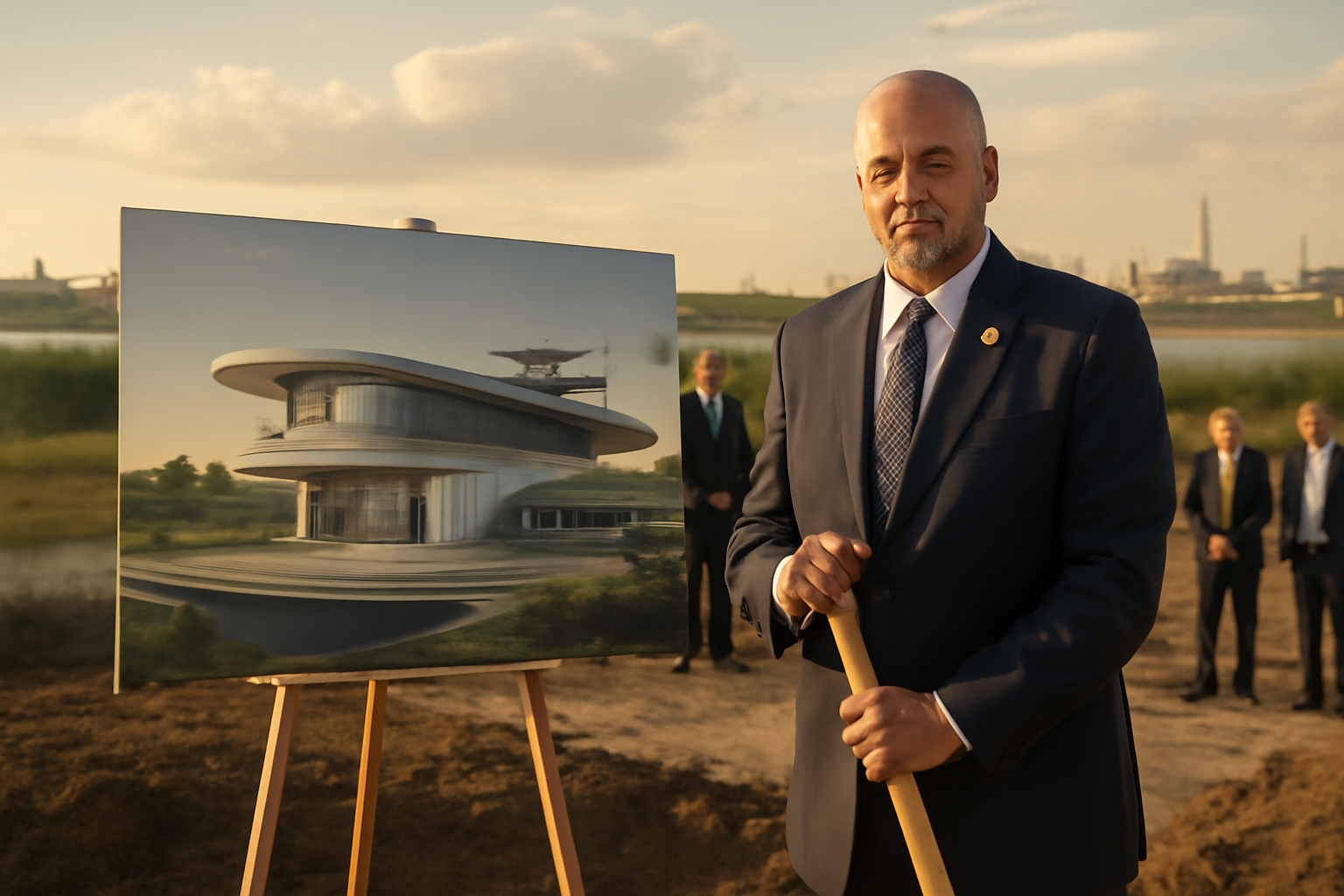
Congressman Clay Higgins has officially celebrated the groundbreaking of an Advanced Air Mobility (AAM) pilot program in Houma, Louisiana, marking a significant milestone for personal air mobility development in the United States. This initiative represents a collaborative effort to establish infrastructure and operational frameworks that will support the future deployment of electric vertical takeoff and landing aircraft in a real-world environment.
Strategic Location: Why Houma Matters for AAM Development
Houma, Louisiana, has emerged as an ideal location for testing advanced air mobility systems due to its unique geographic and economic characteristics. The city’s proximity to industrial facilities, combined with its relatively controlled airspace, provides an excellent laboratory for developers and regulators to study eVTOL operations in a practical setting. Houma’s existing infrastructure for logistics and transportation makes it a natural fit for air mobility solutions that could revolutionize regional cargo and passenger movement.
The selection of Houma also reflects broader economic diversification efforts in Louisiana. As traditional energy sectors evolve, the state is positioning itself as a hub for emerging aerospace and mobility technologies. This pilot program aligns with regional economic development goals while simultaneously advancing the nation’s leadership in advanced air mobility innovation.
Local stakeholders have expressed enthusiasm for the program, recognizing both the technological advancement opportunity and the potential economic benefits. The presence of a functioning AAM pilot program could attract further investment in aerospace and unmanned systems technology to the region, creating skilled jobs and establishing Houma as a recognized center of aviation innovation.
Federal Support and Congressional Leadership
Congressman Higgins’ involvement in celebrating this groundbreaking underscores the importance of federal support for advanced air mobility initiatives. Congressional backing is crucial for developing the regulatory frameworks, airspace management systems, and safety protocols that will enable widespread eVTOL deployment across the United States. Federal legislators play a key role in allocating resources and providing political support for these transformative technologies.
This pilot program receives support from multiple government levels, including federal funding and coordination with the Federal Aviation Administration (FAA). The FAA’s involvement ensures that testing and operations comply with existing aviation regulations while simultaneously informing the development of new regulatory standards specifically designed for electric vertical takeoff and landing aircraft. This collaborative approach balances innovation with safety.
The groundbreaking event signals that Congress recognizes AAM as a priority technology for the nation’s future transportation infrastructure. Federal investment in pilot programs like Houma’s demonstrates commitment to maintaining American competitiveness in the rapidly growing global advanced air mobility market, where international competitors are also racing to establish operational leadership.
Infrastructure and Operational Framework Development
The Houma AAM pilot program will focus on building essential infrastructure including vertiports, charging stations, and command and control centers necessary for eVTOL operations. These facilities represent the physical backbone of any functional advanced air mobility ecosystem. Developing robust infrastructure at the pilot level allows planners to test designs, identify operational challenges, and refine deployment strategies before broader rollout.
Operational frameworks developed during this pilot will establish best practices for traffic management, emergency response procedures, and community integration. Real-world testing helps identify technical requirements, equipment needs, and training protocols for pilots, ground crews, and air traffic management personnel. This data will prove invaluable as the industry scales operations to multiple cities and regions.
The program will also explore integration with existing transportation networks. Advanced air mobility isn’t intended to exist in isolation but rather to complement ground-based transportation systems. The Houma pilot provides an opportunity to test how eVTOL services can connect seamlessly with conventional aviation, ground transit, and urban mobility infrastructure to create a comprehensive transportation ecosystem.
Regulatory Pathways and Industry Standardization
Pilot programs like Houma’s serve as critical pathways for developing the regulatory standards that will govern commercial eVTOL operations. The FAA and industry partners collaborate during these initiatives to identify regulatory gaps, test compliance mechanisms, and establish safety performance standards. Data collected from operational pilots directly informs regulatory decision-making and certification processes.
Industry standardization is essential for the successful commercialization of advanced air mobility. Through coordinated pilot programs, manufacturers, operators, and regulators can align on technical specifications, safety requirements, and operational procedures. Standardization reduces costs for manufacturers, simplifies training for personnel, and builds public confidence in the safety and reliability of eVTOL systems.
The groundbreaking also signals that the industry is transitioning from pure research and development toward pre-commercial operation. This shift indicates confidence among stakeholders that technical challenges have been sufficiently addressed to enable controlled, limited-scope operations. Successful execution of the Houma pilot will accelerate the timeline for broader commercial deployment of advanced air mobility services.
Key Developments in AAM Pilot Program Evolution
- Infrastructure development including vertiports and charging stations is advancing toward real-world testing and operational validation
- Federal and congressional support demonstrates sustained governmental commitment to positioning the U.S. as a global leader in advanced air mobility technology
- Regional pilot programs serve dual purposes of technological advancement and economic diversification, attracting investment and skilled employment opportunities
Congressman Higgins’ celebration of the Houma AAM pilot program groundbreaking represents a pivotal moment in the maturation of advanced air mobility as an emerging industry. The transition from theoretical discussions to operational pilot programs demonstrates that eVTOL technology has reached sufficient readiness for real-world testing. With federal support, strategic location selection, and coordinated infrastructure development, Houma is positioned to generate critical data and operational experience that will shape the future of personal air mobility across America. Success in Louisiana could serve as a blueprint for similar programs in regions nationwide, ultimately accelerating the commercialization timeline for electric vertical takeoff and landing aircraft.