HIGHLIGHTS
- ePlaneAI identifies 10 cutting-edge VTOL designs ranging from single-passenger vehicles to larger aircraft, each addressing distinct market segments from urban courier services to regional passenger transport.
- Electric propulsion with distributed motor configurations delivers zero-emission flight, noise reduction of up to 80% compared to helicopters, and lower operating costs that could make air mobility economically accessible to mainstream travelers.
- Regulatory frameworks are crystallizing globally with early certifications emerging, while vertiport infrastructure development accelerates in major cities—positioning commercial VTOL operations to scale within 2-3 years.
The aviation industry is undergoing a dramatic transformation, and vertical takeoff and landing (VTOL) aircraft are leading the charge into a new era of personal air mobility. ePlaneAI’s comprehensive analysis of 10 futuristic VTOL aircraft reveals how emerging technologies and innovative designs are breaking free from traditional constraints, enabling aircraft to operate from congested urban environments without conventional runways. These vehicles represent the convergence of autonomous systems, electric propulsion, and advanced materials that could fundamentally reshape how billions of people travel in the coming decades.
The Rise of Electric VTOL Technology
Electric vertical takeoff and landing aircraft have emerged as one of the most promising solutions for reducing aviation’s environmental footprint while improving accessibility to air transportation. Unlike traditional helicopters that rely on fossil fuels and require extensive maintenance, electric VTOL vehicles leverage battery technology and distributed electric propulsion to deliver quieter, cleaner operations. The market has evolved rapidly, with dozens of companies worldwide racing to develop certified aircraft that meet stringent safety and performance standards.
ePlaneAI’s analysis highlights how these 10 aircraft represent diverse approaches to solving the electric VTOL puzzle. Some designs emphasize passenger capacity and range, targeting intercity commuting applications, while others focus on lightweight configurations optimized for urban air mobility (UAM) within metropolitan areas. This diversity of design philosophy reflects the immature state of the market and the multitude of potential use cases that VTOL aircraft could serve.
The technological breakthroughs enabling these aircraft span multiple domains: high-energy-density battery systems that provide sufficient range, advanced composite materials that minimize weight, autonomous flight control systems that enhance safety, and electric motor technology that delivers reliable, maintenance-free operation. Each of these foundational technologies has advanced significantly in recent years, creating a convergence moment where VTOL aircraft are transitioning from concept to commercial reality.
Design Innovation and Performance Breakthroughs
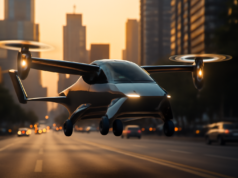
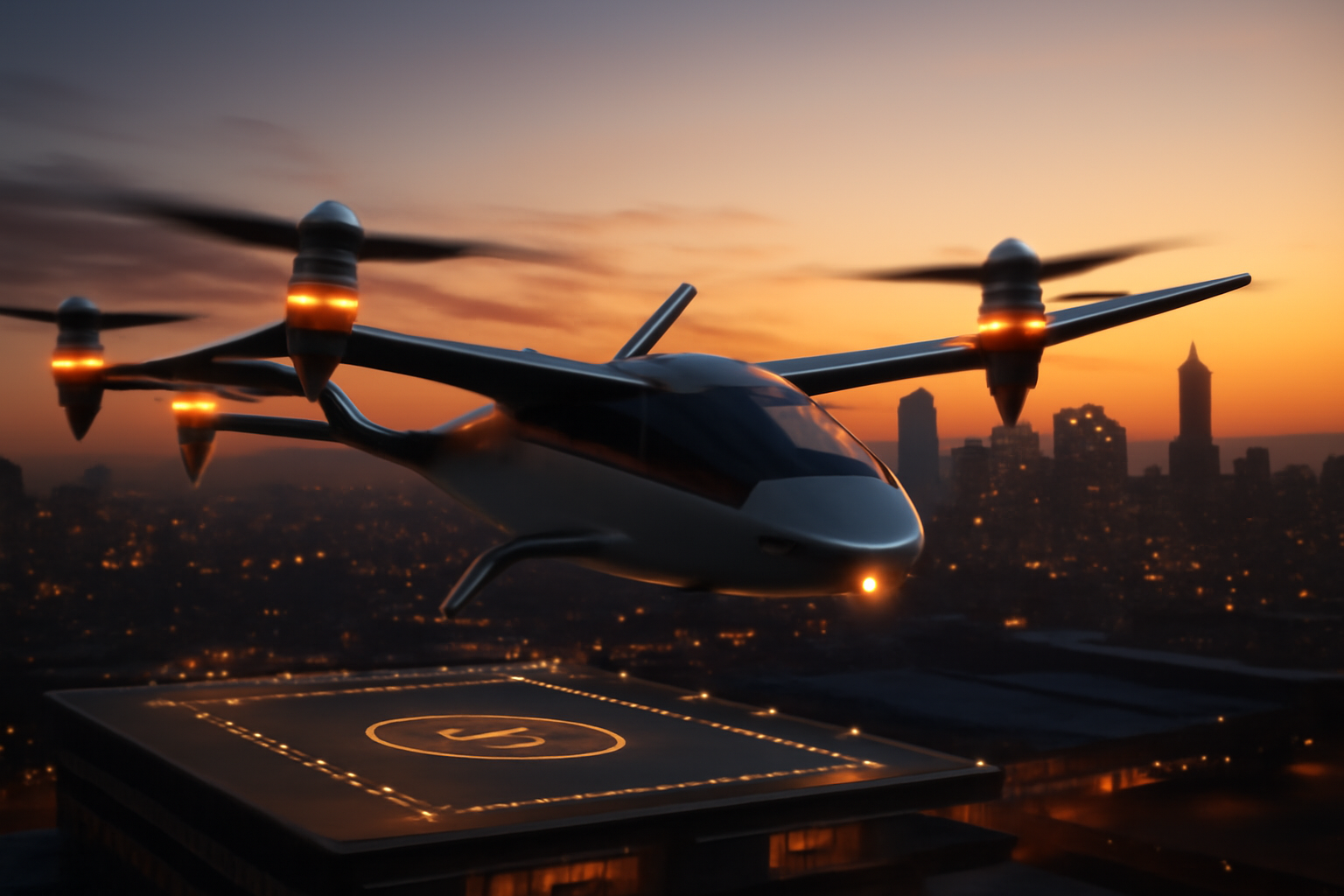
The 10 aircraft featured in ePlaneAI’s report showcase remarkable diversity in their approach to VTOL design. Some vehicles employ traditional helicopter-like rotor configurations, while others feature innovative tiltrotor designs that combine vertical takeoff capability with efficient forward flight. Distributed electric propulsion—where multiple smaller motors power numerous rotors instead of a few large engines—has become a defining characteristic of next-generation aircraft, offering inherent redundancy and improved efficiency.
Performance specifications across these aircraft vary considerably. Payload capacities range from single-passenger vehicles suitable for courier applications to larger aircraft capable of transporting 4-6 passengers. Range estimates typically fall between 40 to 200 kilometers depending on the specific design, battery configuration, and operational profile. These specifications suggest that VTOL aircraft are particularly well-suited for short-to-medium-distance flights where they can compete effectively with ground transportation.
What’s particularly noteworthy is how these designs challenge conventional aviation wisdom. Many feature unusual airframe configurations, novel propulsion arrangements, or hybrid-electric powertrains that would have seemed impractical just a decade ago. This willingness to innovate and explore unconventional solutions reflects how young the VTOL market is, with significant optimization still ahead as the industry matures and learns from real-world operations.
Urban Air Mobility and Market Potential
The primary market opportunity driving VTOL development is urban air mobility (UAM)—the vision of integrated air transportation networks operating above cities, moving passengers and cargo through three-dimensional corridors. Urban congestion costs economies hundreds of billions annually, and VTOL aircraft offer a compelling alternative that bypasses ground traffic entirely. ePlaneAI’s analysis suggests that even a partial shift of transportation demand to the airspace could generate enormous economic value while dramatically improving mobility efficiency.
Cities worldwide are beginning to prepare infrastructure to support VTOL operations. Skyports and vertiports designed specifically for electric aircraft are under development in Singapore, Los Angeles, London, and dozens of other major metropolitan areas. These facilities will enable seamless integration of air mobility into broader transportation networks, allowing travelers to experience point-to-point door-to-door service that traditional aviation cannot match.
The economic model supporting UAM operations differs fundamentally from conventional aviation. Lower operating costs per flight hour, minimal fuel expenses, and reduced maintenance requirements compared to helicopters mean that VTOL operators could potentially offer competitive fares that make air mobility economically accessible to mainstream travelers. As production scales and unit costs decline through manufacturing innovation and competition, affordability will improve further, expanding the addressable market significantly.
Regulatory Framework and Certification Challenges
Bringing innovative VTOL aircraft to commercial operation requires navigating complex regulatory landscapes that vary significantly by region. Aviation authorities including the FAA, EASA, and their international counterparts are actively developing special conditions and certification pathways specifically designed for novel electric aircraft. This regulatory responsiveness reflects the industry’s recognition that VTOL aircraft represent a fundamentally new category requiring updated standards and procedures.
The certification process for these 10 ePlaneAI-featured aircraft involves comprehensive safety assessments covering propulsion system reliability, flight control robustness, battery safety, and emergency procedures. Operators must demonstrate that their aircraft meet or exceed safety standards for traditional aviation while accounting for the unique characteristics of electric propulsion and autonomous systems. This process can require several years and substantial financial investment, creating barriers to entry that favor well-capitalized companies and those with regulatory expertise.
Beyond safety certification, commercial operation of VTOL aircraft requires approvals related to airspace management, noise emissions, vertiport operations, and crew qualification standards. ePlaneAI’s analysis recognizes that regulatory clarity and streamlined approval processes are essential for accelerating market growth. Early certifications are beginning to emerge globally, signaling that regulatory frameworks are maturing and becoming more accommodating of innovation.
Sustainability and Environmental Impact
The environmental benefits of electric VTOL aircraft represent a powerful value proposition driving investment and policy support. Zero direct emissions, significantly reduced noise compared to traditional helicopters, and the potential to operate on renewable electricity create an aviation solution that aligns with climate goals and environmental regulations becoming increasingly stringent worldwide. ePlaneAI emphasizes how these aircraft contribute to sustainable transportation systems in ways that conventional aviation cannot match.
The lifecycle environmental impact of VTOL aircraft depends critically on electricity sources. In regions with clean electricity grids powered by renewable energy, electric aircraft operate with minimal environmental footprint. Even in regions with carbon-intensive grids, electric VTOL aircraft typically produce fewer emissions per passenger-kilometer than traditional helicopters or regional aircraft. As electricity grids continue decarbonizing globally, the relative environmental advantage of electric VTOL will improve over time.
Beyond emissions reduction, electric VTOL aircraft enable more efficient use of urban space and land resources. By eliminating the need for conventional runways, these vehicles allow aviation operations within or near cities, reducing the transportation distances that travelers must cover and enabling more sustainable overall transportation patterns. This spatial efficiency compounds the environmental benefits, creating multiplier effects that extend beyond the aircraft themselves.
Key Takeaways from ePlaneAI’s Analysis
- The 10 featured VTOL aircraft represent diverse design approaches addressing varied market needs from urban air mobility to regional transport, demonstrating the industry’s maturation and growing market segmentation
- Electric propulsion, distributed motor configurations, and advanced materials enable unprecedented capabilities including true zero-emission flight, near-silent operation, and inherent safety redundancy
- Regulatory pathways are crystallizing globally, early certifications are emerging, and infrastructure development is accelerating—signaling that commercial VTOL operations could begin scaling within the next 2-3 years
The 10 futuristic VTOL aircraft analyzed by ePlaneAI represent far more than incremental improvements to existing aviation technology—they embody a fundamental reimagining of how humans can move through cities and across regions. With electric propulsion technology maturing, regulatory frameworks clarifying, infrastructure beginning to materialize, and market demand intensifying, the conditions for VTOL aircraft commercialization are converging. The question is no longer whether electric vertical takeoff and landing aircraft will transform air mobility, but rather how quickly this transformation will unfold and which companies will lead the industry into its next phase of growth and innovation.