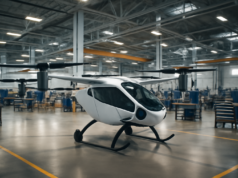
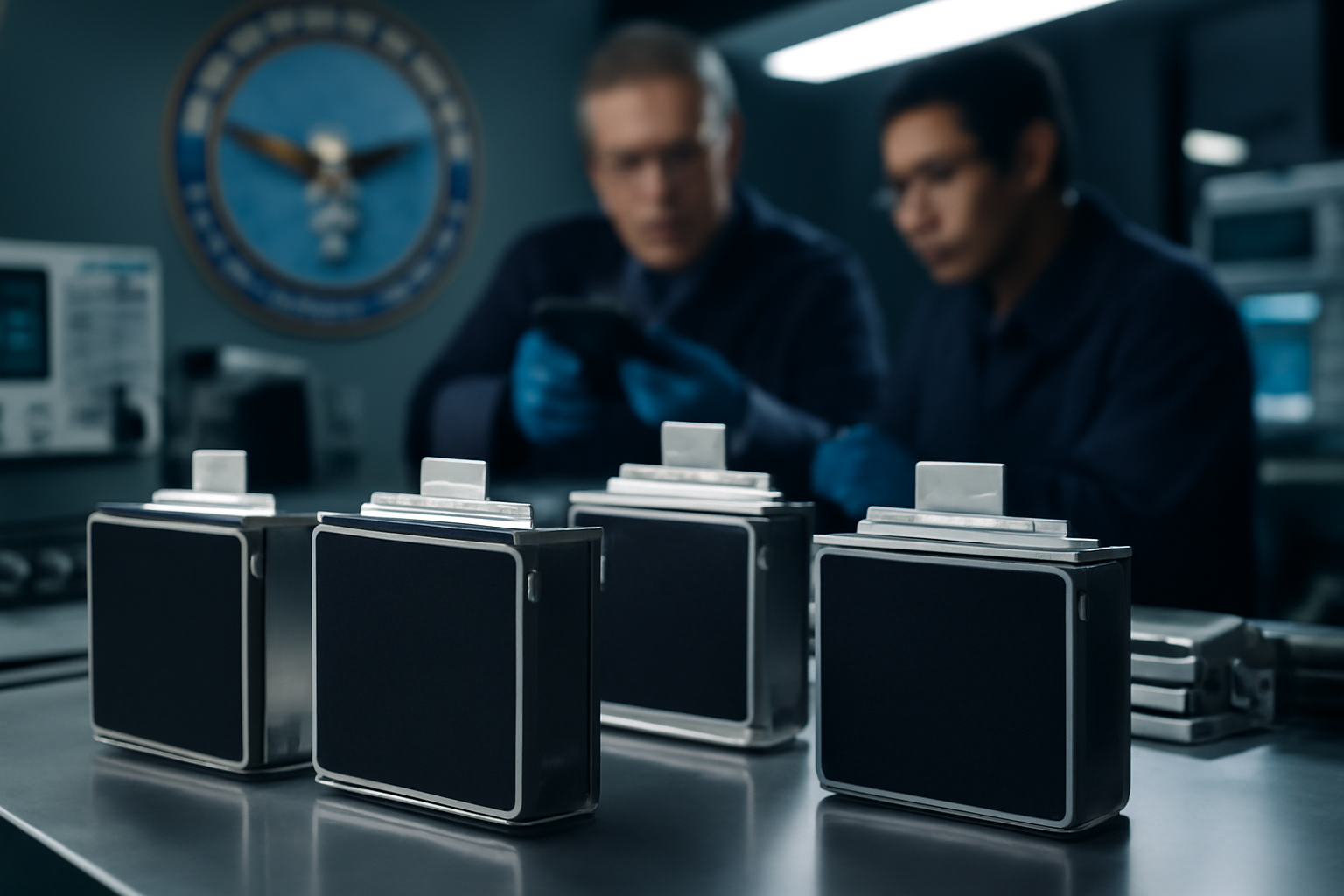
HIGHLIGHTS
- Silicon EV batteries earn $1.4 billion Department of Defense validation, unlocking critical funding for drone and air mobility advancement.
- DoD backing represents major credibility milestone, positioning silicon-based technology as military-grade power solution for next-generation aircraft.
- Strategic government investment accelerates timeline for higher energy density batteries essential to extended eVTOL and EV drone flight endurance.
In a major victory for next-generation battery technology, silicon-based EV batteries have received a groundbreaking $1.4 billion Department of Defense endorsement. This landmark validation represents far more than a financial injection—it’s institutional confirmation that silicon battery architecture is ready for mission-critical applications in military and commercial drone operations. As the personal air mobility industry races to overcome energy density limitations, this DoD seal of approval signals that a fundamental power problem may finally have a viable solution on the horizon.
The Silicon Battery Advantage
Silicon anodes represent a quantum leap forward from conventional lithium-ion technology. By replacing traditional carbon anodes with silicon, manufacturers can dramatically increase energy density—the amount of power stored per unit of weight. For EV drones and eVTOL aircraft, where every gram directly impacts flight time and payload capacity, this advantage is transformative. A silicon battery can potentially deliver 30-50% greater energy density than conventional alternatives, fundamentally changing the economics of urban air mobility.
The DoD’s investment signals that government researchers and contractors have validated these performance claims in rigorous testing environments. Military applications demand extreme reliability, safety, and consistency. If silicon batteries can meet defense-grade standards, commercial aviation certifications become far more achievable. This de-risking of technology adoption is precisely what the emerging air mobility sector needs to accelerate from prototype phase to production scale.
Silicon technology also addresses thermal management and cycle longevity concerns that have historically plagued advanced battery research. The Department of Defense doesn’t commit $1.4 billion to unproven concepts. This funding reflects confidence that silicon anodes can deliver sustained performance across thousands of charge cycles without catastrophic degradation—essential for commercial drone fleets operating daily.
Military and Defense Applications Drive Innovation
The Department of Defense has long viewed advanced battery technology as critical infrastructure. Drones and unmanned aerial systems are now central to military operations globally, yet current battery technology remains a fundamental bottleneck. Extended flight endurance directly translates to larger coverage areas, longer surveillance missions, and reduced need for frequent battery swaps in field operations. Silicon batteries could multiply the operational radius of military drones by 30-50% on a single charge.
Beyond drones, the DoD sees silicon battery investment as strategic national security infrastructure. As geopolitical competition intensifies around advanced manufacturing and critical materials, domestic battery production becomes a priority. Funding silicon technology research keeps cutting-edge battery innovation within US defense and industrial control, reducing reliance on international battery supply chains vulnerable to geopolitical disruption.
The $1.4 billion commitment also signals that the Defense Department recognizes personal air mobility and eVTOL development as inseparable from military innovation. Commercial air taxi markets and military drone networks will share fundamental technology pathways. By investing in silicon battery advancement now, DoD is essentially seeding civilian air mobility infrastructure while securing defense capabilities. This public-private technology crossover has historically accelerated innovation timelines significantly.
Implications for Commercial EV Drone and eVTOL Markets
For companies developing commercial drone platforms and electric air taxis, this DoD validation opens multiple pathways forward. First, it provides third-party credibility that silicon battery technology is ready for real-world deployment. Investors, regulators, and potential customers often wait for government or institutional validation before committing capital to emerging technologies. A $1.4 billion DoD vote of confidence removes significant market uncertainty.
Second, the funding likely accelerates manufacturing scale-up and cost reduction. Silicon battery production currently occurs at pilot scale, with unit costs significantly higher than conventional lithium-ion. As manufacturing processes mature and production volumes increase—potentially accelerated by defense contracts—costs will decline. This creates a virtuous cycle: as silicon batteries become cheaper, adoption in commercial drones increases, driving further manufacturing scale and cost reduction.
Third, the DoD backing creates a competitive advantage for companies aligned with this technology pathway. Startups and established manufacturers who can integrate silicon batteries into their platforms gain access to government contracts, funding partnerships, and technology development collaborations. This could consolidate around a few leaders and create significant market advantages for early movers.
Challenges and Timelines Ahead
While the DoD funding represents tremendous progress, significant engineering and manufacturing challenges remain. Silicon anodes are more prone to expansion and contraction during charge cycles compared to carbon anodes, potentially causing mechanical stress and reducing battery lifespan if not carefully engineered. Years of development have made progress on this fundamental materials science problem, but it’s not fully solved at commercial scale.
Manufacturing silicon batteries also requires different production equipment, process protocols, and quality control procedures than conventional lithium-ion. This means battery manufacturers must invest heavily in new facilities or retrofit existing ones. The $1.4 billion from DoD will help fund this transition, but scaling from defense contracts to mass commercial production remains complex. Realistic timelines suggest 3-5 years before silicon batteries are widely available in consumer and commercial drone products.
Safety certification also presents hurdles. While military applications have different regulatory pathways than commercial aviation, FAA and international aviation authorities will require extensive testing and validation before silicon batteries can power certified eVTOL aircraft carrying paying passengers. The DoD backing accelerates technology development, but regulatory timelines move independently. Companies should anticipate that silicon battery integration into commercial air taxi platforms will lag behind initial military deployment by several years.
Key Takeaways: What Silicon Batteries Mean for Air Mobility
- Energy Density Revolution: Silicon anodes deliver 30-50% greater energy density than conventional lithium-ion, directly extending flight endurance and expanding operational possibilities for eVTOL and EV drone platforms.
- Credibility Catalyst: DoD validation removes technology skepticism, signaling to investors, regulators, and manufacturers that silicon batteries are production-ready and worth the capital investment required for commercial integration.
- Supply Chain Security: The $1.4 billion investment prioritizes domestic advanced battery manufacturing, reducing reliance on international supply chains and positioning the US as a leader in next-generation power technology critical to air mobility competition.
The Department of Defense’s $1.4 billion validation of silicon EV battery technology marks a watershed moment for personal air mobility. For years, the promise of eVTOLs and EV drones has been constrained by the same fundamental challenge: current battery technology simply cannot store enough energy per unit weight to achieve the flight times and payload capacities required for commercial viability. Silicon batteries represent a genuine breakthrough that could change this equation. With government backing, manufacturing momentum, and clear military applications driving near-term development, silicon battery technology is no longer a theoretical advantage—it’s becoming practical infrastructure. The next few years will determine whether this innovation lives up to its potential, but the DoD’s confidence suggests that the personal air mobility revolution just gained its most critical missing component.