HIGHLIGHTS
- Governor DeSantis announces central Florida will host eVTOL air taxi testing by end of 2026, positioning the state as a leading hub for urban air mobility development and validation.
- Real-world testing in Florida will generate critical data for FAA certification, regulatory development, and operational best practices essential for commercial air taxi deployment.
- Successful eVTOL deployment creates substantial economic opportunities including aircraft manufacturing jobs, vertiport infrastructure development, and new service industries across Florida.
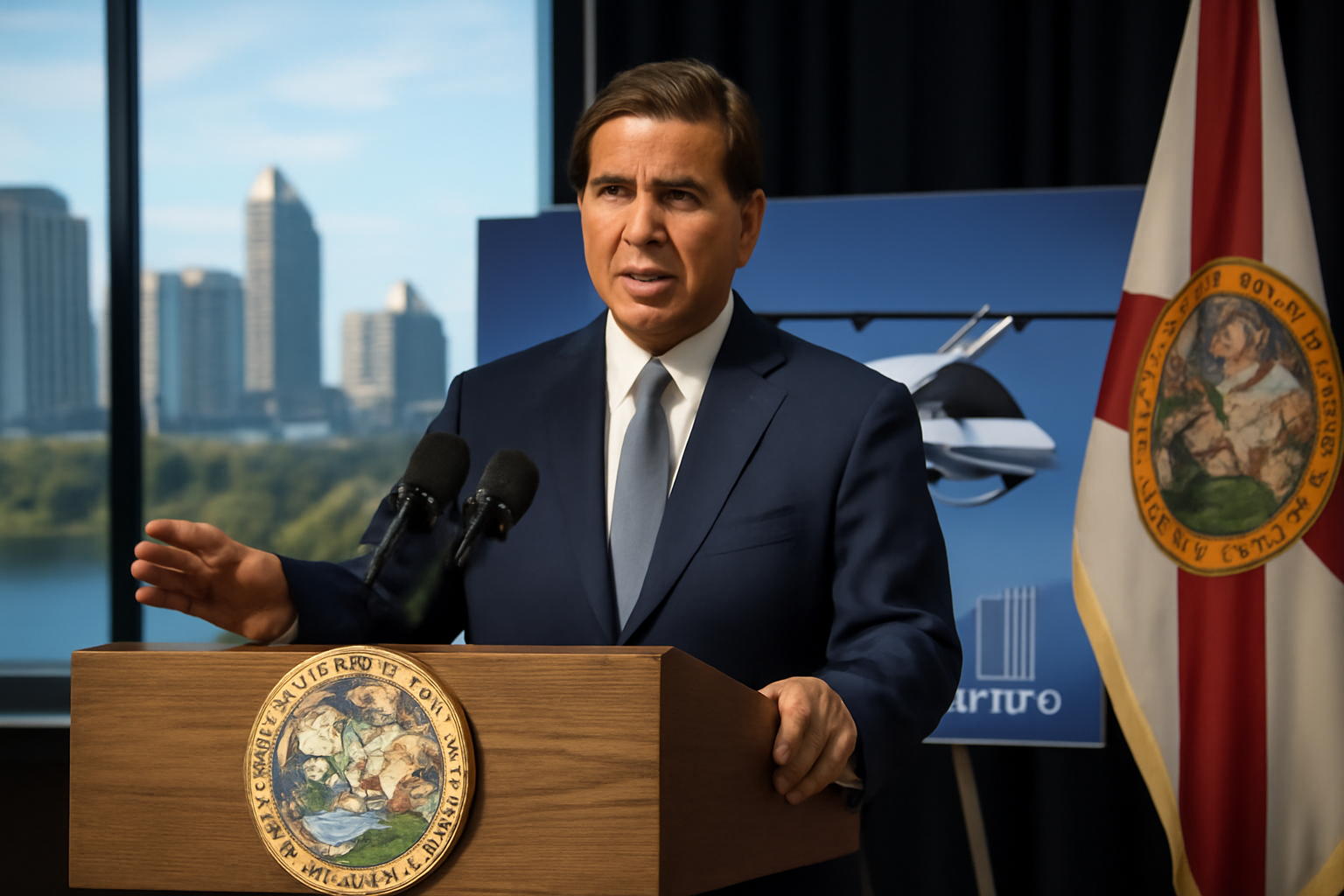
Florida is poised to become a major hub for air taxi testing and development. Governor Ron DeSantis has announced that eVTOL aircraft testing will begin in central Florida by the end of 2026, marking a significant step forward for urban air mobility infrastructure in the United States. This announcement signals growing momentum in the personal air mobility sector and positions Florida as a leader in emerging transportation technologies.
Florida’s Strategic Position in Urban Air Mobility
Central Florida has emerged as an ideal location for eVTOL testing and deployment due to its unique combination of geography, infrastructure, and regulatory environment. The region’s population centers, combined with existing aviation facilities and relatively clear regulatory pathways, make it an attractive choice for companies developing air taxi services. Florida’s warm climate also provides year-round testing opportunities that would be challenging in colder regions.
Governor DeSantis’s commitment to hosting eVTOL testing reflects Florida’s broader strategy to position itself as a technology and innovation hub. By creating a welcoming regulatory environment for advanced air mobility, the state aims to attract investment, create jobs, and establish itself as a testing ground for next-generation transportation solutions. This proactive approach distinguishes Florida from other states and demonstrates state-level commitment to emerging technologies.
The announcement comes at a critical time in the eVTOL industry’s development. Multiple manufacturers are advancing their aircraft toward commercial certification, and testing locations in diverse environments are essential for validating safety, performance, and operational procedures. Florida’s central location and existing aviation infrastructure make it an obvious choice for companies preparing for broader market entry.
eVTOL Technology and Current Development Stage
eVTOL aircraft represent a revolutionary advancement in urban transportation, combining vertical takeoff and landing capabilities with electric propulsion systems. Unlike traditional helicopters, these vehicles are designed to be quieter, more efficient, and capable of operating from vertiports—compact urban landing facilities. Multiple companies including Joby Aviation, Lilium, and Archer are advancing their designs toward certification and commercial service.
Current eVTOL designs typically accommodate four to six passengers plus a pilot, with battery ranges sufficient for flights of 15-50 miles depending on the aircraft model. Electric propulsion systems offer significant operational cost reductions compared to conventional aviation while minimizing environmental impact. The technology has progressed from concept to flight testing, with several manufacturers conducting public demonstrations and regulatory validation flights.
The transition from development to testing in real-world conditions represents a critical validation phase. Florida’s announced testing program will generate essential data on operational procedures, passenger experience, safety protocols, and community integration. This information is vital for manufacturers seeking Federal Aviation Administration (FAA) certification and for regulators developing commercial air taxi operational standards.
Regulatory Framework and FAA Certification Path
The Federal Aviation Administration has established regulatory pathways for eVTOL aircraft certification, working through Special Federal Aviation Regulations (SFAR) and Advanced Air Mobility (AAM) programs. These frameworks allow manufacturers to demonstrate compliance with safety and performance standards while enabling testing in controlled environments. Florida’s announcement aligns with FAA guidance encouraging real-world testing programs to support the development of commercial air taxi services.
State and local regulatory cooperation is essential for successful eVTOL deployment. Governor DeSantis’s commitment demonstrates that Florida intends to coordinate with federal aviation authorities to streamline approvals and create efficient pathways for testing operations. This collaborative approach between state government and federal regulators is critical for accelerating the transition from development to commercial deployment.
The regulatory environment continues to evolve as the industry matures. Standards for pilot certification, vertiport operations, traffic management, and passenger safety are being developed through industry collaboration and regulatory proceedings. Florida’s testing program will contribute valuable data to inform these developing standards and help establish best practices for safe, efficient air taxi operations.
Economic Impact and Industry Growth Potential
The air taxi market represents a significant economic opportunity for Florida and the broader U.S. economy. Market analysts project the eVTOL industry could generate billions of dollars in revenue within the next decade, including aircraft manufacturing, vertiport construction, operational services, and support infrastructure. Florida’s early positioning as a testing hub could attract companies, investors, and skilled workers to the state.
Job creation extends across multiple sectors—from engineers and technicians in manufacturing facilities to pilots, maintenance personnel, and ground operations staff for commercial air taxi services. Educational institutions in Florida are beginning to develop training programs aligned with eVTOL industry needs. These economic benefits create incentives for state and local governments to continue supporting air mobility development.
Beyond direct employment, eVTOL services will generate demand for new infrastructure including vertiports, charging facilities, and maintenance centers. Tourism opportunities may also emerge as air taxi services enable rapid connections between airports, hotels, and attractions. The cumulative economic impact positions air mobility as a transformative industry for Florida’s economy.
Community Integration and Operational Considerations
Successful eVTOL deployment requires careful attention to community concerns including noise, safety, and airspace integration. Modern electric aircraft are significantly quieter than helicopters, addressing one major community concern. However, operational protocols, flight corridors, and frequency limitations will be essential for maintaining community acceptance as testing transitions to commercial operations.
Vertiport placement and design are critical considerations for successful air taxi integration. Locations must balance accessibility for passengers with community impact and airspace efficiency. Central Florida’s mix of urban and suburban areas offers diverse testing environments for developing operational procedures in different community contexts. Learning from testing operations will inform best practices for vertiport deployment in other markets.
Traffic management systems and integration with existing National Airspace System operations present technical challenges that require thorough testing and validation. Florida’s airspace environment, including proximity to major airports and military installations, provides a realistic testing context. Solving these operational challenges through Florida testing will advance the industry’s readiness for broader geographic deployment.
Key Takeaways from Florida’s eVTOL Testing Announcement
- Governor DeSantis announces central Florida will host eVTOL air taxi testing by end of 2026, establishing the state as a leading hub for urban air mobility development and validation
- eVTOL technology is rapidly advancing toward commercial deployment, with electric aircraft offering significant noise and emissions reductions compared to traditional aviation
- Florida’s testing program will generate critical data for FAA certification, regulatory development, and operational best practices while creating substantial economic opportunities in manufacturing, jobs, and new infrastructure
Florida’s commitment to hosting eVTOL testing by the end of 2026 represents a watershed moment for the personal air mobility industry. As manufacturers advance their aircraft toward certification and commercial deployment, real-world testing in diverse operational environments becomes increasingly essential. Governor DeSantis’s announcement positions Florida as a key player in this transformative transportation revolution, with potential for significant economic benefits, job creation, and technological leadership. The coming months will be critical as stakeholders work to establish operational procedures, safety protocols, and community integration frameworks that will serve as models for air taxi services across the United States and globally.