HIGHLIGHTS
- Vertical Aerospace advances propulsion efficiency and airframe manufacturing while maintaining CAA and EASA certification momentum through Q2 2026.
- Market valuation pressures persist despite technical progress, driving increased focus on demonstrating unit economics and path-to-profitability models.
- European regulatory strategy and supply chain positioning differentiate Vertical’s competitive approach in the fragmented eVTOL market landscape.
Vertical Aerospace, the UK-based electric vertical takeoff and landing (eVTOL) manufacturer, has released its Q2 2026 update, showcasing continued engineering progress on its flagship aircraft while navigating the evolving landscape of urban air mobility investment and valuation pressures. The update highlights significant milestones in propulsion systems, airframe integration, and regulatory pathways, even as the company faces broader market dynamics affecting eVTOL valuations across the sector. For stakeholders and industry observers, the Q2 results represent a critical checkpoint in the race to commercialize autonomous passenger aircraft.
Engineering Milestones and Aircraft Development
Vertical Aerospace has achieved notable technical breakthroughs during the second quarter, advancing core systems integration on its lead aircraft design. The company’s propulsion architecture has undergone rigorous bench testing, with improvements to battery thermal management and motor efficiency reducing operational constraints identified in earlier prototypes. These incremental gains are essential for meeting the stringent power-to-weight ratios required for safe commercial operation.
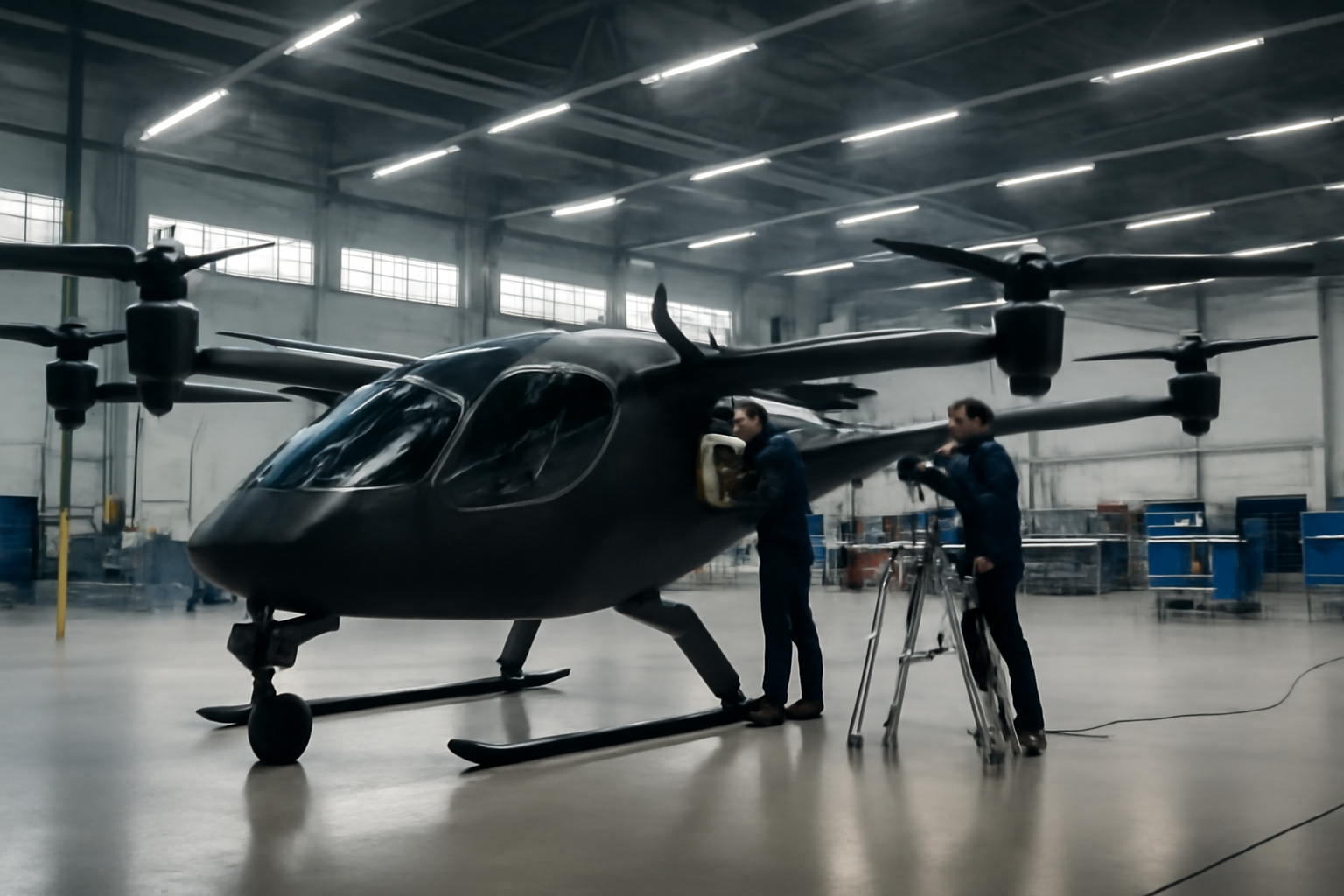
The airframe manufacturing process has also accelerated, with Vertical’s production facility demonstrating increased throughput in composite fabrication and assembly. The company reports improved supply chain coordination with key component suppliers, mitigating previous bottlenecks in landing gear, avionics integration, and structural components. This supply chain optimization reduces both production timelines and per-unit manufacturing costs—critical factors for scaling toward commercial certification.
Flight testing activities have remained on schedule, with multiple short-range prototype flights validating aerodynamic models and control systems. Vertical has emphasized that these flights are generating valuable data for regulatory submissions, particularly in areas of stability, redundancy, and failure-mode analysis. The cumulative testing library now supports more confident predictions about performance across diverse operating environments.
Regulatory Progress and Certification Roadmap
Vertical Aerospace has made measurable headway in its interactions with aviation authorities, particularly the UK Civil Aviation Authority (CAA) and the European Union Aviation Safety Agency (EASA). The company continues to follow a staged certification approach, with Special Conditions now in advanced stages of development. These regulatory frameworks are essential precursors to Type Certification and ultimately commercial service approval.
The Q2 update indicates that Vertical’s certification documentation package has expanded significantly, with over 40 technical submissions addressing aircraft performance, crew training requirements, and operational procedures. The company has also engaged with air traffic management authorities to define integration pathways for urban air mobility operations within existing airspace. Early coordination with these stakeholders reduces the risk of post-certification delays caused by inadequate airspace infrastructure planning.
International regulatory recognition is another strategic focus. Vertical has pursued validation pathways with authorities beyond Europe, including preliminary discussions with the U.S. Federal Aviation Administration (FAA). While full FAA certification remains years away, these early-stage engagements position the company to enter multiple markets simultaneously once Type Certification is secured, accelerating revenue diversification and geographic expansion.
Valuation Challenges and Market Sentiment
Despite technical progress, Vertical Aerospace’s market valuation has experienced notable compression since its SPAC merger in 2021, reflecting broader investor skepticism about eVTOL commercialization timelines and unit economics. The Q2 update arrives against a backdrop of scaling challenges facing competitors, with some players revising production schedules and reducing near-term service capacity expectations. Vertical’s transparent communication about challenges and realistic timelines appears to be resonating with longer-term institutional investors.
The company’s capital position remains adequate, with sufficient funding to support development activities through certification milestones and into early operational deployment phases. However, market conditions have intensified focus on demonstrating tangible path-to-profitability metrics. Vertical has begun articulating clearer unit economics models, including projected maintenance costs, pilot utilization assumptions, and revenue per flight-hour scenarios under different operational configurations.
Analyst commentary following the Q2 update reflects a bifurcated view: technical execution praise paired with caution about market adoption rates and regulatory timelines. Some institutional investors view current valuations as discounting eVTOL risks excessively, creating potential upside if Vertical achieves key milestones. Others remain cautious, citing the unproven nature of the urban air mobility market and persistent questions about passenger demand at projected price points.
Competitive Context and Market Positioning
Vertical Aerospace’s progress must be evaluated within a competitive ecosystem that includes Joby Aviation, Archer Aviation, Lilium, and international entrants from Asia and Europe. Each player has taken different technical approaches—ranging from battery-electric to hybrid architectures—and pursued distinct regulatory and geographic strategies. Vertical’s focus on electric propulsion, European certification, and the regional air taxi market represents a coherent positioning within this fragmented landscape.
The Q2 update suggests that Vertical is prioritizing quality and regulatory soundness over rapid speed-to-market. This conservative posture contrasts with some competitors’ more aggressive timelines and may provide long-term differentiation if it results in superior safety records and more rapid post-certification ramp. The company’s partnerships with regional air operators and airport authorities also provide operational launch partners, reducing execution risk during initial commercial deployment.
Vertical’s international supply chain strategy, leveraging European aerospace expertise and manufacturing infrastructure, also differentiates its cost structure. As eVTOL production scales, manufacturing location and labor costs will become increasingly important competitive factors. Vertical’s European positioning may offer advantages in serving initial markets in the UK, Continental Europe, and beyond, with potential for regional manufacturing hubs that reduce logistics costs compared to centralized U.S.-based production models.
Key Takeaways
- Vertical Aerospace has advanced propulsion, airframe, and flight-test capabilities while maintaining a clear regulatory certification pathway with the CAA and EASA through Q2 2026.
- The company’s capital position supports development through certification, though market valuation pressures demand increasingly transparent unit economics and path-to-profitability demonstrations.
- Vertical’s technical execution and European regulatory strategy position it competitively within the fragmented eVTOL market, though broader commercialization success depends on unproven passenger demand and operational integration with existing air traffic management.
Vertical Aerospace’s Q2 2026 update reflects a company executing methodically on its technical roadmap while absorbing significant market headwinds. The combination of engineering progress, regulatory advancement, and strategic positioning offers a foundation for commercial success, but investor confidence will ultimately hinge on whether the company delivers on its certification timelines and whether early operational deployments validate business model assumptions. The coming quarters will be critical in determining whether Vertical can bridge the gap between technical viability and commercial reality.