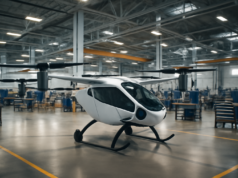

HIGHLIGHTS
- Davis Park Management’s institutional scrutiny of the Boeing-Archer deal signals major investor confidence in eVTOL market viability
- Boeing brings decades of regulatory expertise, manufacturing scale, and supply chain mastery to accelerate Archer’s path to FAA certification and commercial operations
- The partnership exemplifies a shift toward legacy aerospace-eVTOL startup alliances over proprietary development, reshaping competitive dynamics in urban air mobility
The personal air mobility sector continues to attract major institutional investors and aerospace leaders. Davis Park Management’s recent examination of Boeing’s eVTOL partnership with Archer represents a pivotal moment for the industry, demonstrating that serious financial players are now evaluating the commercial viability of electric vertical takeoff and landing aircraft. This scrutiny from established investment firms underscores the transition of eVTOL technology from speculative venture to legitimate asset class worthy of institutional capital allocation.
Boeing’s Strategic Entry into Urban Air Mobility
Boeing’s involvement with Archer eVTOL signals a major shift in the aerospace giant’s portfolio strategy. Rather than developing proprietary eVTOL technology from scratch, Boeing has chosen to partner with dedicated innovators in the sector, leveraging Archer’s specialized expertise while providing manufacturing, regulatory, and certification support. This approach allows Boeing to tap into the rapidly expanding urban air mobility market without bearing the full development risk independently.
The partnership represents Boeing’s recognition that traditional aircraft manufacturers must adapt to remain competitive in emerging transportation segments. By backing Archer, Boeing gains exposure to a multi-billion-dollar addressable market while positioning itself as a key player in the future of urban transportation infrastructure. The collaboration also enables Boeing to apply its extensive experience with safety certifications, supply chain management, and production scaling to accelerate Archer’s path to commercial operations.
This investment reflects broader industry trends where legacy aerospace companies are increasingly partnering with or acquiring specialized eVTOL developers rather than building competing technologies internally. Such strategic alliances create ecosystem synergies that benefit all stakeholders, from manufacturers to investors to future passengers seeking innovative transportation solutions.
Archer’s Position in the Competitive eVTOL Landscape
Archer eVTOL has emerged as one of the most well-capitalized and operationally advanced companies in the personal air mobility sector. The company’s focus on scalable design, battery efficiency, and regulatory compliance has attracted multiple rounds of institutional investment. With Boeing’s backing, Archer gains access to unparalleled manufacturing capabilities and industry relationships that can accelerate its commercialization timeline significantly.
Archer’s aircraft design emphasizes practical engineering solutions for urban environments, including noise reduction, battery range optimization, and passenger safety protocols. The company’s commitment to working closely with regulatory authorities positions it favorably for FAA certification and international approvals. These factors make Archer an attractive investment target for institutions seeking exposure to established management teams with clear technical roadmaps.
The competitive eVTOL market includes numerous players, but those with strong financial backing and clear certification pathways have emerged as frontrunners. Archer’s partnership with Boeing elevates its standing among potential investors, customers, and regulatory bodies, creating a positive feedback loop that reinforces its market position and de-risks its business model for institutional capital.
Institutional Investment Trends in Urban Air Mobility
Davis Park Management’s detailed examination of the Boeing-Archer deal reflects a broader institutional awakening to the eVTOL sector’s investment potential. Traditional venture capital has long funded eVTOL startups, but the involvement of specialized investment firms signals that the sector is maturing beyond early-stage speculation. Institutional investors are now conducting rigorous due diligence on business models, regulatory pathways, and revenue potential.
This institutional scrutiny brings both benefits and challenges to the eVTOL ecosystem. On the positive side, professional investors with deep sector expertise help validate viable business models and identify promising technologies. They also bring capital discipline, requiring companies to demonstrate clear paths to profitability and operational scalability. However, this scrutiny also raises performance expectations and timelines, putting pressure on companies to deliver concrete results sooner rather than later.
The influx of institutional capital is accelerating consolidation within the eVTOL sector, as larger players acquire smaller ones or enter partnerships that create dominant market positions. Boeing’s involvement with Archer exemplifies this trend, where established corporations provide the muscle to scale promising technologies. These dynamics suggest that the eVTOL market will likely be dominated by a relatively small number of well-capitalized companies within the next 5-10 years.
Market Implications and Future Outlook
Boeing’s commitment to Archer signals confidence in the near-term viability of commercial eVTOL operations. The aerospace manufacturer’s willingness to allocate significant resources to the partnership suggests that internal analyses project meaningful revenue generation within the next decade. This optimism from a company with unparalleled aircraft manufacturing expertise provides reassurance to other institutional investors and potential customers evaluating the sector.
The eVTOL market’s growth trajectory depends on several key factors: regulatory approvals, battery technology advancement, infrastructure development, and consumer adoption. Boeing-Archer’s partnership addresses multiple elements of this equation by combining Archer’s innovative design with Boeing’s regulatory expertise and manufacturing infrastructure. The company’s ability to deliver certified, profitable aircraft operations will significantly influence investor sentiment across the entire sector.
Looking forward, expect increased consolidation among eVTOL manufacturers, expanded investor participation from institutional funds, and accelerated regulatory pathways in key markets. The Boeing-Archer partnership serves as a blueprint for how legacy aerospace corporations can effectively participate in the eVTOL revolution without abandoning their core competencies. Success in this partnership will likely inspire other major manufacturers to pursue similar strategies, further energizing the urban air mobility ecosystem.
Key Takeaways from Boeing’s eVTOL Investment Strategy
- Institutional investors like Davis Park Management are now subjecting eVTOL deals to rigorous financial scrutiny, signaling the sector’s maturation from speculative venture territory to legitimate asset class
- Boeing’s partnership with Archer combines the startup’s innovative aircraft design with the manufacturer’s unparalleled regulatory expertise and production scaling capabilities
- The deal exemplifies a broader industry trend where legacy aerospace companies partner with specialized eVTOL developers to compete in urban air mobility markets without building competing technologies from scratch
The Boeing-Archer eVTOL partnership represents a crucial inflection point for the personal air mobility industry. By attracting serious institutional investment and leveraging aerospace legacy expertise, the companies are building a blueprint for sustainable, scalable eVTOL operations. As regulatory approvals advance and commercial operations begin, the sector’s growth will increasingly depend on these kinds of strategic alliances between innovative startups and established manufacturing powerhouses. Investors, policymakers, and passengers should all monitor this partnership’s progress closely, as its success or failure will significantly shape the future of urban transportation.