
HIGHLIGHTS
- ePlane targets April 2027 for first flight tests of its specialized eVTOL air ambulance, one of the industry’s most concrete timelines for medical-configured electric aircraft.
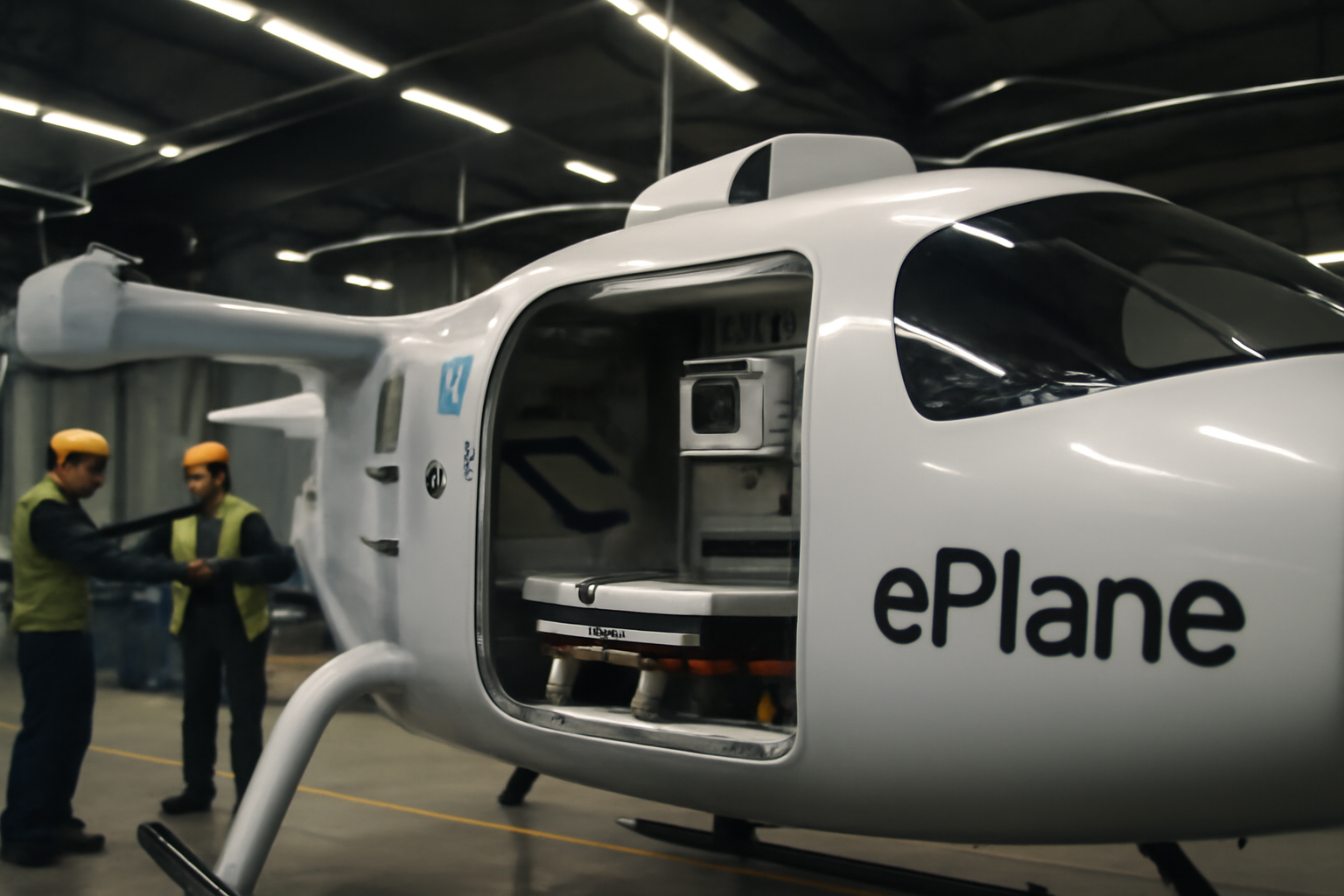
- India’s eVTOL startup is designing aircraft with medical-specific features including climate control, equipment mounting, and pressurized cabins to address rural emergency medical response gaps.
- Successful 2027 flight tests could establish certification precedent for eVTOL air ambulances in emerging markets while positioning India as a key electric aviation innovation hub.
India’s emerging eVTOL sector is poised for a significant milestone as ePlane, a homegrown electric aviation startup, targets April 2027 for its first flight tests of a revolutionary air ambulance system. This development marks a crucial step in bringing emergency medical transport into the modern era of sustainable aviation, positioning India as a key player in the global personal air mobility revolution. The ambitious timeline reflects growing momentum in Asia’s adoption of electric vertical takeoff and landing technology for real-world applications.
ePlane’s Vision for Emergency Medical Transport
ePlane has designed its eVTOL air ambulance with a specific focus on India’s healthcare infrastructure challenges, where rapid response times can mean the difference between life and death. The electric aircraft promises to bridge critical gaps in rural and remote medical emergency response, where traditional ground ambulances face significant time constraints due to geography and infrastructure limitations. By leveraging clean electric propulsion, ePlane aims to reduce operational costs while eliminating emissions from emergency medical services.
The company’s air ambulance variant incorporates specialized medical equipment mounting points and climate control systems necessary for safe patient transport. Unlike generic eVTOL designs, ePlane’s ambulance model addresses the unique requirements of emergency medical services, including rapid stabilization capabilities and pressurized cabins for high-altitude flight. These design considerations demonstrate how the company is tailoring electric aviation specifically for critical healthcare applications rather than simply adapting existing passenger designs.
With India’s population dispersed across vast distances and varying terrain, air ambulance services could revolutionize emergency response times in underserved regions. ePlane’s timeline suggests the company has already completed substantial engineering work and secured necessary funding to move toward the testing phase. This acceleration reflects investor confidence in both the company’s technology and the market opportunity for medical eVTOLs across South Asia and beyond.
Technical Development and Flight Test Preparations
The April 2027 flight test window indicates ePlane has likely completed critical design validations, manufacturing trials, and regulatory coordination with India’s aviation authorities. Reaching this milestone requires demonstrating structural integrity, battery system reliability, autonomous flight control systems, and safety protocols specific to medical operations. The timeline suggests the company is on track with component manufacturing and integration, though any aerospace development program typically faces unforeseen engineering challenges that could affect schedules.
ePlane’s engineering team must validate battery performance across the thermal and operational envelopes required for medical missions, including climb rates, hover stability, and emergency descent procedures. The eVTOL’s electric propulsion system requires extensive ground testing to ensure reliability margins necessary for carrying critical patients. Advanced battery management systems must guarantee sufficient power reserves for medical equipment operation throughout the mission profile, adding complexity beyond passenger-only designs.
Flight testing will reveal crucial data about the aircraft’s actual performance versus simulations, including hover efficiency, noise levels, and vibration characteristics—all critical factors for medical operations. Early test flights typically focus on basic airworthiness and handling qualities before advancing to emergency procedures and operational scenarios. ePlane’s progression from ground tests to initial flight operations represents a crucial inflection point for the company’s credibility and technology maturation within India’s regulatory framework.
India’s Regulatory Landscape for eVTOL Air Ambulances
India’s aviation regulator, the Directorate General of Civil Aviation (DGCA), has been gradually establishing frameworks for experimental aircraft and urban air mobility operations. ePlane’s development timeline suggests the company is working collaboratively with regulatory authorities to establish certification pathways for medical-configured eVTOLs. Unlike some nations with pre-existing urban air mobility regulations, India is simultaneously developing both technology and governance structures, creating unique opportunities and challenges for pioneering companies like ePlane.
The April 2027 flight tests will likely occur under experimental flight permits, allowing ePlane to gather performance data while regulatory definitions continue evolving. Successful demonstration of the air ambulance’s safety and operational capabilities could influence how Indian regulators approach eVTOL certification for other emergency service applications, including disaster response and search-and-rescue missions. ePlane’s progress will serve as a proof-of-concept for how electric aviation can integrate into critical infrastructure roles beyond commercial passenger transport.
International regulatory bodies, including EASA and FAA, are watching developments in India’s eVTOL certification approach, as precedent-setting decisions could inform global standards. ePlane’s compliance with international airworthiness principles while navigating India-specific requirements positions the company as a bridge between Western certification traditions and emerging markets’ practical needs. This regulatory navigation demonstrates that building eVTOLs involves not only engineering prowess but also diplomatic coordination with government agencies and international aviation authorities.
Market Opportunity and Competitive Landscape
India’s healthcare sector faces critical infrastructure gaps that eVTOL air ambulances are uniquely positioned to address. With over 1.4 billion people spread across geographically diverse terrain, rapid emergency medical response remains a persistent challenge in rural regions. ePlane’s timing capitalizes on growing recognition that electric aircraft offer a sustainable solution to this problem while also reducing operating costs compared to traditional helicopter-based ambulance services. The market opportunity extends beyond India to other South Asian nations facing similar healthcare logistics challenges.
Globally, several eVTOL manufacturers including Joby Aviation, Archer Aviation, and Lilium are exploring air ambulance variants, but few have committed to publicly announced timelines for medical-configured flight tests. ePlane’s April 2027 target represents one of the most concrete deadlines announced for eVTOL air ambulance operations, positioning the Indian startup as a serious contender in this emerging market segment. The company’s focus on a specific application and geography contrasts with broader competitors pursuing general passenger transport, offering ePlane a differentiated market entry strategy.
India’s startup ecosystem and government support for aerospace innovation create favorable conditions for companies like ePlane to mature rapidly. Success with the 2027 flight tests could attract additional funding and international partnerships, potentially accelerating commercial deployment beyond April 2027. ePlane’s ability to demonstrate practical eVTOL utility in emergency medical services could reshape investor perceptions about near-term commercial viability of electric aircraft across Asia’s emerging markets.
Key Takeaways from ePlane’s Progress
- ePlane’s April 2027 flight test deadline for its eVTOL air ambulance represents one of the most concrete timelines for medical-configured electric aircraft, positioning India as an emerging leader in this application segment.
- The specialized medical configuration—including equipment mounting, climate control, and pressurized cabins—demonstrates how ePlane is tailoring eVTOL design for critical infrastructure rather than generic passenger transport.
- ePlane’s development occurs within India’s evolving regulatory framework, where successful flight tests could establish precedent for eVTOL certification in emerging markets while addressing critical gaps in rural emergency medical response.
ePlane’s ambitious 2027 timeline reflects broader momentum in personal air mobility toward practical, application-specific designs rather than speculative passenger services. By targeting emergency medical transport—a sector with proven demand and clear infrastructure gaps—the Indian startup demonstrates how eVTOL technology can solve real-world problems while building sustainable business models. As April 2027 approaches, ePlane’s flight tests will provide crucial insights into whether electric aircraft can effectively transition from development programs into operational critical infrastructure roles. The company’s success could inspire similar medical-focused eVTOL initiatives across South Asia and establish India as a significant hub for electric aviation innovation beyond traditional aerospace centers.