
HIGHLIGHTS
- Intel’s $620M concentrated investment in Joby Aviation demonstrates major tech corporations are actively backing eVTOL commercialization.
- The strategic bet signals growing confidence in Joby’s S4 aircraft and urban air mobility’s near-term market viability.
- Tech-to-aviation crossover investments are reshaping how eVTOL companies secure funding and accelerate regulatory approval timelines.
In a striking move that underscores the growing confidence in personal air mobility, Intel has revealed that Joby Aviation represents one of just two significant stock holdings in its corporate investment portfolio, with a $620 million concentrated bet on the eVTOL pioneer. This revelation, reported by 24/7 Wall St., signals more than mere financial speculation—it reflects a strategic conviction by one of the world’s largest technology corporations that urban air mobility is transitioning from concept to commercial reality. When a Fortune 500 tech giant concentrates such substantial capital into an aviation venture, it sends a powerful message to investors, regulators, and the broader industry about the trajectory of electric vertical takeoff and landing aircraft.
Intel’s Strategic Commitment to eVTOL Innovation
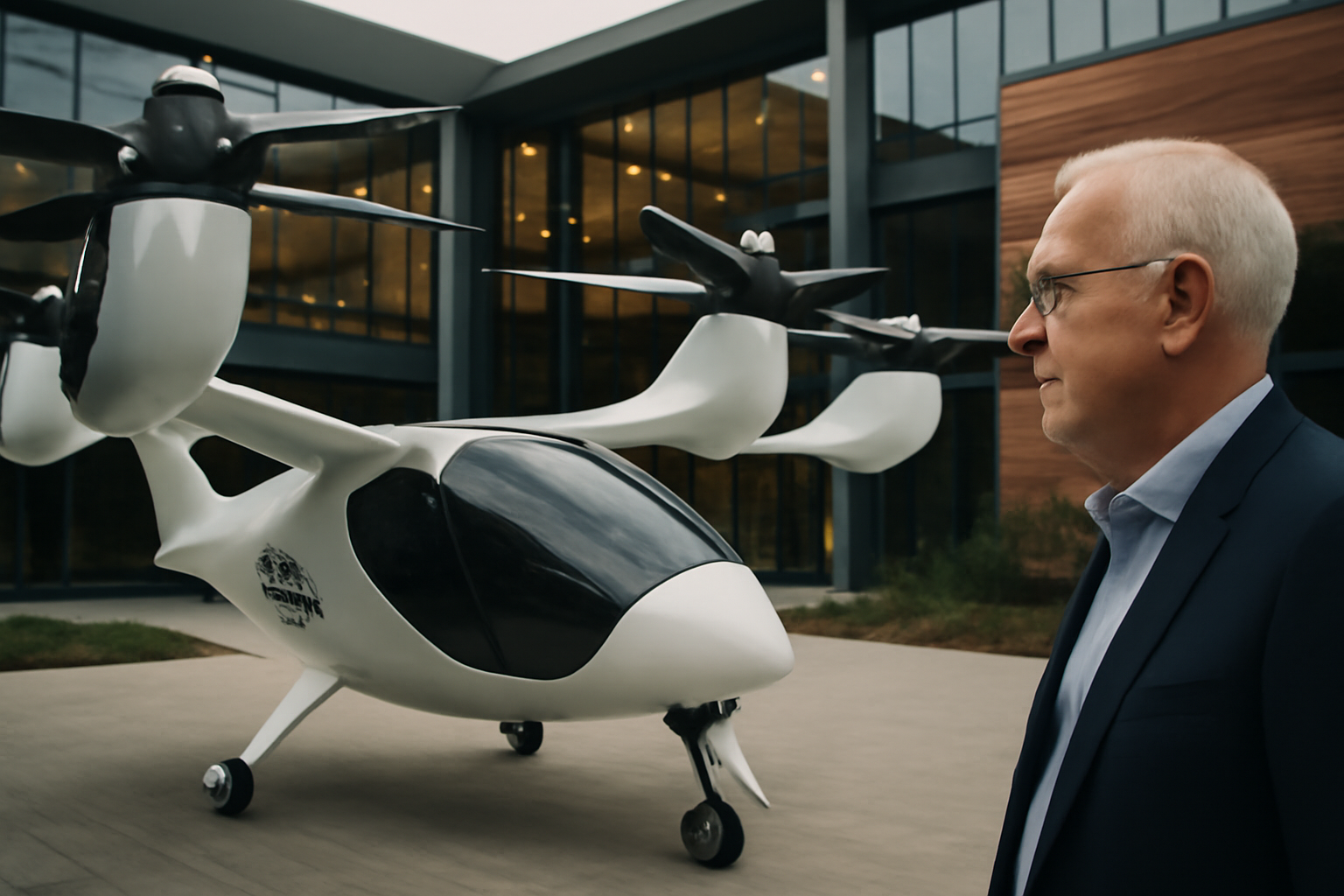
Intel’s $620 million position in Joby Aviation is not a casual venture capital play. The sheer concentration of this bet—representing one of only two major stock holdings—reveals that Intel’s leadership views Joby as a transformational investment opportunity. This level of commitment suggests that Intel sees the convergence of battery technology, autonomous systems, and aerospace engineering as core to future computing and logistics ecosystems. Joby’s S4 aircraft, which has undergone extensive flight testing in California, represents exactly the kind of advanced engineering problem that attracts serious technology investors looking beyond traditional semiconductor markets.
The timing of this investment revelation is particularly significant, coming as Joby advances toward commercial operations. The company has been working with the Federal Aviation Administration (FAA) on certification pathways and has secured partnerships with major entities including Japan’s Toyota and Joby’s own corporate backing from firms like Genting Asia. Intel’s participation signals that the aerospace industry’s transition to electric propulsion is attracting the same caliber of institutional capital that powered the digital revolution.
What makes Intel’s bet particularly telling is the diversity it represents. While venture capitalists and dedicated aviation funds have long supported eVTOL startups, mainstream technology corporations have been more cautious. Intel’s move breaks that pattern, suggesting that the company’s board and investors are convinced that Joby’s path to profitability and market dominance is increasingly clear. This vote of confidence from Silicon Valley heavyweight carries weight with regulators, passengers, and other enterprises contemplating investments in urban air mobility infrastructure.
What This Bet Reveals About eVTOL Market Maturity
When a company concentrates $620 million into a single eVTOL firm, it reflects a fundamental shift in how investors perceive the sector’s maturity. Gone are the days when eVTOL was seen as speculative “moon-shot” technology; it is now viewed as an emerging market with clear regulatory pathways, proven technology demonstrators, and identifiable customer bases. Joby’s partnerships with airport authorities, tourism operators, and logistics companies provide concrete use cases that extend far beyond theoretical benefits.
Intel’s investment also reflects confidence in Joby’s management and technical execution. The company has delivered multiple generations of the S4 aircraft, conducted thousands of flight hours, and maintained safety records that satisfy FAA inspectors. These operational milestones reduce perceived risk for large institutional investors who might otherwise remain skeptical of an aerospace startup, no matter how innovative. By backing Joby, Intel is essentially vouching for the company’s engineering discipline and commercialization strategy.
The broader implication is that eVTOL is shifting from the “hope and hype” phase to a capital-intensive maturation phase where only well-funded players with strong technology and partnerships will survive. Companies like Joby that can attract both specialized aviation investors and mainstream technology corporations have a strategic advantage. They can fund the expensive regulatory approvals, manufacturing buildout, and operational infrastructure that urban air mobility requires to achieve scale.
Tech-to-Aviation Convergence: A New Funding Model
Intel’s $620 million commitment exemplifies a new funding paradigm for advanced air mobility: the tech-to-aviation convergence. Rather than relying solely on aviation-focused private equity or traditional aerospace contractors, eVTOL companies are increasingly accessing capital from technology and computing firms. This trend reflects the reality that modern eVTOL aircraft are fundamentally software and electrical-system platforms, not traditional mechanical aircraft. Joby’s S4 is controlled by sophisticated autonomous systems, electric power management units, and real-time flight optimization algorithms—domains where companies like Intel have deep expertise.
This convergence creates mutual benefits. For Intel, investment in Joby positions the company in a growth market while potentially opening partnerships for onboard computing, chip integration, and avionics systems. For Joby, the backing provides not just capital but potential access to Intel’s supply chain, manufacturing expertise, and enterprise customer relationships. Similar patterns are emerging across the eVTOL sector, with technology companies, automotive firms, and aerospace giants all competing to fund and partner with promising air mobility ventures.
The concentrated nature of Intel’s portfolio—just two major stock holdings, with Joby being one—also suggests that Intel’s executive leadership is making a deliberate, high-conviction bet. Unlike diversified mutual funds or index portfolios, concentrated positions require board-level approval and risk assessment. This governance layer adds legitimacy to Joby’s path forward and demonstrates that seasoned corporate strategists, not just venture speculators, believe in the eVTOL market’s near-term viability.
Implications for Joby Aviation’s Commercial Timeline
With Intel’s $620 million backing, Joby Aviation has secured a major institutional anchor investor at a critical juncture. The company is pursuing FAA Part 135 certification, which would allow commercial charter operations, and is targeting initial revenue flights in 2025-2026. Intel’s visible support strengthens Joby’s position with regulators by demonstrating that a major, publicly traded corporation with reputational stake has conducted thorough due diligence and believes the company’s safety and operational claims.
This validation effect extends to customer acquisition and partnerships. Airlines, airport operators, and corporate charter services are more likely to commit to purchasing Joby aircraft or contracting for air taxi services once they see that Fortune 500 companies are financially backing the venture. Passengers booking urban air mobility flights will gain confidence knowing that Intel, a brand synonymous with reliability and innovation, has placed a nine-figure bet on Joby’s success.
The investment also provides Joby with capital flexibility during the expensive phase of scaling manufacturing, establishing operational bases in multiple cities, and training pilots. The aviation industry is capital-intensive, and regulatory certification alone can cost hundreds of millions. With Intel’s backing, Joby can accelerate timelines, hire top talent, and invest in manufacturing automation without constantly seeking new funding rounds—a significant competitive advantage over less-capitalized rivals.
The Broader eVTOL Landscape and Competitive Positioning
Joby Aviation is not the only eVTOL developer pursuing commercialization, but it has emerged as the industry frontrunner in many investors’ assessments. Companies like Archer Aviation, Lilium, and others continue to advance designs and seek funding, but Joby’s combination of flight-proven aircraft, FAA engagement, and strategic partnerships has given it momentum. Intel’s $620 million vote of confidence reinforces this perception and may accelerate consolidation in the sector, as investors gravitate toward companies with visible institutional backing.
Other eVTOL developers will need to secure comparable validation from major corporations or demonstrate alternative paths to commercialization. The investment landscape is tightening as speculators exit and serious, long-term players establish their positions. Companies that can announce partnerships or major investments from recognizable brands—whether in automotive, technology, or aerospace—will attract further capital and customer interest. Those that cannot risk falling behind in the race to first commercial operations.
Intel’s bet also influences how eVTOL is perceived by government agencies and infrastructure planners. Cities and airport authorities planning for air mobility systems are more willing to invest in ground infrastructure, airspace management, and regulatory frameworks when they see that major corporations are making substantial financial commitments. The psychological and strategic impact of Intel’s investment extends far beyond the $620 million itself.
Key Takeaways for the eVTOL Sector
- Major technology corporations are moving beyond speculation into concentrated, strategic investments in eVTOL leaders, signaling sector maturity and commercial viability.
- Joby Aviation’s combination of validated technology, FAA progress, and now intel’s backing creates a competitive moat that may reshape the eVTOL landscape.
- Tech-to-aviation convergence is establishing a new funding model where computing and software expertise complement traditional aerospace capabilities.
Intel’s $620 million concentration in Joby Aviation marks a watershed moment for the eVTOL industry. When a multinational technology corporation—itself facing pressure to deploy capital wisely—places nearly all its stock bets on two companies, with an aviation startup as one of them, it signals that urban air mobility has transitioned from experimental to investment-grade. This vote of confidence from Silicon Valley carries weight with regulators, customers, and competitors alike. For Joby, the backing provides both capital and institutional validation at a crucial moment in its path toward commercial operations. For the broader eVTOL sector, Intel’s move demonstrates that the narrative has shifted: the question is no longer whether electric air mobility will succeed, but which companies will lead the market and how quickly commercialization will occur. That narrative shift, more than any single check, may be Intel’s most valuable contribution to Joby’s future.