
HIGHLIGHTS
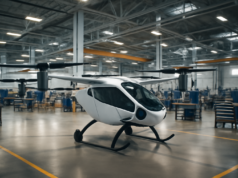
- Ola Electric is repurposing its gigafactory to produce EV drones and defence autonomous systems, expanding beyond electric scooter manufacturing using existing battery and motor expertise.
- India’s liberalized drone regulations and massive addressable market create unprecedented opportunities for domestically produced, cost-competitive EV drones across commercial, agricultural, and government sectors.
- This strategic pivot positions Ola Electric as a leader in India’s emerging personal air mobility ecosystem while advancing the nation’s goal of reducing dependence on foreign drone manufacturers.
Ola Electric, India’s leading electric vehicle manufacturer, is making a bold strategic pivot that signals the company’s ambitious entry into the personal air mobility and defence sectors. Originally constructed to mass-produce electric scooters, the company’s state-of-the-art gigafactory is now being repurposed and expanded to manufacture EV drones and defence-related autonomous systems. This transformation underscores how traditional EV manufacturers are rapidly diversifying into adjacent emerging technologies, and it positions Ola Electric as a significant player in India’s nascent urban air mobility ecosystem.
From Scooters to Sky: Ola Electric’s Strategic Expansion
Ola Electric’s decision to transition its gigafactory from scooter-focused production to include drone manufacturing reflects the company’s forward-thinking approach to electrification and mobility innovation. The facility, initially designed with the capacity and technological infrastructure to support high-volume two-wheeler production, possesses many of the core competencies required for drone assembly—including battery integration, electric motor manufacturing, quality control systems, and supply chain logistics. Rather than investing in entirely new facilities, Ola Electric is leveraging existing infrastructure to capitalize on the rapidly growing demand for EV drones in commercial and consumer markets.
This pivot also demonstrates the interconnectedness of the EV ecosystem in India. Battery technology, motor efficiency, lightweight materials, and power management systems developed for electric scooters translate directly to drone applications. By consolidating multiple product lines under one gigafactory roof, Ola Electric can achieve economies of scale, reduce manufacturing costs, and accelerate time-to-market for new drone products. The company’s existing expertise in supply chain management, regulatory compliance, and manufacturing excellence becomes a competitive advantage in the drone sector.
Furthermore, this expansion reflects broader industry trends where established EV makers are recognizing that the future of mobility is three-dimensional. As urban air mobility (UAM) regulations mature across India and Asia, companies that can transition from two wheels to autonomous flight will be positioned to dominate the next wave of transportation innovation. Ola Electric’s gigafactory pivot is not merely a production line adjustment—it’s a strategic repositioning for the future of mobility infrastructure.
EV Drone Market Opportunity in India
India’s EV drone market is poised for explosive growth over the next five to ten years, driven by increasing demand for last-mile delivery, infrastructure inspection, agricultural applications, and search-and-rescue operations. The Indian government has been progressively liberalizing drone regulations through its Drone Rules 2021 and subsequent amendments, creating a favorable regulatory environment for commercial drone operations. With a population of 1.4 billion and vast geographical diversity, India presents one of the world’s largest untapped markets for autonomous aerial vehicles, particularly in rural and semi-urban areas where traditional logistics infrastructure is limited.
Ola Electric’s entry into drone manufacturing addresses a critical gap: the lack of domestically produced, cost-competitive EV drones for the Indian market. Most drones sold in India are imported, making them expensive and subject to lengthy supply chain delays. By manufacturing drones locally in a world-class gigafactory, Ola Electric can significantly reduce costs, improve accessibility, and support India’s “Make in India” initiative. This domestic production capability is especially valuable for sectors like agriculture, where drone-based crop monitoring and precision spraying could revolutionize farming practices across the country.
The addressable market extends beyond consumer and commercial delivery drones. Government agencies, telecom companies, energy firms, and emergency services represent substantial institutional buyers for inspection drones, surveillance systems, and emergency response platforms. Ola Electric’s manufacturing scale and quality standards position the company to compete for these lucrative government and enterprise contracts, particularly as India seeks to reduce dependence on foreign drone manufacturers for critical infrastructure and defence applications.
Defence and Autonomous Systems Integration
The mention of defence-related technology in Ola Electric’s drone expansion strategy suggests the company is also targeting military and paramilitary applications for autonomous aerial systems. India’s defence sector has increasingly recognized the strategic importance of indigenous drone capabilities, particularly in border security, surveillance, and tactical operations. As international tensions in South Asia persist, the Indian government has prioritized developing a robust domestic defence technology ecosystem, creating opportunities for private manufacturers to supply military-grade autonomous systems.
Ola Electric’s gigafactory could support the production of surveillance drones, reconnaissance platforms, and other autonomous defence systems that require the precision engineering, quality assurance, and scalability that a purpose-built facility provides. The company’s involvement in defence technology also opens doors to collaboration with India’s defence research organizations, such as the Defence Research and Development Organisation (DRDO), potentially accelerating innovation and securing long-term government contracts. Additionally, defence-focused manufacturing often carries higher profit margins and provides stable, long-term revenue streams—valuable attributes for a company scaling into new markets.
The defence pivot also enhances Ola Electric’s strategic importance within India’s broader economic and security framework. By developing indigenous drone and autonomous system capabilities, the company contributes to India’s strategic autonomy and reduces vulnerability to external supply chain disruptions. This geopolitical dimension may translate into government support, preferential procurement policies, and regulatory advantages that accelerate market adoption of Ola Electric’s defence and drone products.
Manufacturing Excellence and Scalability
Ola Electric’s gigafactory represents one of India’s most advanced manufacturing facilities, featuring cutting-edge automation, robotics, and quality control systems. The facility was engineered to handle the complex assembly of electric scooters, which involve battery packs, motor integration, electronic control systems, and rigorous testing protocols. These same capabilities—precision assembly, battery expertise, and quality assurance—are directly applicable to drone manufacturing, where reliability and performance standards are equally stringent. The factory’s existing infrastructure, including power supply, supply chain networks, and skilled workforce, provides a solid foundation for rapid scaling into drone production.
The transition to drone manufacturing also allows Ola Electric to optimize its gigafactory utilization. As the electric scooter market matures and competition intensifies, diversifying into higher-margin products like drones helps sustain profitability and justifies the massive capital investment in the facility. Multi-product manufacturing also provides flexibility—if demand in one segment fluctuates, the facility can adjust production allocation across scooters, drones, and defence systems to maintain operational efficiency. This manufacturing resilience is particularly valuable in emerging markets where demand patterns can shift rapidly.
Furthermore, Ola Electric’s commitment to expanding drone production at its gigafactory signals confidence in the long-term viability of the EV drone market. The company is not treating drones as a niche experiment but as a core business pillar worthy of integration into its primary manufacturing facility. This level of commitment attracts component suppliers, research institutions, and talent to the ecosystem around the gigafactory, creating agglomeration effects that enhance innovation and competitive advantage. Over time, the facility could become a hub for advanced manufacturing and aerospace technology in India.
Competitive Landscape and Market Implications
Ola Electric’s drone manufacturing ambitions position the company to compete with both international drone manufacturers—such as DJI, Parrot, and emerging Western EV drone startups—and domestic Indian competitors. However, Ola Electric possesses distinct advantages: established manufacturing excellence, existing battery and electric motor capabilities, a recognizable brand, and distribution networks already in place across India. Unlike specialized drone startups, Ola Electric can leverage synergies across its product portfolio, cross-sell to existing scooter customers, and achieve cost structures that smaller competitors cannot match. The company’s entry into drones is likely to intensify competition and accelerate market consolidation, particularly among smaller Indian drone manufacturers lacking comparable manufacturing scale.
Ola Electric’s gigafactory pivot also sends a signal to other EV manufacturers about diversification opportunities. Companies like Bajaj Auto, Hero MotoCorp, and TVS Motor may recognize similar potential in their own facilities to pivot toward drone manufacturing, transforming India’s automotive manufacturing base into a multi-modal mobility ecosystem. This competitive dynamic could ultimately accelerate India’s emergence as a global centre for EV drone innovation and production, rivalling China’s dominance in the sector. For consumers and enterprises in India, increased competition among domestic manufacturers promises better products, lower prices, and faster innovation cycles.
Internationally, Ola Electric’s drone ambitions represent India’s growing technological ambition and manufacturing capability. As Indian drone manufacturers scale production and improve quality, they become formidable competitors in export markets across Asia, Africa, and Southeast Asia. Ola Electric’s gigafactory could catalyze India’s evolution from a drone importing nation to a drone exporting powerhouse, creating jobs, boosting trade balances, and enhancing India’s global technology reputation.
Key Takeaways
- Ola Electric’s gigafactory is transitioning from scooter-focused production to manufacture EV drones and defence autonomous systems, leveraging existing battery and motor expertise.
- India’s liberalized drone regulations and vast addressable market create a major opportunity for domestically produced, cost-competitive EV drones across commercial, agricultural, and government sectors.
- The move signals India’s strategic push toward indigenous drone and defence technology capabilities while positioning Ola Electric as a key player in the emerging personal air mobility ecosystem.
Ola Electric’s transformation of its gigafactory from scooter manufacturing to EV drone and defence production represents a watershed moment for India’s personal air mobility sector. The company is not simply adding a new product line; it is repositioning itself as a comprehensive mobility innovator capable of serving customers across two wheels, the skies, and critical national defence infrastructure. As the global eVTOL and EV drone markets expand, manufacturing capacity and production expertise will become critical bottlenecks. By securing world-class production facilities and technical capabilities now, Ola Electric is positioning itself at the forefront of India’s air mobility revolution and signalling to investors, partners, and regulators that domestically produced EV drones are not a distant future—they are a present reality.