HIGHLIGHTS
- Florida Polytechnic University’s police department becomes the first law enforcement agency in the U.S. to deploy an eVTOL aircraft for operational duty.
- The electric aircraft enables faster emergency response times and expanded patrol coverage across the university campus and surrounding areas.
- This milestone demonstrates the practical viability of air mobility technology in public safety and law enforcement applications.
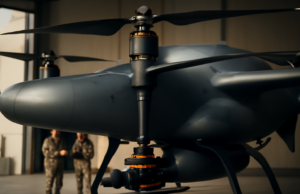
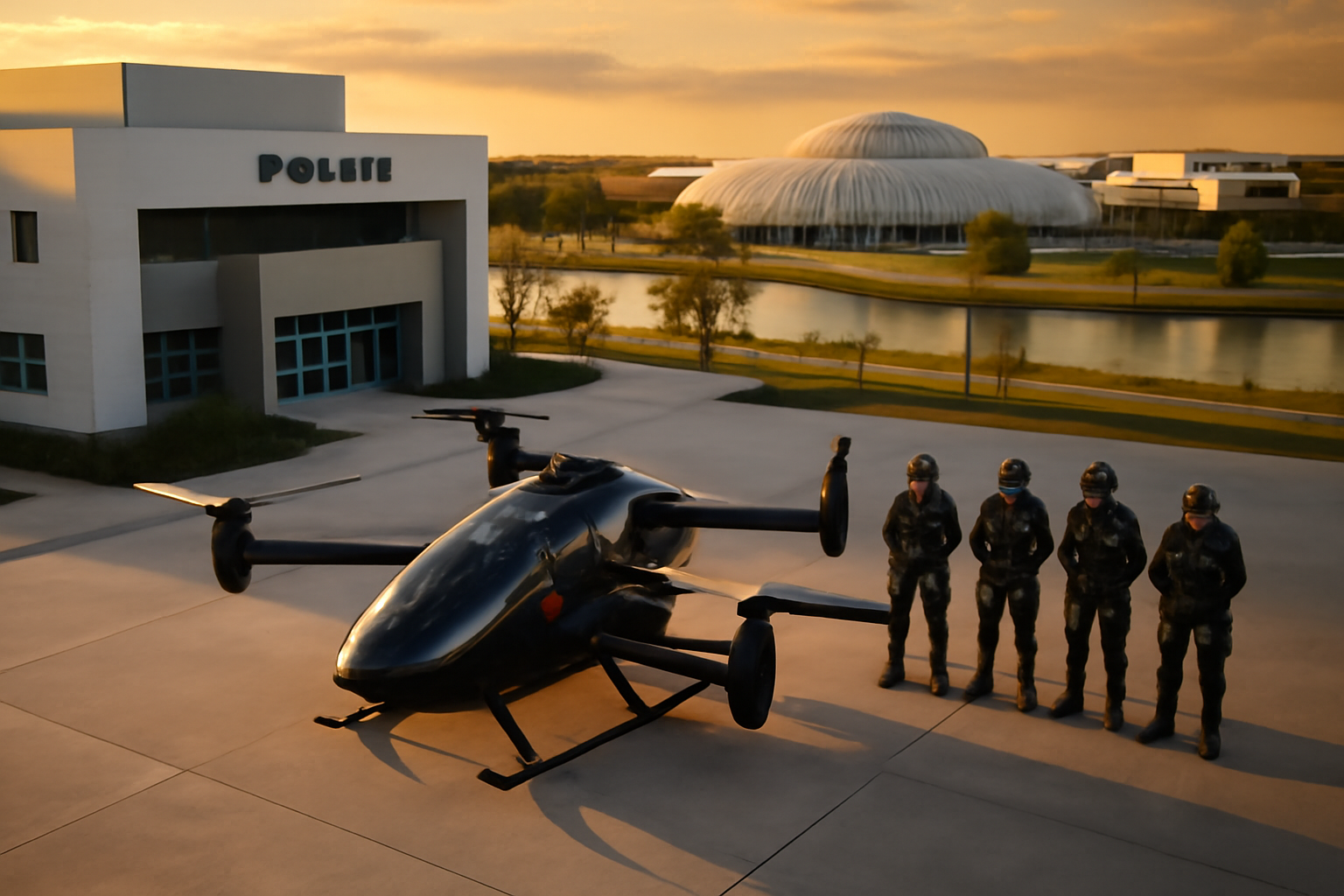
Florida Polytechnic University has achieved a groundbreaking milestone in the world of personal air mobility and public safety innovation. The university’s police department has officially become the first law enforcement agency in the United States to operationalize an electric vertical takeoff and landing (eVTOL) aircraft for active patrol and emergency response duties. This historic deployment represents a watershed moment in how law enforcement can leverage emerging aviation technologies to improve response times, expand coverage, and enhance community safety. The initiative underscores the growing recognition that eVTOL aircraft are no longer theoretical concepts confined to aviation conferences—they are now practical tools transforming real-world operations.
A Pioneering Step in Law Enforcement Innovation
Florida Polytechnic University’s decision to integrate an eVTOL aircraft into its police department operations marks a significant departure from traditional law enforcement methods. The university, located in Lakeland, Florida, recognized the potential of electric vertical takeoff technology to address specific operational challenges faced by campus and regional security forces. By deploying this aircraft, Florida Poly is not only advancing its own public safety infrastructure but also serving as a test case for how other law enforcement agencies—both municipal and institutional—might adopt similar technologies in the coming years.
The police department’s eVTOL platform enables officers to respond to emergencies with unprecedented speed and flexibility. Unlike traditional ground-based patrol vehicles, the aircraft can bypass traffic congestion, traverse difficult terrain, and reach areas of the sprawling university campus in seconds rather than minutes. This capability is especially valuable during critical incidents where every second counts, such as medical emergencies, security threats, or search and rescue operations.
The acquisition and deployment of this aircraft also reflects Florida Poly’s institutional commitment to innovation and technological advancement. As a university with a strong focus on engineering and applied technology, the institution is well-positioned to lead the charge in adopting cutting-edge solutions that benefit the broader community. By putting an eVTOL aircraft into the hands of trained officers, Florida Poly is conducting real-world research that will inform best practices for law enforcement air mobility adoption nationwide.
Operational Advantages and Practical Benefits
The operational benefits of deploying an eVTOL aircraft in a law enforcement context are substantial and multifaceted. First and foremost, the electric vertical takeoff and landing capability allows the aircraft to operate from distributed landing sites across the university campus and surrounding areas. Unlike traditional helicopters, which require large, dedicated helipad facilities, eVTOL platforms are considerably more flexible in their infrastructure requirements. This means law enforcement can position the aircraft at multiple strategic locations, reducing response time to incidents across a wider geographic area.
Cost efficiency represents another significant advantage. Electric aircraft are substantially cheaper to operate than traditional rotorcraft, both in terms of fuel consumption and maintenance requirements. The reduced operating costs enable Florida Poly to allocate more resources toward training officers, upgrading other public safety systems, and expanding the range of services available to the campus community. Over time, this cost advantage could make eVTOL-based law enforcement solutions economically viable even for smaller police departments with limited budgets.
Environmental sustainability is a third pillar of benefit. As eVTOL aircraft produce zero direct emissions, the deployment aligns with Florida Poly’s broader environmental stewardship goals and demonstrates a commitment to reducing the carbon footprint of campus operations. The noise signature of electric aircraft is also significantly lower than traditional helicopters, minimizing disruption to the academic environment and surrounding neighborhoods during emergency response operations.
Technical Specifications and Aircraft Capabilities
While specific technical details about the exact aircraft model deployed by Florida Poly’s police department may vary, modern eVTOL platforms designed for law enforcement applications typically feature vertical takeoff and landing capabilities, cruising speeds between 40 and 80 miles per hour, and flight endurance ranging from 20 to 45 minutes on a single charge. These specifications are well-suited for campus-scale and regional emergency response scenarios where rapid deployment over short to medium distances is required.
The aircraft is equipped with advanced avionics systems, including GPS navigation, live video streaming capabilities, and integration with dispatch and command center systems. Officers operating or coordinating with the eVTOL platform receive real-time situational awareness data, allowing ground personnel to make informed decisions based on aerial reconnaissance. This capability is particularly valuable in search operations, monitoring large events, traffic management, and tactical response scenarios.
Safety systems built into modern law enforcement eVTOL platforms include redundant battery and propulsion systems, automated emergency descent capabilities, and collision avoidance sensors. These features ensure that the aircraft can operate reliably in demanding public safety situations while maintaining the highest standards of flight safety. Rigorous pilot training and certification programs ensure that operators are fully prepared to manage the aircraft in diverse operational scenarios.
Implications for the Broader Law Enforcement Community
Florida Poly’s groundbreaking deployment will almost certainly catalyze interest among other law enforcement agencies across the United States and internationally. Police departments, sheriff’s offices, and campus security operations are perpetually seeking ways to enhance response capabilities while managing operational budgets. The success of the Florida Poly initiative will provide valuable data on cost-benefit ratios, operational efficiency gains, and practical integration challenges that will inform decision-making for other institutions considering similar adoptions.
The regulatory environment surrounding law enforcement use of eVTOL aircraft is evolving rapidly. Federal Aviation Administration (FAA) regulations, state and local aviation laws, and municipal ordinances all play roles in determining how freely eVTOL platforms can be deployed. Florida Poly’s experience navigating this complex regulatory landscape will provide valuable guidance to other agencies. As more law enforcement organizations adopt eVTOL technology, regulatory frameworks will likely become more standardized and streamlined, reducing barriers to adoption for agencies of all sizes.
Partnerships between law enforcement agencies, eVTOL manufacturers, aviation authorities, and research institutions will be essential to scaling this technology across the sector. Florida Poly may find itself in a position to collaborate with other universities, law enforcement training centers, and technology companies to develop standardized protocols, training curricula, and operational guidelines that accelerate responsible adoption of air mobility solutions in public safety.
Challenges and Considerations Moving Forward
While the deployment of an eVTOL aircraft by Florida Poly’s police department is undoubtedly a major achievement, several challenges and considerations will need to be addressed as the technology is integrated into law enforcement operations. Weather limitations represent one significant constraint; eVTOL aircraft, like all aircraft, have defined operating parameters for wind speed, visibility, and precipitation. Officers and dispatchers must be trained to understand these limitations and have contingency plans for situations where weather prohibits air operations.
Public perception and community acceptance are equally important factors. The introduction of aerial surveillance and patrol capabilities in any community—even a university campus—raises questions about privacy and civil liberties. Florida Poly will need to communicate clearly about how the eVTOL aircraft will be used, what safeguards are in place to protect privacy, and how community members can raise concerns or file complaints if they believe the aircraft is being used inappropriately.
Training and workforce development represent ongoing challenges. Pilots and maintenance personnel with eVTOL-specific expertise are still relatively scarce in the job market. Florida Poly will need to invest in comprehensive training programs to ensure that officers and support staff are fully capable of operating and maintaining the aircraft safely and effectively. As more law enforcement agencies adopt eVTOL technology, the demand for trained personnel will increase, creating opportunities for educational institutions and vocational programs to develop specialized curricula.
Key Takeaways for Law Enforcement and Air Mobility Stakeholders
- Florida Polytechnic University’s deployment of an eVTOL aircraft in its police department represents the first operational use of this technology by a law enforcement agency, opening new possibilities for emergency response and campus security.
- The economic, operational, and environmental advantages of eVTOL platforms—including lower operating costs, faster response times, and zero-emission flight—make them attractive solutions for law enforcement agencies seeking to modernize their fleets.
- As law enforcement agencies begin adopting eVTOL technology, standardized training, regulatory clarity, and community engagement will be essential to ensuring safe, effective, and responsible deployment of these aircraft in public safety operations.
Florida Polytechnic University’s pioneering deployment of an eVTOL aircraft in its police department marks a pivotal moment in the convergence of personal air mobility technology and public safety. This achievement demonstrates that electric vertical takeoff and landing platforms are no longer futuristic concepts—they are operational realities that can deliver tangible benefits in real-world law enforcement scenarios. As other agencies learn from Florida Poly’s experience and begin evaluating eVTOL adoption for their own operations, the public safety sector will increasingly leverage air mobility as a standard tool in emergency response and patrol strategies. The success of this initiative will likely accelerate the broader adoption of eVTOL technology across the law enforcement community and establish Florida Poly as a leader and innovator in the intersection of aviation technology and public safety.