HIGHLIGHTS
- Governor DeSantis officially highlights a dedicated test facility in Alachua designed specifically for eVTOL and autonomous flying vehicle development and validation.
- Florida positions itself as a key hub for advanced air mobility innovation, supporting both regulatory testing and commercial deployment of electric vertical takeoff aircraft.
- The facility represents government commitment to fostering autonomous vehicle technology, signaling competitive advantage for manufacturers and operators choosing Florida as a testing ground.
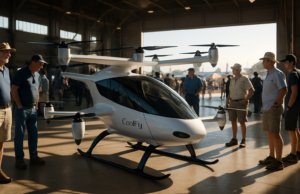
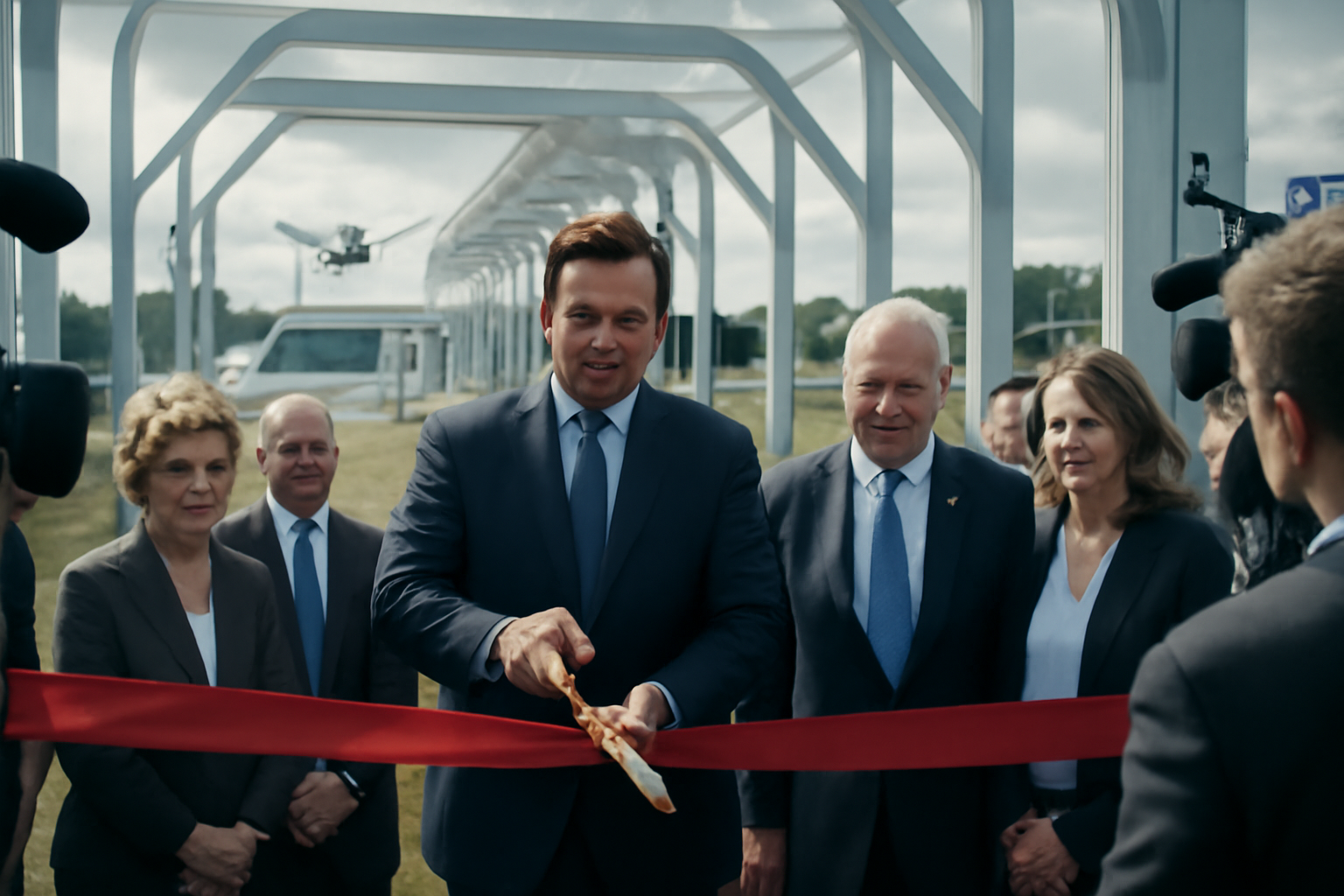
In a significant move toward establishing Florida as a leader in advanced air mobility innovation, Governor Ron DeSantis has highlighted a new dedicated test facility in Alachua designed specifically for electric vertical takeoff and landing (eVTOL) aircraft and autonomous vehicle development. The announcement underscores growing state-level support for personal air mobility technology and signals a strategic push to attract manufacturers, operators, and aerospace companies to test and deploy next-generation flying vehicles in Florida’s airspace.
Florida’s Strategic Investment in Urban Air Mobility
The Alachua test facility represents a tangible commitment from the state of Florida to become a hub for eVTOL innovation and deployment. By establishing infrastructure specifically designed for autonomous flying vehicles and electric vertical takeoff platforms, Governor DeSantis is positioning Florida alongside other innovation corridors seeking to lead the urban air mobility revolution. The facility will serve as both a testing ground and a validation center for manufacturers developing advanced aircraft technologies.
This strategic investment acknowledges the exponential growth expected in the personal air mobility sector over the next decade. As companies worldwide accelerate eVTOL certification and commercial rollout timelines, having a dedicated, state-supported test facility provides manufacturers with regulatory certainty and operational flexibility. The Alachua location offers Florida-based companies and those considering relocation a competitive advantage in accessing controlled airspace for flight testing without competing for limited federal resources.
The facility also reflects broader recognition that successful eVTOL commercialization requires more than federal approval—it demands state and local infrastructure, airspace coordination, and community partnerships. By taking an active role in supporting these technologies, Florida is demonstrating that it understands the economic and workforce benefits of becoming an early adopter of urban air mobility infrastructure development.
Regulatory Framework and Safety Testing Capabilities
The test facility in Alachua is equipped to support comprehensive validation of autonomous flying vehicles and eVTOL systems under controlled conditions. This includes flight testing, sensor validation, communication protocol verification, and integration testing with broader autonomous systems. Having a dedicated facility allows manufacturers to accelerate development cycles by reducing wait times for airspace access and enabling iterative testing protocols that would be impractical in limited federal test airspaces.
From a regulatory perspective, having state-endorsed facilities can streamline the path from concept to certification. While the Federal Aviation Administration (FAA) maintains ultimate authority over airworthiness certification and operational approvals, state-level support and infrastructure remove practical bottlenecks. Manufacturers can demonstrate compliance readiness, gather performance data, and validate safety systems before entering the intensive FAA certification process. This two-tier approach—state-facilitated testing followed by federal certification—is becoming standard practice in advanced aviation technology development.
The Alachua facility also provides space for testing integration between eVTOL systems and autonomous ground vehicles, creating opportunities to validate end-to-end urban mobility solutions. This integrated approach to testing autonomous air and ground transportation is essential for realizing the vision of seamless multimodal mobility networks in future smart cities.
Economic Opportunity and Industry Attraction
By actively promoting the Alachua test facility, Governor DeSantis is sending a clear signal to the aerospace and autonomous vehicle industries that Florida welcomes investment and operational headquarters. The eVTOL sector represents significant economic potential, with manufacturing, maintenance, operator training, and support services creating high-skilled employment opportunities. Companies like Joby Aviation, Archer Aviation, and Lilium are actively seeking optimal geographic locations for testing and eventual operations; state-level endorsement and infrastructure support are key decision factors.
The facility also attracts a broader ecosystem of suppliers, integrators, and service providers. Avionics manufacturers, battery developers, software firms, and maintenance organizations all benefit from proximity to active testing operations and established manufacturers. This clustering effect can accelerate innovation through knowledge sharing, talent development, and collaborative problem-solving within the industry.
Beyond direct aerospace employment, the facility supports adjacent sectors including real estate development, hospitality, transportation, and logistics. As urban air mobility becomes operational in Florida’s cities, the demand for pilot training, aircraft maintenance facilities, charging infrastructure, and operations control centers will generate additional economic activity throughout the state. Early investment in testing infrastructure positions Florida to capture disproportionate benefits from these emerging industries.
Path to Commercial Deployment in Florida Cities
The Alachua test facility is not an endpoint but rather a stepping stone toward operational deployment of eVTOL services in Miami, Tampa, Orlando, and other major Florida metropolitan areas. Successful testing and validation at the facility builds the operational experience, safety records, and regulatory documentation needed to launch passenger and cargo operations. Companies that prove their systems’ reliability in Alachua will have a compelling case for early operational authorization in Florida’s major urban corridors.
This pathway from testing to operations requires careful coordination between state aviation authorities, the FAA, local municipalities, and private operators. Governor DeSantis’s public endorsement of the test facility signals that the state government will actively facilitate these conversations and work toward streamlined approval processes for operators meeting safety and performance standards. Such supportive policy frameworks are crucial differentiators in the competitive race among U.S. states to host the first commercially viable urban air mobility networks.
The facility also enables pilot training and operational familiarization for future eVTOL operators, maintenance technicians, and air traffic management specialists. Building a skilled workforce in advance of commercial deployment ensures that when eVTOL services launch in Florida cities, trained personnel are available to operate and support these vehicles. This workforce development aspect is often overlooked but is critical to successful technology commercialization.
Key Takeaways for the eVTOL Industry
- State-level infrastructure investment in dedicated eVTOL test facilities reduces commercialization timelines and accelerates the path from concept to operational deployment.
- Governor DeSantis’s public support signals Florida’s competitive positioning in the urban air mobility sector, attracting manufacturers and operators seeking optimal testing and deployment environments.
- The Alachua facility enables integrated autonomous air and ground vehicle testing, advancing the multimodal urban mobility vision while generating high-skilled employment and economic development opportunities.
The Alachua test facility represents a meaningful step forward in Florida’s journey toward becoming a leader in personal air mobility and autonomous vehicle technology. By combining state support, regulatory clarity, and modern infrastructure, Governor DeSantis is laying the groundwork for the next generation of transportation systems. As eVTOL technology matures and regulatory frameworks solidify, facilities like this will play an increasingly important role in validating innovations and enabling the smooth transition from experimental aircraft to commercially viable urban air mobility services. The companies and states that establish these capabilities early will enjoy lasting competitive advantages as the aviation industry enters its most transformative era in decades.