HIGHLIGHTS
- Tesla’s Roadster failed to achieve flight, but the demonstration provided critical real-world data on power-to-weight ratios and energy efficiency that will shape next-generation flying vehicle design.
- Battery energy density emerged as the confirmed bottleneck limiting personal air mobility; industry now focuses on solid-state and advanced battery technologies to overcome this constraint.
- Commercial flying vehicle deployment timelines have been recalibrated to 2030-2035 for meaningful market development, driven by realistic assessment of technical, regulatory, and infrastructure requirements.
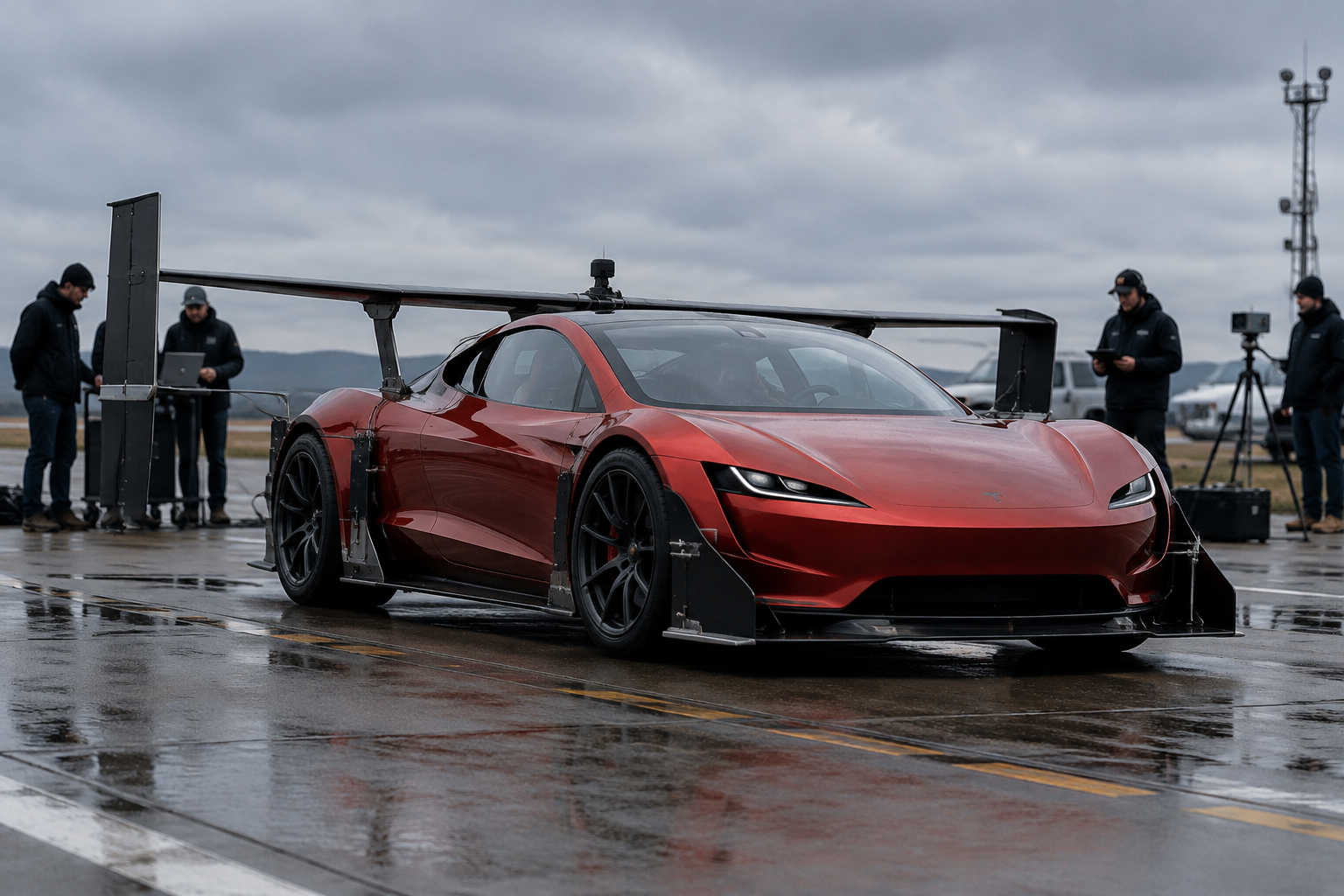
Elon Musk’s highly anticipated Roadster demonstration captured headlines this week, but not quite in the way Tesla had envisioned. The vehicle failed to achieve actual flight during its public reveal, sending observers and industry analysts scrambling to understand what the setback means for the broader personal air mobility sector. However, despite the failed flight attempt, experts argue that the demonstration revealed valuable technological insights that could significantly accelerate development in flying car design and electric vertical takeoff and landing (eVTOL) systems.
The Failed Flight Attempt and What It Reveals
The Roadster demonstration was meant to showcase Tesla’s latest innovations in lightweight materials, power systems, and aerodynamic engineering—all critical components for any functional flying vehicle. When the vehicle failed to lift off as planned, rather than dismissing the effort entirely, industry observers recognized the demonstration as a valuable data point. The failure provided real-world performance metrics, structural stress tests, and propulsion system feedback that would have taken months or years to develop through traditional simulation methods.
What became apparent during the failed demonstration was that Tesla had pushed the boundaries of current battery density and motor efficiency to their limits. The Roadster’s power-to-weight ratio, while impressive for a ground vehicle, proved insufficient for sustained vertical lift using current-generation technology. This finding aligns with ongoing research across the personal air mobility industry and highlights a critical bottleneck: energy density rather than conceptual design.
Rather than a complete failure, the demonstration functioned as a real-world stress test that will inform future engineering decisions. The data collected from the attempt—including aerodynamic behavior, structural integrity under load, and power consumption patterns—provides engineers with concrete evidence that will shape the next generation of flying vehicle prototypes.
Implications for the eVTOL and Flying Car Industry
The Roadster demonstration, despite its shortcomings, underscores a fundamental reality that the personal air mobility sector must confront: the gap between aspiration and current technological capability remains substantial. However, this realization is not pessimistic—it is clarifying. Manufacturers and startups working on eVTOL aircraft and flying cars now have a clearer understanding of where the real engineering challenges lie, allowing them to allocate resources more effectively.
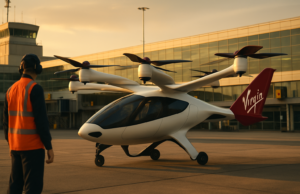
For companies like Joby Aviation, Archer Aviation, and traditional automakers investing in flying vehicle development, the Roadster’s failed flight serves as a cautionary tale about over-promising timelines while simultaneously validating their own cautious, iterative development approaches. Many eVTOL companies have deliberately focused on smaller passenger capacities and optimized battery management precisely because they recognized the energy density limitations that the Roadster demonstration now publicly revealed.
The broader implication is that the personal air mobility market will likely mature through incremental technological improvements rather than revolutionary breakthroughs. Battery chemistry advances, motor efficiency gains, and novel materials science innovations will collectively enable the flying vehicles we envision—but not through a single dramatic moment. Instead, progress will accumulate through thousands of small engineering victories, each tested and validated in real-world conditions.
Battery Technology as the Critical Constraint
The Roadster’s inability to achieve flight has refocused industry attention on battery technology as the primary limiting factor in personal air mobility development. Current lithium-ion battery systems, while revolutionary for electric ground vehicles, simply cannot deliver the energy density required for sustained vertical flight in heavier platforms. A typical eVTOL aircraft uses energy at exponentially higher rates than even high-performance ground vehicles, creating an engineering equation that current battery chemistry cannot balance.
Tesla’s demonstration effectively proved that engineering excellence in vehicle design, materials science, and motor efficiency cannot overcome fundamental limitations in available energy density. This realization has already begun influencing investment patterns across the sector. Venture capital and corporate R&D divisions are increasingly funding advanced battery development projects focused specifically on aviation applications, including solid-state batteries, lithium-metal configurations, and novel electrolyte systems.
The next 24-36 months will be critical, as several solid-state battery companies approach commercialization of products with 2-3x higher energy density than current lithium-ion systems. If these technologies reach production at scale, they could fundamentally change the feasibility timeline for personal air mobility, potentially accelerating deployment of viable flying vehicles by five years or more.
What Success Actually Means for Flying Vehicles
The Roadster demonstration, in failing to fly, inadvertently clarified an important philosophical question: what does success look like for personal air mobility? The public imagination often fixates on dramatic images of sleek vehicles hovering majestically over urban landscapes. However, the real markers of progress are far more mundane: regulatory frameworks that accommodate air traffic, proven safety records across hundreds of flight hours, infrastructure for battery charging and vehicle maintenance, and economic models that justify operational costs for passengers.
Companies actually achieving incremental progress in these areas—like Joby’s recent commercial air taxi operations in select markets and Lilium’s partnerships with regional airports—represent genuine industry advancement. These companies are solving the complex problem of integrating air mobility into existing transportation networks, establishing operational procedures, and building the supporting infrastructure that flying vehicles require to become mainstream.
The Roadster’s failed flight actually highlights the difference between technical achievement and commercial viability. Building a vehicle that can theoretically lift off the ground is one problem; building an entire ecosystem where such vehicles operate safely, profitably, and legally is an entirely different challenge. The companies making genuine progress tend to focus on solving the ecosystem problem first, then iterating on the technical platform.
Timeline Recalibration and Industry Outlook
Following the Roadster demonstration, many observers are recalibrating their expectations for widespread personal air mobility deployment. The original optimistic forecasts—some predicting commercial flying car services by 2025—now seem obviously premature. However, revised forecasts from major consulting firms still anticipate meaningful market development by 2030-2035, with larger-scale commercial operations possible by 2040.
These adjusted timelines align better with the actual technical development curve and regulatory environment. Regulators like the FAA and EASA are actively developing certification frameworks for eVTOL aircraft, but this process cannot be rushed without compromising safety. The Roadster’s failure serves as a humbling reminder that rushing complex technology to market without adequate testing creates risks that responsible companies cannot accept.
Looking forward, the companies most likely to succeed in personal air mobility will be those that combine technical innovation with pragmatic problem-solving. They will acknowledge the battery technology constraints that the Roadster demonstration exposed, invest in solving them systematically, and simultaneously develop the regulatory, operational, and economic frameworks required for viable commercial services.
Key Takeaways for the Industry
- Battery energy density remains the critical bottleneck limiting personal air mobility advancement, validating the focus on solid-state and next-generation battery technologies.
- Incremental, iterative progress through real-world testing—rather than revolutionary breakthroughs—will likely characterize the path to viable flying vehicles.
- Commercial success requires solving ecosystem challenges (regulatory, operational, infrastructure) as much as technical vehicle design challenges.
The Roadster’s failed flight might seem like a setback, but it represents exactly the kind of honest technical reality check that the personal air mobility industry needs. By confronting fundamental engineering constraints and recalibrating timelines accordingly, companies and regulators can focus resources on the genuine solutions that will make flying cars a reality—not in the next two years, but as a transformative transportation technology within the next decade. The path forward is clearer now, even if the destination remains further away than some optimists once hoped.