HIGHLIGHTS
- West Palm Beach commissioners approved Related Ross’ air taxi vertiport plans, signaling regulatory support for urban air mobility infrastructure in South Florida.
- The air taxi hub represents a critical step toward establishing viable eVTOL commuter routes in major metropolitan areas.
- Regional approval sets a precedent for integrating advanced air mobility into existing urban infrastructure and transportation networks.
In a significant regulatory victory for the personal air mobility sector, West Palm Beach commissioners have officially approved Related Ross’ proposed air taxi vertiport facility. This approval represents a crucial stepping stone in the path toward mainstream urban air mobility (UAM) integration across the United States. The decision reflects growing municipal confidence in electric vertical takeoff and landing (eVTOL) technology and its potential to revolutionize regional transportation networks in South Florida and beyond.
Understanding the West Palm Beach Air Taxi Initiative
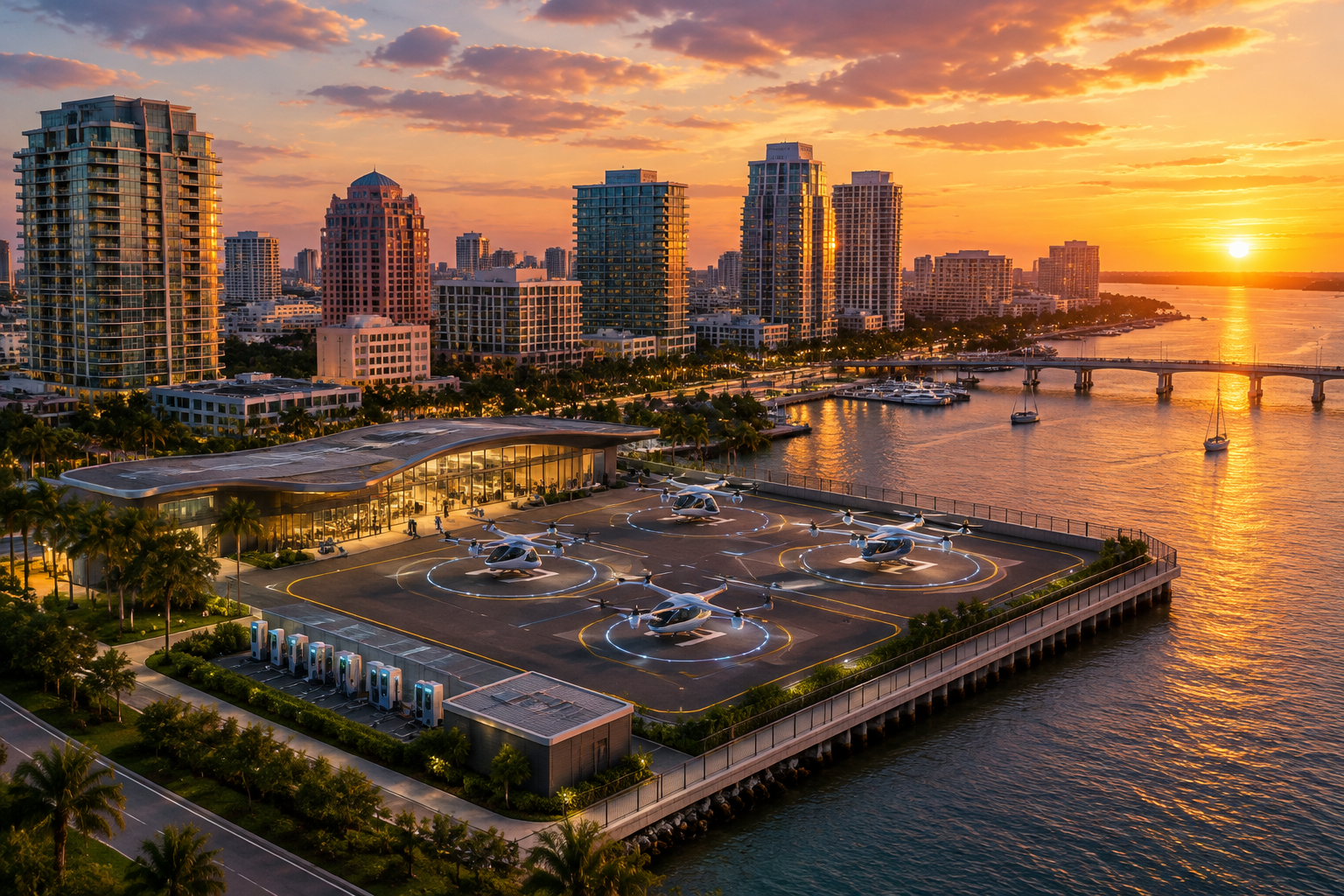
West Palm Beach’s approval of the Related Ross air taxi hub marks a watershed moment for infrastructure planning in South Florida. The proposed vertiport facility is designed to serve as a strategic landing and charging hub for electric aircraft, positioning the region as a leader in adopting advanced air mobility solutions. This development comes at a time when major developers and aviation companies are increasingly seeking municipal support for similar projects across key metropolitan corridors.
The facility is envisioned as a modern transportation hub that seamlessly integrates eVTOL services with existing ground transportation networks. By establishing dedicated landing zones with appropriate charging infrastructure, the vertiport will support point-to-point air taxi operations that can reduce travel times between West Palm Beach and neighboring communities. The design emphasizes sustainable operations, with a focus on electric-powered aircraft that produce zero direct emissions and minimal noise pollution compared to traditional helicopters.
Related Ross, a prominent real estate and development firm, has positioned this air taxi hub as part of a broader vision for mixed-use development that enhances the region’s connectivity and economic competitiveness. The company’s commitment to integrating cutting-edge transportation technology into urban planning demonstrates how private sector innovation can align with municipal priorities around sustainability and modern infrastructure.
Regulatory Approval and Municipal Support
The commissioners’ decision to greenlight the air taxi stop reflects a shift in how local governments view advanced air mobility. Rather than dismissing eVTOL operations as futuristic speculation, West Palm Beach officials recognized the tangible benefits these services could provide to residents and businesses. The approval process involved careful consideration of safety protocols, noise mitigation strategies, and integration with existing zoning regulations—all critical factors in establishing precedent for future UAM projects.
This municipal endorsement is particularly noteworthy given the ongoing evolution of regulatory frameworks governing eVTOL operations. The FAA continues to develop operational guidelines and certification standards for new aircraft types, but cities like West Palm Beach are taking proactive steps to prepare ground infrastructure. By approving dedicated vertiport facilities before aircraft certification is fully finalized, municipalities position themselves to capture first-mover advantages in the emerging air mobility market.
The commissioners’ support also signals confidence in the business models being proposed by air mobility operators. With multiple eVTOL manufacturers advancing toward commercial operations—including companies like Joby Aviation, Archer Aviation, and Lilium—the demand for urban landing sites is expected to increase substantially. West Palm Beach’s early approval positions the region to become a hub for these operations, potentially attracting additional investment and economic activity.
Infrastructure and Environmental Implications
The proposed vertiport facility incorporates modern design principles focused on sustainability and urban integration. Charging infrastructure powered by renewable energy sources ensures that air taxi operations remain environmentally friendly throughout their lifecycle. The facility’s location in West Palm Beach allows for efficient connectivity to key business districts, residential areas, and regional transportation hubs, creating a genuine alternative to ground-based congestion.
Environmental benefits extend beyond zero direct emissions. eVTOL aircraft operate at lower altitudes than fixed-wing aircraft and produce significantly less noise than traditional helicopters, addressing long-standing community concerns about aviation activity. By routing air traffic through designated vertiport corridors, municipalities can minimize noise impacts on residential areas while maintaining operational efficiency. This controlled approach to airspace management creates a template for how urban air mobility can coexist harmoniously with existing communities.
The infrastructure investment also addresses broader transportation challenges facing South Florida. The region’s geography—featuring numerous islands, water barriers, and congested roadways—makes it particularly well-suited for air taxi services. By leveraging vertical flight capabilities, air taxis can bypass surface traffic entirely, offering commuters a compelling alternative to sitting in bumper-to-bumper traffic on crowded highways. This mobility advantage could yield significant quality-of-life improvements for residents while reducing transportation-related carbon emissions.
Market Implications and Future Growth
Related Ross’ air taxi hub represents more than a single infrastructure project; it signals market confidence in the commercial viability of urban air mobility. As the first purpose-built vertiport facility to receive municipal approval in South Florida, this project will likely catalyze similar developments throughout the region. Other developers and municipalities will be watching West Palm Beach’s implementation closely, using it as a blueprint for their own UAM infrastructure plans.
The approval also comes at an opportune moment in the eVTOL industry’s development cycle. Multiple manufacturers have announced specific timelines for commercial operations, with some planning to launch air taxi services in major US cities within the next two to three years. West Palm Beach’s forward-thinking infrastructure planning positions the region to capture these early commercial routes, potentially establishing it as a significant hub in the emerging urban air mobility network.
Broader economic implications extend to job creation, real estate value appreciation, and regional competitiveness. Cities that successfully integrate air mobility infrastructure early will likely attract more skilled workers, entrepreneurs, and businesses seeking modern transportation options. The vertiport facility itself will require ongoing operations and maintenance, creating permanent employment opportunities. Additionally, proximity to air taxi services may command a premium in real estate markets, benefiting property owners and local tax bases.
Navigating Regulatory Complexities and Future Considerations
While the commissioners’ approval represents a major victory, the path from facility approval to operational air taxi service remains complex. The FAA must complete certification of specific eVTOL aircraft models, establish operational procedures for urban airspace, and coordinate with air traffic control systems to safely integrate aircraft into busy metropolitan airspace. West Palm Beach commissioners have essentially positioned the city to be ready when these regulatory milestones are achieved.
Safety and community acceptance remain paramount concerns for municipal leaders. The vertiport facility must comply with strict airfield design standards, emergency procedures, and public safety protocols. Additionally, community outreach will be essential to address neighborhood concerns about noise, traffic patterns, and safety risks. Related Ross’ development plan will need to demonstrate how these concerns have been thoroughly evaluated and mitigated through careful facility design and operational procedures.
Looking forward, the West Palm Beach vertiport serves as a catalyst for broader infrastructure planning discussions. Other Florida municipalities are likely to explore similar projects, potentially creating an interconnected network of air taxi routes throughout the state. This regional coordination could establish South Florida as a leadership hub for urban air mobility technology and implementation, positioning the region favorably within the emerging global eVTOL market.
Key Takeaways for Air Mobility Stakeholders
- Municipal approval of purpose-built vertiport infrastructure is accelerating, moving urban air mobility from concept to concrete implementation
- Early adopters like West Palm Beach will likely capture significant competitive advantages as commercial eVTOL operations launch in major cities
- Coordinated planning between developers, regulators, and municipal governments is proving effective in overcoming traditional obstacles to air mobility adoption
The West Palm Beach commissioners’ approval of Related Ross’ air taxi hub represents a pivotal moment in the maturation of the urban air mobility industry. As municipalities worldwide begin planning for eVTOL integration, projects like this vertiport facility establish practical templates for thoughtful infrastructure development. The decision reflects not just regulatory confidence in the technology itself, but recognition that urban air mobility offers genuine solutions to transportation challenges facing modern cities. As we look toward the near-term commercialization of eVTOL services, infrastructure approvals like this one will prove increasingly critical to transforming personal air mobility from vision into everyday reality.