HIGHLIGHTS
- FAA has authorized long-range BVLOS (beyond-visual-line-of-sight) operations for uncrewed VTOL aircraft, eliminating prior restrictions that limited drone range and operational distance
- Operators must deploy advanced detect-and-avoid systems, encrypted communications, autonomous safety protocols, and pre-coordinated flight corridors to meet FAA safety and airspace integration standards
- This regulatory milestone enables scaled commercial drone delivery, rural logistics, emergency services, and urban air mobility applications while establishing precedent for future autonomous airspace access
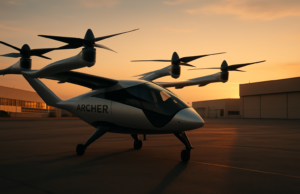
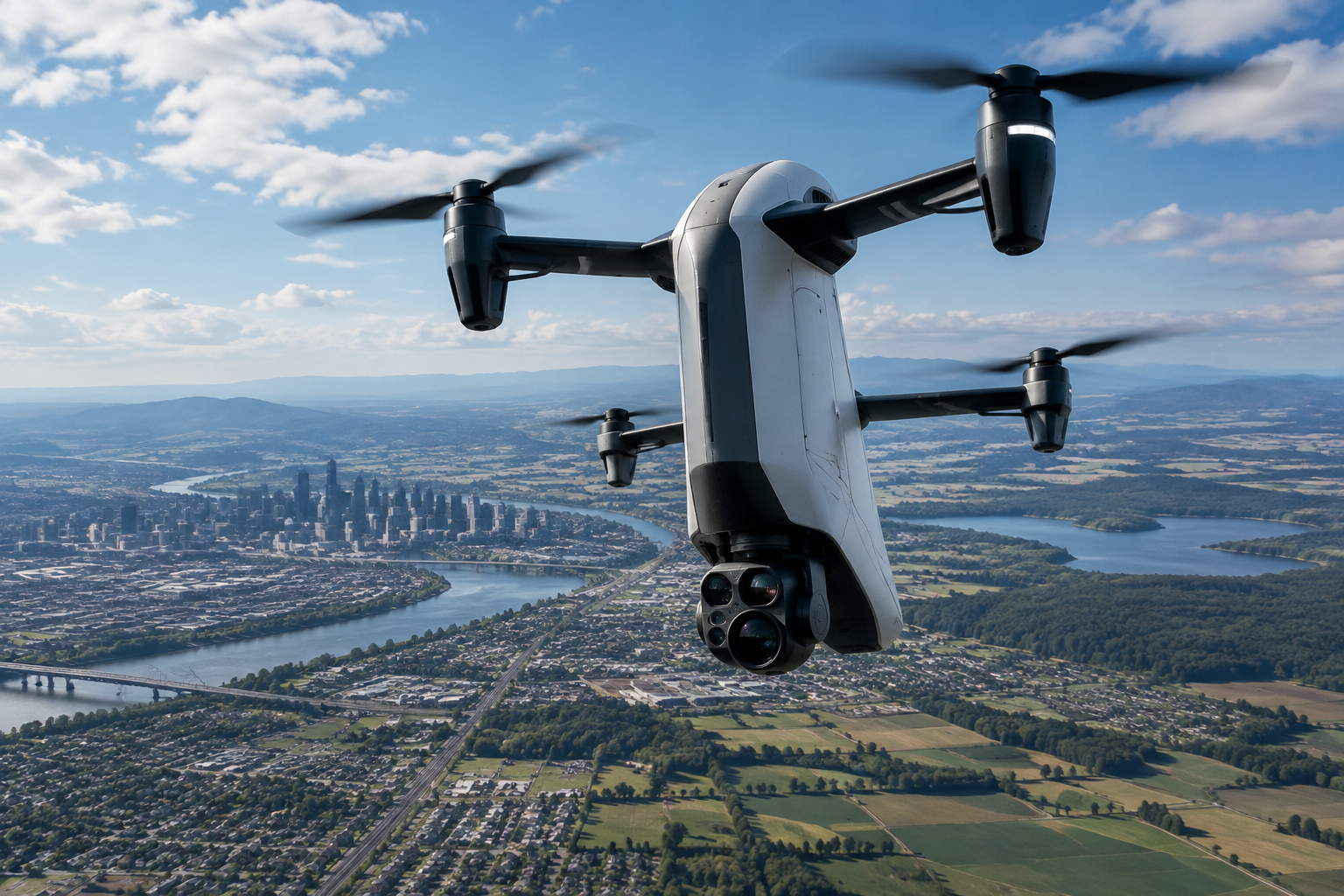
In a landmark regulatory decision, the Federal Aviation Administration (FAA) has authorized long-range beyond-visual-line-of-sight (BVLOS) operations for uncrewed vertical takeoff and landing (VTOL) aircraft. This authorization represents a significant milestone in the evolution of autonomous air mobility, removing critical operational constraints that have previously limited the commercial deployment of advanced drone systems across the United States.
Understanding BVLOS Authorization and Its Significance
Beyond-visual-line-of-sight operations allow unmanned aircraft to operate at distances and altitudes where the pilot cannot maintain direct visual contact with the vehicle. Historically, the FAA has restricted most drone operations to within the visual line of sight of a certified remote pilot, limiting range, efficiency, and practical commercial applications. This blanket restriction has been a major barrier to scaling drone delivery, infrastructure inspection, and other autonomous air mobility services.
The FAA’s authorization of long-range BVLOS operations for uncrewed VTOL aircraft removes this constraint for a specific class of advanced vehicles. VTOL craft—which can take off and land vertically without requiring a runway—are particularly well-suited for urban and suburban environments where traditional fixed-wing aircraft cannot operate. By permitting BVLOS operations, the FAA is effectively opening the door to transformative applications that were previously impossible under existing airspace rules.
This decision reflects growing confidence in unmanned aircraft systems technology, robust detect-and-avoid capabilities, and the operational maturity of the autonomous vehicle industry. It also signals the FAA’s commitment to enabling innovation while maintaining safety standards and airspace integrity.
Implications for Commercial Autonomous Air Mobility
The authorization of long-range BVLOS operations for uncrewed VTOL aircraft has immediate and substantial implications for commercial operators. Drone delivery companies, infrastructure service providers, and logistics firms can now plan business models based on extended range operations without the expense and complexity of maintaining visual line-of-sight pilots along entire flight corridors. This dramatically improves operational efficiency and reduces labor costs for providers.
Urban air mobility (UAM) companies developing electric VTOL aircraft for passenger and cargo transport will also benefit from this regulatory clarity. While current certification focuses on uncrewed systems, the precedent established by BVLOS authorization for VTOL platforms demonstrates the FAA’s willingness to adapt regulations as technology matures. This paves the way for future authorization of longer-range, higher-capacity crewed and autonomous VTOL services in metropolitan areas.
Additionally, this authorization enables new use cases in remote and underserved regions where traditional logistics infrastructure is limited or absent. Emergency medical deliveries, disaster response operations, and rural cargo transport become economically viable when aircraft can operate over extended distances without constant visual monitoring. The economic benefits could be particularly transformative for communities with geographic or infrastructure limitations.
Technical Requirements and Safety Standards
The FAA’s authorization of long-range BVLOS operations for uncrewed VTOL systems comes with stringent technical and operational requirements designed to ensure safety and airspace integration. Aircraft must be equipped with advanced detect-and-avoid (DAA) systems capable of identifying and maneuvering around other aircraft, weather systems, and obstacles autonomously. These systems must meet or exceed performance standards equivalent to manned aircraft collision avoidance systems.
Operators must also maintain continuous communication links with their aircraft, with automatic return-to-home protocols triggered if the link is lost. Flight corridors and operating areas are defined in advance and coordinated with existing air traffic, including commercial aviation routes and military operations. Real-time weather monitoring and automatic mission abort capabilities ensure that flights occur only under conditions where safety can be assured.
Data security and cybersecurity requirements are equally rigorous. All uncrewed aircraft operating under BVLOS authorization must demonstrate resilience against GPS spoofing, jamming, and unauthorized command injection. Encrypted communications, redundant systems, and autonomous safety logic ensure that aircraft cannot be hijacked or manipulated to deviate from their authorized flight plans or engage in unsafe behavior.
Industry Response and Future Trajectory
The FAA’s authorization has been met with enthusiasm from the unmanned aircraft systems industry, drone manufacturers, and commercial operators who view it as validation of their technology and business models. Companies that have invested in autonomous flight systems, collision avoidance, and remote operation infrastructure see this as a critical step toward scaling their services. Many manufacturers are now publicly planning commercial launches and service expansions premised on BVLOS authorization.
However, industry observers also recognize that this authorization is just the first step in a longer regulatory evolution. Most BVLOS operations remain restricted to specific corridors and controlled airspace, with extensive coordination requirements. The path to fully integrated autonomous air mobility in congested urban airspace will require additional advances in air traffic management, communication standards, and regulatory harmonization across jurisdictions.
Looking forward, the successful deployment of long-range BVLOS VTOL operations will generate operational data, safety records, and performance metrics that will inform the next generation of regulatory approvals. As the industry demonstrates safe operation at scale, the FAA is expected to expand BVLOS permissions to additional aircraft types, expand geographic coverage, and relax some operational constraints. This iterative approach allows innovation to proceed while maintaining rigorous safety oversight.
Key Takeaways for Industry Stakeholders
- Long-range BVLOS authorization eliminates the visual-line-of-sight constraint, enabling extended-range operations and new economic models for drone delivery and logistics services
- Operations require advanced detect-and-avoid systems, secure communications, autonomous safety protocols, and pre-coordinated flight corridors to meet FAA safety standards
- This regulatory milestone validates autonomous VTOL technology and establishes a precedent for future authorizations of expanded airspace access and higher-capacity vehicle operations
The FAA’s authorization of long-range BVLOS operations for uncrewed VTOL aircraft marks a turning point in the regulatory framework governing autonomous air mobility. By removing the visual-line-of-sight constraint for advanced vehicle systems that meet rigorous safety standards, the FAA is enabling a new generation of commercial applications while maintaining the safety and integrity of the national airspace system. As industry operators gain experience under this authorization and accumulate safety data, the path forward for even more expansive autonomous air mobility becomes clearer. This decision demonstrates that regulatory innovation and technological advancement can advance together, creating opportunities for transformative services while protecting public safety.