HIGHLIGHTS
- NASA’s Kennedy Space Center hosted a groundbreaking eVTOL flight demonstration, merging America’s space exploration legacy with next-generation electric aviation technology.
- Third-party validation at a prestigious government aerospace facility accelerates regulatory approvals and investor confidence in personal air mobility commercialization.
- The demonstration signals global momentum for eVTOL deployment, likely triggering increased funding and infrastructure development for urban and regional air mobility systems.
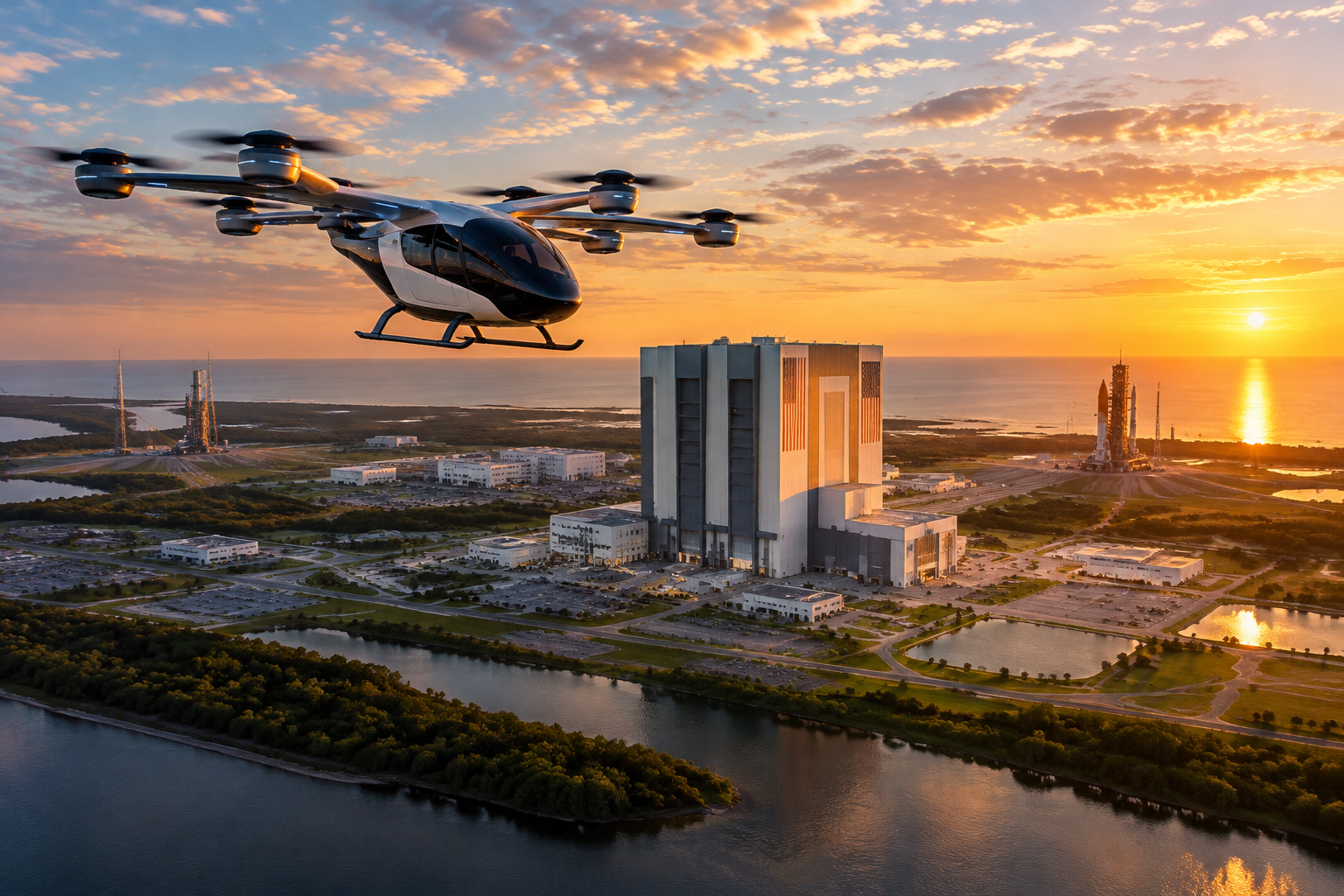
In a remarkable convergence of space exploration heritage and cutting-edge aviation innovation, NASA’s Kennedy Space Center recently hosted a demonstration flight of an electric vertical takeoff and landing (eVTOL) vehicle that left observers awestruck. This extraordinary event represents a pivotal moment in the evolution of personal air mobility, as one of humanity’s most prestigious aerospace facilities embraced the future of urban and regional transportation. The flight demonstration at Kennedy Space Center underscores the growing momentum behind electric aviation and signals that the aerospace industry is uniting around sustainable, innovative solutions for human mobility.
Kennedy Space Center: A New Frontier for Air Mobility
NASA’s Kennedy Space Center, historically synonymous with rocket launches and space exploration, has now become a testing ground for revolutionary aerial vehicles. The facility’s vast infrastructure, experienced personnel, and world-class testing capabilities make it an ideal location for validating advanced aviation technologies. By hosting this eVTOL demonstration, Kennedy Space Center has officially expanded its mission beyond traditional space programs to encompass the emerging personal air mobility ecosystem.
The presence of this event at such an iconic venue carries tremendous symbolic weight. Kennedy Space Center is not merely a runway or testing facility—it represents humanity’s aspirations to transcend conventional boundaries. Hosting an eVTOL flight there signals to the world that electric vertical takeoff and landing vehicles are no longer theoretical concepts confined to laboratory discussions; they are practical, testable, and ready for real-world validation.
This development also highlights the strategic importance of government-backed aerospace facilities in nurturing emerging technologies. NASA’s involvement and endorsement of eVTOL testing demonstrates that federal agencies view personal air mobility as a critical transportation frontier worthy of institutional support and investment.
The Science Fiction Appeal of Modern eVTOL Technology
For decades, the vision of vehicles that could take off vertically, hover in place, and transition smoothly into forward flight existed primarily in the realm of science fiction. Movies and novels depicted futuristic skyways filled with flying cars and personal aircraft that moved through three-dimensional urban airspace with ease. What once seemed impossible is now becoming tangible reality, and the Kennedy Space Center flight brought this dream measurably closer to everyday life.
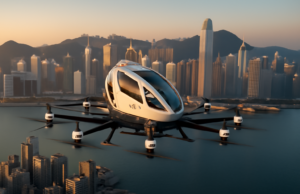
Modern eVTOL vehicles embody multiple advanced technologies working in harmony: electric propulsion systems, sophisticated battery chemistry, distributed electric motors, advanced flight control software, and aerodynamic designs optimized for vertical and forward flight. These vehicles often feature sleek, contemporary aesthetics that genuinely resemble the concept art that once illustrated futuristic transportation systems. When observers witnessed the Kennedy Space Center demonstration, they saw vehicles that authentically matched the aesthetic and functional expectations established by decades of science fiction imagination.
The “science fiction” quality of the flight also reflects the remarkable acceleration of technological progress in aviation. What seemed impossible ten years ago is now demonstrable fact. This accelerating pace of innovation is reshaping public expectations and regulatory frameworks worldwide, as governments and industries race to establish standards and infrastructure for this emerging sector.
Regulatory and Safety Validation Through Government Partnerships
One of the most critical aspects of eVTOL commercialization is obtaining regulatory approval and demonstrating safety compliance. By conducting demonstrations at NASA’s Kennedy Space Center, vehicle developers gain access to rigorous testing protocols, safety evaluation frameworks, and expert analysis that can strengthen their regulatory submissions to aviation authorities such as the FAA. This partnership between private innovators and government aerospace agencies accelerates the path to certification.
Kennedy Space Center’s involvement also provides third-party validation that carries substantial weight with regulators, investors, and the public. When a vehicle successfully completes a flight demonstration at one of America’s most respected aerospace facilities, it establishes credibility and confidence in the technology’s maturity. This validation is crucial for expediting the approval processes that are currently one of the main bottlenecks preventing widespread eVTOL deployment.
The demonstration also serves as a platform for collecting real-world performance data in a controlled environment. Kennedy Space Center’s advanced instrumentation and monitoring capabilities allow engineers to gather detailed telemetry, safety metrics, and operational insights that inform future design iterations and certification dossiers. This data-driven approach strengthens the entire industry’s case for regulatory approval and operational deployment.
Implications for the Broader Personal Air Mobility Ecosystem
The Kennedy Space Center demonstration sends powerful signals throughout the personal air mobility ecosystem. For investors and venture capital firms, it demonstrates that eVTOL technology has matured sufficiently to merit testing at elite aerospace facilities, suggesting that the sector is transitioning from speculative to credible. For manufacturers and developers worldwide, it provides a visible benchmark and proof point that can be referenced in their own regulatory and commercial discussions.
This event also influences public perception and political will regarding air mobility infrastructure. When NASA—an institution trusted by the American public—visibly supports and facilitates eVTOL testing, it helps normalize the technology and justify public investment in supporting infrastructure such as vertiports, charging networks, and air traffic management systems. Political leaders are more likely to allocate resources to air mobility initiatives when they observe that prestigious government agencies are engaged and optimistic about the sector’s future.
Furthermore, the Kennedy Space Center demonstration creates momentum for international air mobility development. Other countries and regions may accelerate their own testing and certification programs in response to seeing America’s aerospace leadership institutions embrace eVTOL technology. This competitive dynamic can drive innovation and expedite the global deployment of personal air mobility systems.
Key Takeaways from Kennedy Space Center’s eVTOL Milestone
- NASA’s Kennedy Space Center hosted a revolutionary eVTOL flight demonstration, marking the convergence of space exploration heritage with cutting-edge electric aviation innovation and validating the technology’s readiness for real-world testing.
- The demonstration at one of America’s most respected aerospace facilities provides critical third-party validation and regulatory credibility, accelerating the path to FAA certification and commercial deployment of personal air mobility vehicles.
- This high-profile event signals to investors, manufacturers, and policymakers worldwide that eVTOL technology has transitioned from speculative to mature, likely spurring increased investment and expedited air mobility infrastructure development globally.
The flight demonstration at NASA’s Kennedy Space Center represents far more than a single technological achievement—it embodies the convergence of scientific progress, regulatory evolution, and societal readiness for revolutionary change in human transportation. As eVTOL vehicles continue to mature and approach commercialization, events like this will be remembered as the inflection points where science fiction genuinely became science fact. The aerospace industry, government agencies, and innovators worldwide are collaborating to transform personal air mobility from a distant dream into an operational reality. Kennedy Space Center’s recent demonstration flight is a powerful testament to that transformation and a harbinger of the remarkable era of urban air mobility that lies ahead.