HIGHLIGHTS
- Foster Aviation deploys Aeroberm’s patented vertiport technology in the UAE, marking a major infrastructure milestone for regional eVTOL operations
- UAE selected as regional hub to serve Middle East, North Africa, and South Asia markets with purpose-built vertiport infrastructure
- Aeroberm’s integrated charging, safety, and passenger flow systems enable rapid scaling of commercial air mobility services in emerging markets
Foster Aviation has announced a strategic deployment of Aeroberm’s patented vertiport technology to the United Arab Emirates, marking a significant milestone in establishing infrastructure for personal air mobility across the Middle East. This partnership represents a critical step in bridging the gap between eVTOL aircraft development and the real-world infrastructure required to support commercial urban air mobility operations in one of the world’s most innovative regions.
Aeroberm’s Patented Vertiport Technology
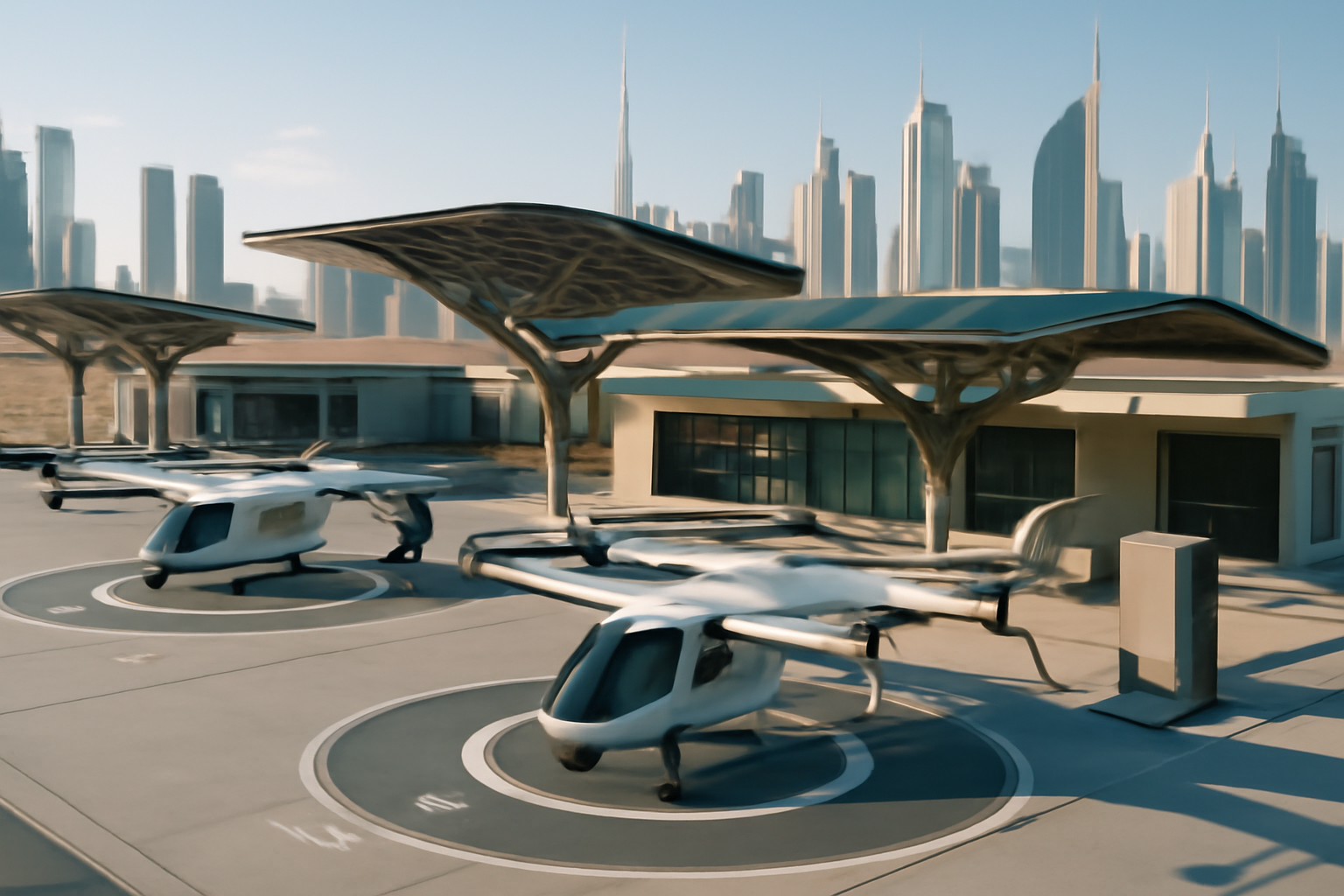
Aeroberm’s proprietary vertiport technology represents a breakthrough in designing and deploying vertical takeoff and landing infrastructure optimized for eVTOL operations. The patented systems are engineered to maximize space efficiency in urban environments while maintaining the safety and operational standards required for commercial aviation. This approach allows vertiports to be integrated into existing urban landscapes without requiring extensive land acquisition or major infrastructure overhauls.
The technology addresses one of the most critical bottlenecks in urban air mobility adoption: the lack of dedicated, purpose-built landing and charging stations. Traditional helicopter pads and rooftop landing zones were never optimized for the unique requirements of electric vertical takeoff aircraft, which demand rapid charging capabilities, passenger safety systems, and noise mitigation measures. Aeroberm’s solution specifically addresses these requirements through modular, scalable design principles.
The vertiport systems feature advanced battery charging infrastructure, weather monitoring capabilities, and automated passenger flow management. These integrated systems reduce operational complexity for vertiport operators while ensuring eVTOL operators have access to the infrastructure needed to maintain commercial schedules. The patented technology has been refined through multiple design iterations and testing phases to meet rigorous aviation standards.
Foster Aviation’s Regional Expansion Strategy
Foster Aviation’s deployment of Aeroberm technology in the UAE represents a deliberate geographic expansion strategy targeting high-growth regions with strong regulatory frameworks and significant investment in emerging transportation technologies. The UAE has positioned itself as a global leader in aerospace innovation, with Dubai and Abu Dhabi serving as testbeds for cutting-edge mobility solutions. This partnership leverages the region’s forward-thinking regulatory environment and substantial infrastructure investment capabilities.
The selection of the UAE as the deployment location reflects careful market analysis by Foster Aviation’s leadership team. The region’s wealthy demographics, high propensity for early adoption of new technologies, and existing experience with autonomous systems make it an ideal proving ground for commercial eVTOL services. Additionally, the UAE’s strategic location serves as a gateway to other Middle Eastern markets where air mobility infrastructure development is accelerating.
Foster Aviation’s approach emphasizes establishing the UAE as a regional hub that can serve as a model for subsequent vertiport deployments across the Middle East, North Africa, and South Asia. By demonstrating successful operations in one of the world’s most demanding aviation markets, the company positions itself to expand rapidly into adjacent regions as regulatory frameworks mature and demand for urban air mobility grows.
UAE’s Role as a Global Urban Air Mobility Hub
The United Arab Emirates has emerged as one of the world’s most progressive markets for urban air mobility development, with both Dubai and Abu Dhabi investing heavily in next-generation transportation infrastructure. The government’s commitment to positioning the UAE at the forefront of autonomous systems, artificial intelligence, and sustainable transportation creates an ideal environment for vertiport deployment and eVTOL operations. This Aeroberm partnership is part of a broader ecosystem development strategy that includes regulatory support, airspace management coordination, and infrastructure investment.
The UAE’s experience hosting large-scale events, managing complex air traffic systems, and deploying cutting-edge technologies across diverse applications provides a foundation for successful eVTOL integration. The region’s existing investment in smart city infrastructure, renewable energy systems, and autonomous vehicle technologies demonstrates both capability and commitment to sustainable urban mobility solutions. Vertiport deployment aligns with the UAE’s broader Vision 2050 sustainability and innovation objectives.
The arrival of Aeroberm’s vertiport technology signals to global investors and eVTOL manufacturers that the UAE is serious about developing comprehensive urban air mobility ecosystems. This creates network effects that attract additional manufacturers, operators, and service providers to establish operations in the region. The resulting clustering of air mobility expertise and infrastructure creates a competitive advantage that attracts further investment and innovation.
Infrastructure Requirements and Operational Impact
The deployment of Aeroberm vertiports in the UAE addresses critical operational requirements for eVTOL service providers seeking to launch commercial routes in the region. Vertiport infrastructure must accommodate multiple simultaneous eVTOL operations, support rapid battery charging cycles, manage passenger comfort and safety, and integrate seamlessly with ground transportation networks. Aeroberm’s technology platform delivers these capabilities through integrated design that optimizes every aspect of vertiport operations.
The vertiports will serve as critical nodes in emerging air mobility networks, connecting major urban centers and reducing ground transportation times for passengers traveling between key destinations. The infrastructure enables point-to-point services that bypass congested ground traffic while providing convenient access to transit hubs, business districts, and airports. This operational model dramatically improves the value proposition of eVTOL services for both passengers and operators.
Battery charging infrastructure represents a particular focus area for Aeroberm’s vertiport design, as rapid recharge capabilities directly impact eVTOL fleet utilization rates and profitability. The technology incorporates grid management systems that optimize charging timing to minimize energy costs while ensuring aircraft are ready for scheduled operations. Integration with the UAE’s renewable energy infrastructure further reduces operating costs and supports sustainability objectives.
Key Infrastructure Considerations for Vertiport Deployment
- Advanced battery charging systems with multi-aircraft simultaneous charging capability and grid optimization integration
- Modular, scalable design enabling rapid deployment across urban and semi-urban locations without extensive civil engineering
- Integrated safety systems including weather monitoring, noise mitigation, and automated emergency protocols compliant with aviation regulations
- Passenger flow management systems coordinating ground transportation, security screening, and aircraft boarding operations
- Real-time operational monitoring and maintenance scheduling systems maximizing aircraft availability and minimizing downtime
Foster Aviation’s partnership with Aeroberm represents a critical convergence of technology innovation and market deployment strategy. By bringing patented vertiport infrastructure to the UAE, the companies are establishing a foundation for commercial eVTOL operations that can scale rapidly as aircraft manufacturers bring new models to market and demand for urban air mobility grows. The project demonstrates that the infrastructure ecosystem required for urban air mobility is advancing in parallel with aircraft development, positioning the industry for accelerated commercial deployment across global markets.