HIGHLIGHTS
- Honeywell Aerospace leads an ambitious European integration project combining eVTOL aircraft and cargo drone technologies for unified urban air mobility operations.
- The project addresses critical infrastructure and regulatory challenges needed to establish seamless, multi-vehicle air transportation networks across Europe.
- Strategic partnership advances avionic systems, flight management integration, and operational standards that will define next-generation piloted and autonomous air mobility systems.
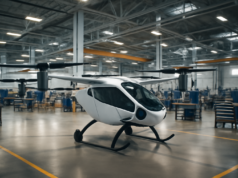
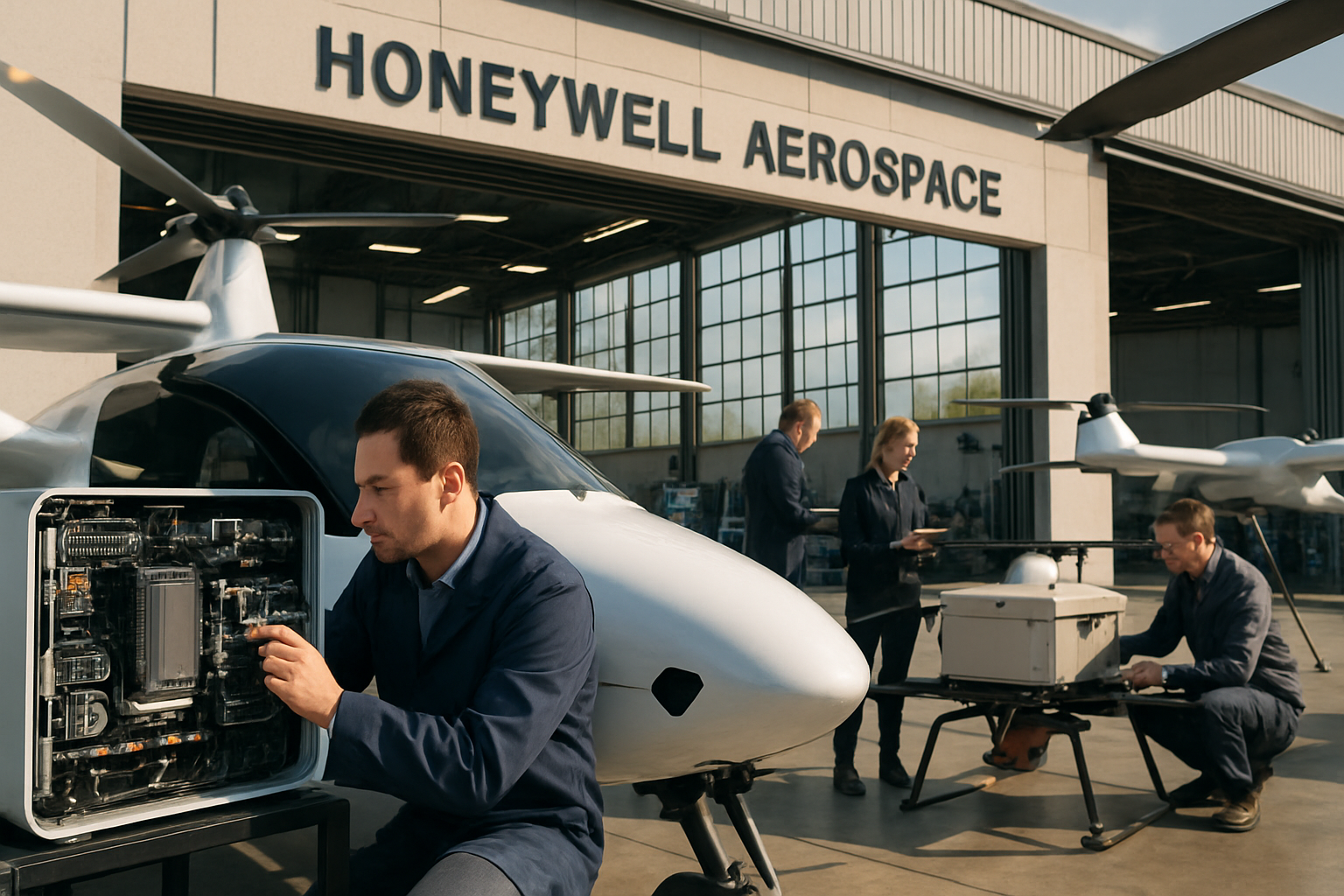
Honeywell Aerospace has emerged as the driving force behind a transformative European initiative that promises to revolutionize how eVTOL aircraft and cargo drones operate within shared airspace. This ambitious integration project marks a watershed moment for the personal air mobility industry, bringing together advanced aerospace technologies with the emerging autonomous systems that define the future of urban and regional transportation. By combining piloted eVTOL platforms with intelligent cargo drone networks, the initiative addresses one of the most pressing challenges facing aviation authorities and operators across the continent: creating a unified, efficient, and safe ecosystem for next-generation air mobility.
Honeywell’s Strategic Leadership in European Air Mobility
Honeywell Aerospace, a division of the industrial conglomerate known for decades of aerospace innovation, has positioned itself as the ideal partner to lead this comprehensive European project. With extensive experience in avionics, propulsion systems, and flight management technology, Honeywell brings unparalleled technical expertise to the challenge of integrating multiple aircraft types and operational models. The company’s decision to focus on Europe reflects the continent’s forward-thinking regulatory environment and its commitment to establishing itself as a global leader in sustainable aviation solutions.
The corporation’s involvement signals industry-wide confidence in a multi-platform approach to air mobility. Rather than betting exclusively on a single aircraft type or business model, Honeywell’s project recognizes that successful urban air mobility ecosystems will require diverse vehicle categories, each optimized for specific missions. This pragmatic approach resonates with stakeholders across Europe who understand that true transformation requires flexible, scalable infrastructure capable of supporting everything from piloted regional transport to autonomous last-mile cargo delivery.
Honeywell’s existing relationships with European aviation authorities, aircraft manufacturers, and technology providers give it unique access to the stakeholders whose cooperation will be essential for the project’s success. The company’s reputation for delivering robust, certified systems provides additional credibility in an industry where safety and regulatory compliance are paramount. This foundation positions Honeywell not merely as a technology supplier but as an integrator and strategic partner shaping the future of European aviation.
The Technical Complexity of eVTOL and Cargo Drone Integration
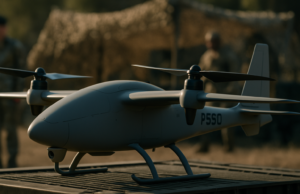
Integrating eVTOL aircraft and cargo drones into a single operational framework presents formidable technical challenges that go far beyond simply ensuring different aircraft types can share the same airspace. Each platform operates under distinct design parameters, regulatory requirements, and operational constraints. eVTOL aircraft, designed to carry human passengers, must meet stringent safety standards and include redundant systems to protect occupants. Cargo drones, by contrast, can be optimized for efficiency and payload capacity since they eliminate the need for passenger safety features, yet they introduce complexity through autonomous operation requirements.
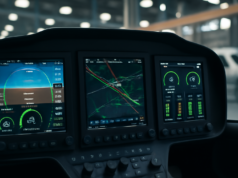
Flight management systems represent one of the most critical integration points. Honeywell must develop or adapt avionics platforms capable of managing diverse vehicle architectures, propulsion systems, and autonomous capabilities within a unified command and control environment. This involves creating standardized communication protocols, navigation systems, and collision avoidance mechanisms that work seamlessly across all platform types. The technical specifications must account for the reality that eVTOLs typically operate with human pilots who require real-time situational awareness, while cargo drones rely on increasingly autonomous decision-making algorithms.
Energy management and battery systems also require careful orchestration. Different aircraft types have varying electrical requirements, charging cycles, and operational envelopes. Honeywell’s integration project must define standards for battery compatibility, charging infrastructure, and power distribution that enable efficient operations across a mixed fleet. Additionally, thermal management, redundancy protocols, and emergency power systems must function reliably when multiple aircraft types operate in proximity, sometimes during high-traffic periods in urban corridors.
European Regulatory Framework and Air Traffic Management
Europe’s leading position in eVTOL development stems partly from its progressive regulatory approach, embodied in frameworks like EASA’s Special Conditions for innovative aircraft. However, the regulatory environment becomes exponentially more complex when multiple aircraft categories must operate within the same airspace management structure. Honeywell’s project will necessarily involve working closely with EASA (European Union Aviation Safety Agency) and national aviation authorities to develop certification standards, operational procedures, and safety cases that account for this multi-platform reality.
The integration of piloted and autonomous systems raises novel regulatory questions that current frameworks only partially address. A cargo drone operating autonomously must demonstrate safety equivalent to a piloted aircraft, yet its design and operational model differ fundamentally. Honeywell must help establish testing methodologies, performance standards, and oversight mechanisms that fairly evaluate safety across these divergent approaches. This work will likely influence EASA guidance documents and potentially establish precedents for global aviation regulation.
Air traffic management modernization stands as a prerequisite for the project’s success. Traditional radar-based ATC systems designed for high-altitude commercial aviation cannot efficiently manage large numbers of eVTOL and cargo drone operations at low to medium altitudes. Honeywell will work with European air navigation service providers and technology partners to implement advanced systems such as U-space (unmanned traffic management) infrastructure, digital datalinks, and automation tools that enable safe, efficient operations. This modernization benefits not only the eVTOL industry but improves airspace efficiency across the entire European aviation sector.
Infrastructure and Operational Deployment Strategy
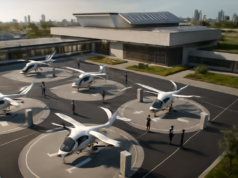
Beyond the technical and regulatory dimensions, Honeywell’s integration project encompasses the physical infrastructure necessary to support scaled operations. This includes vertiport design standards, charging and battery management facilities, maintenance infrastructure, and operational control centers. The diversity of aircraft types complicates infrastructure planning—a facility optimized for piloted eVTOL passenger transport may differ substantially from one designed primarily for autonomous cargo drone operations. Honeywell must work with infrastructure developers and urban planners to create flexible facilities capable of accommodating multiple vehicle categories efficiently.
The project’s deployment strategy will likely prioritize regions and corridors where eVTOL operations are already under development, building on existing infrastructure investments and regulatory progress. European metropolitan areas with existing air mobility initiatives—such as those in the Nordics, the Netherlands, Germany, and France—may serve as proving grounds. By establishing successful operations in these early-adopter regions, Honeywell’s integration framework can generate operational data, refine procedures, and build confidence among regulators, operators, and the public before expanding to additional markets.
Operational procedures represent another critical integration element. Flight crews operating eVTOL aircraft, maintenance technicians, cargo handlers, and remote pilots managing autonomous systems must all understand how to work efficiently within an integrated framework. Honeywell will likely develop comprehensive training programs, standard operating procedures, and certification requirements that enable personnel to work competently across multiple aircraft types. This human factors focus often receives less attention than technical systems but proves absolutely essential for safe, reliable operations.
Industry Impact and Competitive Implications
Key Takeaways for the eVTOL Ecosystem
- Honeywell’s integration project establishes technical and operational standards that could become industry defaults, influencing aircraft design, regulatory compliance, and infrastructure development across Europe and potentially globally.
- The successful integration of piloted eVTOL and autonomous cargo drone operations removes a significant barrier to market growth by creating predictable, unified operating environments that reduce uncertainty for investors and operators.
- Regulatory precedents established through this project will accelerate certification timelines for subsequent aircraft types and operational models, compressing the timeline from development to commercial deployment for eVTOL companies continent-wide.
Honeywell’s project sends clear signals to the eVTOL industry about the direction of market development. Aircraft manufacturers will increasingly design new platforms with integration-friendly architecture, anticipating standardized interfaces and procedures. Operators planning new air mobility services will structure their business models around integrated infrastructure rather than building isolated, platform-specific systems. Investors evaluating potential opportunities will gain greater confidence in the viability of diverse business models, from piloted on-demand mobility to autonomous cargo logistics.
The competitive landscape within the aerospace industry will also shift as a result of this initiative. Companies providing avionics, propulsion systems, communication technologies, and software platforms will increasingly focus on interoperability and integration capabilities. Honeywell itself gains significant advantages from leading this standardization effort, positioning its products as natural components within integrated European air mobility networks. Other major aerospace suppliers, from Siemens to Collins Aerospace to emerging technology companies, will need to ensure their offerings align with emerging standards or risk losing market access.
Perhaps most significantly, Honeywell’s initiative validates the vision of a truly integrated air transportation network where diverse vehicle types operate under unified frameworks. This represents a fundamental departure from the historical aviation paradigm where aircraft categories (commercial, regional, general aviation) operated in largely separate ecosystems. The eVTOL era promises something different: a continuously evolving air transportation network where new vehicle types, operational models, and technologies integrate progressively as they mature. Honeywell’s project demonstrates that this vision is technically feasible and commercially viable.
The European eVTOL integration project led by Honeywell Aerospace marks a pivotal moment for personal air mobility. By bringing together advanced eVTOL aircraft and sophisticated cargo drone technologies within unified operational, regulatory, and infrastructure frameworks, Honeywell is not simply solving a technical problem—it is establishing the foundational systems upon which the entire European air mobility ecosystem will build. As other regions worldwide observe the outcomes of this ambitious initiative, the standards, procedures, and technologies pioneered here will likely influence global aviation development for years to come. The success of this project could accelerate commercial air mobility deployment across Europe by years, creating substantial economic, social, and environmental benefits while positioning Europe as the undisputed leader in next-generation aviation innovation.