HIGHLIGHTS
- Elektros has publicly announced strategic interest in a proprietary EV charging patent, positioning the company at the forefront of drone electrification infrastructure.
- The proprietary charging technology represents a critical bottleneck solution in personal air mobility, where fast-charging and thermal management directly impact commercial viability.
- Industry watchers view Elektros’ patent interest as a major signal of accelerating commercialization timelines for EV drone operations and fleet electrification strategies.
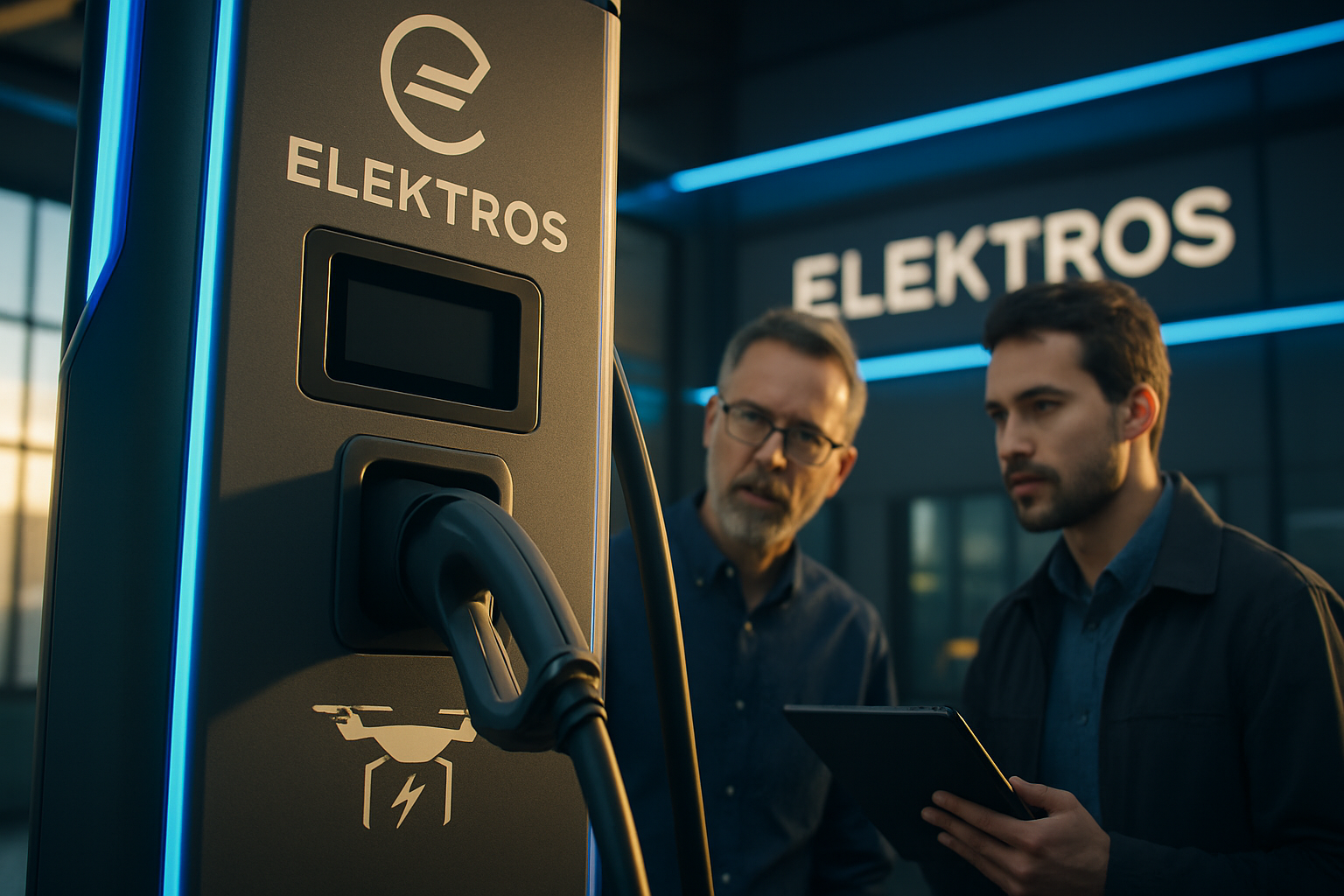
Elektros has emerged as a company drawing significant industry attention following reports of strategic interest in a proprietary EV charging patent. According to coverage from Big News Network, this development signals intensified focus on solving one of personal air mobility’s most critical technical challenges: rapid, efficient charging infrastructure for electric vertical takeoff and landing (eVTOL) aircraft and autonomous drones. The announcement marks a pivotal moment in the race to commercialize fleet electrification for next-generation air transportation systems.
The Critical Role of Charging Infrastructure in Drone Electrification
Electric vertical takeoff and landing vehicles and autonomous drones operate under fundamentally different energy constraints than conventional aviation or ground transportation. A typical eVTOL aircraft or delivery drone requires full battery recharge between flights, with charging cycles happening multiple times daily in commercial operations. Standard automotive EV charging solutions prove inadequate for this use case, as they lack the thermal management, power density, and safety protocols required for aviation-grade battery systems.
The proprietary charging technology that Elektros is reportedly pursuing addresses this gap directly. Advanced charging systems for drone fleets must balance several competing priorities: minimizing recharge time to maximize daily mission capacity, preventing battery degradation through intelligent thermal regulation, maintaining safety certifications for autonomous operations, and achieving cost parity with fossil fuel alternatives. Few solutions currently meet all these requirements simultaneously.
Elektros’ strategic interest in this patent demonstrates recognition that charging infrastructure parity is as essential as airframe design and autonomous software for commercial eVTOL success. Companies that solve the charging equation early gain competitive advantages in securing regulatory approval, attracting fleet operators, and building the ecosystem around electric air mobility.
What Proprietary Patent Technology Means for Market Differentiation
Intellectual property in emerging industries often determines market leaders. By securing or licensing proprietary charging patents, companies like Elektros can establish technical moats that competitors cannot easily replicate. This is particularly significant in the EV drone sector, where standardization of charging protocols remains incomplete and manufacturers retain considerable freedom in system architecture decisions.
A proprietary charging solution offers multiple competitive advantages. First, it enables faster time-to-market for commercial drone operations by reducing dependency on third-party infrastructure. Second, it creates recurring revenue opportunities through licensing arrangements with other eVTOL manufacturers. Third, it strengthens the company’s negotiating position with regulatory bodies by demonstrating comprehensive technical competence across both vehicle and infrastructure domains.
The strategic focus on charging patents also reflects industry maturation. Early-stage drone companies prioritized flight performance and autonomous navigation. As these capabilities have matured, competitive differentiation has shifted toward operational efficiency metrics—including charging speed, battery longevity, total cost of ownership, and fleet management integration. Elektros’ move signals confidence that these operational factors now determine commercial success.
Industry Response and Market Implications
Coverage from Big News Network and other industry outlets indicates that Elektros’ patent initiative has attracted attention from investors, competitors, and potential partners. Strategic interest in a proprietary charging patent typically precedes significant commercial announcements, product launches, or partnership agreements. The timing of this disclosure—July 2026—positions Elektros for potential announcements during major industry conferences and regulatory milestones in the latter half of 2026.
Other companies in the personal air mobility space are certainly monitoring this development. Competitors without advanced charging solutions face pressure to accelerate their own R&D or pursue licensing arrangements. Fleet operators evaluating eVTOL platforms now have additional technical criteria to assess: not just aircraft capability, but charging infrastructure compatibility and availability. This shift fundamentally changes procurement decisions across the industry.
Regulatory bodies overseeing drone operations are also taking note. Advanced charging infrastructure with demonstrated thermal management and safety protocols strengthens certification pathways for commercial autonomous operations. Elektros’ focus on proprietary charging technology may facilitate faster approval timelines by providing regulators with proven technical solutions to operational safety concerns.
The Broader Context of EV Drone Infrastructure Development
Elektros’ strategic move occurs within a larger ecosystem transformation. Global investment in air mobility infrastructure has accelerated substantially, with airports, logistics hubs, and municipalities establishing dedicated charging networks for eVTOL operations. Companies like Joby Aviation, Archer Aviation, and regional operators have begun site surveys and infrastructure partnerships. Elektros’ proprietary charging patent provides critical enabling technology for this buildout.
The intersection of autonomous drone operations and electrification creates unique infrastructure challenges. Unlike manned eVTOL vehicles that may land at established helipads or vertiports, autonomous delivery drones require distributed charging networks—potentially at warehouses, distribution centers, and last-mile logistics hubs. A proprietary, scalable charging solution becomes particularly valuable in this distributed context, where standardized infrastructure may not be economically viable.
Elektros’ interest in charging patents also reflects recognition that battery technology improvements alone cannot drive commercialization forward. Even as battery energy density and cost per kilowatt-hour continue improving, charging speed and cycle life remain critical constraints. A proprietary solution addressing these constraints through intelligent charging algorithms, novel connector designs, or thermal management approaches could provide substantial competitive advantage.
Key Developments to Watch in EV Drone Charging
- Regulatory approval of Elektros’ charging systems for commercial autonomous operations, which would accelerate broader industry adoption of the proprietary technology standards
- Partnership announcements between Elektros and major fleet operators, eVTOL manufacturers, or logistics companies seeking to integrate proprietary charging solutions into operations
- Technical specifications and performance benchmarks for the proprietary charging patent, including charge time, thermal efficiency, and cost-per-charge metrics compared to existing solutions
- Licensing or cross-licensing arrangements that position Elektros as a charging infrastructure provider rather than solely an aircraft or drone manufacturer
- Investment rounds or acquisition activity that might follow successful patent procurement, as investors recognize the strategic value of charging IP in personal air mobility
Elektros’ strategic interest in proprietary EV charging patents represents a fundamental recognition that personal air mobility success depends equally on aircraft capability and supporting infrastructure. The company’s focus on solving the charging equation positions it as a serious contender in the race to commercialize electric vertical takeoff, drone fleet operations, and urban air mobility. As this technology matures and moves toward regulatory approval, Elektros’ charging innovations could become the technical foundation enabling the broader ecosystem of autonomous electric aviation to succeed. Industry observers should monitor patent filings, regulatory submissions, and partnership announcements closely, as these will provide early signals of whether Elektros’ strategic patent interest translates into genuine competitive advantage in the high-stakes race to dominate personal air mobility infrastructure.