
HIGHLIGHTS
- SkyDrive is expanding its eVTOL medical transport network across Taiwan to provide rapid emergency response and medical evacuation services in underserved regions.
- Taiwan’s geographic challenges—island terrain and congested urban areas—make electric vertical takeoff aircraft ideal for reducing response times in critical medical situations.
- SkyDrive’s initiative positions Taiwan as a key market for advanced air mobility in emergency healthcare, setting precedent for regional adoption across Asia-Pacific.
SkyDrive, a leading Japanese electric vertical takeoff and landing (eVTOL) manufacturer, has announced significant advances in its plans to establish a comprehensive medical transport network across Taiwan. This strategic expansion marks a pivotal moment in the commercialization of electric aviation for emergency healthcare services, positioning Taiwan as a frontline market for advanced air mobility solutions in critical medical response scenarios.
SkyDrive’s Taiwan Medical Transport Initiative
SkyDrive’s announcement represents a major milestone in translating eVTOL technology from concept to operational healthcare delivery. The company is actively developing infrastructure and operational frameworks to deploy electric vertical aircraft for medical emergencies, patient transfers, and organ transportation across Taiwan’s diverse geography. This initiative goes beyond traditional helicopter emergency medical services by offering zero-emission, quieter alternatives that can operate from smaller landing zones in urban and rural environments.
The expansion of SkyDrive’s medical transport network in Taiwan addresses critical healthcare accessibility challenges. Taiwan’s complex terrain, including mountainous regions and scattered island communities, has historically created bottlenecks in emergency response times. By deploying eVTOL aircraft at strategic medical hubs, SkyDrive enables hospitals and emergency services to bypass ground traffic congestion and geographic barriers that traditionally delay critical care delivery.
SkyDrive’s commitment to Taiwan reflects the company’s broader vision of establishing sustainable air mobility ecosystems across Asia. The selection of Taiwan as a primary expansion market demonstrates confidence in the region’s regulatory readiness, healthcare infrastructure sophistication, and geographic imperative for innovative transport solutions. This partnership between private aviation technology and public healthcare delivery creates a replicable model for other markets in the Asia-Pacific region.
Operational Infrastructure and Implementation Strategy
Establishing an operational eVTOL medical network requires comprehensive infrastructure development beyond aircraft acquisition. SkyDrive is collaborating with Taiwanese hospitals, emergency services, and aviation authorities to design landing zones, charging facilities, and operational protocols that integrate seamlessly with existing healthcare systems. This infrastructure-first approach ensures that aircraft deployment aligns with hospital workflows, emergency dispatch procedures, and patient care standards.
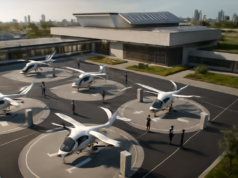
The network’s success depends on strategically positioned vertiports—specialized takeoff and landing facilities optimized for eVTOL operations. SkyDrive is identifying rooftop locations at major medical centers, regional hospitals, and emergency response facilities throughout Taiwan. These facilities require specialized design considerations including electrical charging infrastructure, weather monitoring systems, and safety protocols adapted for urban and semi-urban medical settings where traditional helicopter operations face airspace constraints.
Battery management and charging logistics represent critical operational considerations for SkyDrive’s Taiwan network. The company is developing rapid-charge infrastructure and battery-swap protocols to minimize aircraft downtime and ensure continuous availability for emergency response. Advanced battery technology optimized for high-demand medical missions must balance energy density, safety requirements, and flight performance to meet the unpredictable scheduling demands of emergency healthcare transport.
Regulatory Framework and Government Support
Taiwan’s regulatory environment has proven receptive to advanced air mobility innovations. The Taiwan Civil Aeronautics Administration has been proactive in developing certification pathways for eVTOL operations, creating a foundation for SkyDrive’s ambitious expansion plans. Government support extends beyond mere regulatory approval to encompass strategic recognition of air mobility as a critical infrastructure solution for healthcare accessibility and emergency response capabilities.
Taiwan’s participation in international aviation safety standards and progressive stance on autonomous vehicle development position the nation as an ideal testbed for eVTOL medical operations. The regulatory clarity provided by Taiwanese authorities enables SkyDrive to conduct advanced trials, optimize operational procedures, and gather performance data that will inform subsequent deployments across the Asia-Pacific region. This regulatory partnership demonstrates how forward-thinking governance can accelerate the transition from experimental aviation technology to practical healthcare solutions.
Government support also includes potential financial incentives and infrastructure investment that reduce barriers to network deployment. Taiwan’s commitment to healthcare innovation and sustainability aligns perfectly with SkyDrive’s mission to establish environmentally responsible medical transport services. This synergy between public health objectives and private technology innovation creates a compelling case study for international collaboration in advanced air mobility commercialization.
Healthcare Benefits and Emergency Response Transformation
The deployment of eVTOL aircraft in Taiwan’s medical system promises transformative improvements in emergency response capabilities. Current helicopter services face limitations including operational costs, noise pollution in urban areas, and restricted availability due to weather conditions and airspace congestion. SkyDrive’s electric aircraft address these limitations while offering superior environmental performance and the ability to operate from numerous landing sites throughout urban and regional Taiwan.
Time-critical medical emergencies—including acute cardiac events, stroke cases, and trauma situations—benefit immensely from accelerated transport to specialized treatment facilities. eVTOL medical transport can reduce transfer times by 50-70% compared to ground ambulance services in congested urban areas. For remote and mountainous regions of Taiwan, air transport eliminates distance as a barrier to access to high-level trauma care and specialized medical services, fundamentally altering outcomes for patients in underserved communities.
Organ transportation represents another critical application where eVTOL technology delivers measurable improvements. The narrow window for organ viability during transplant operations creates extreme time pressures on current logistics systems. Electric aircraft enable faster, more reliable inter-hospital organ delivery that can expand the geographic radius of viable donor-recipient matching, potentially increasing the number of successful transplant operations and improving allocation efficiency across Taiwan’s healthcare network.
Regional Market Implications and International Expansion Precedent
SkyDrive’s Taiwan initiative carries significance extending far beyond a single geographic market. The Asia-Pacific region includes numerous countries with similar geographic and healthcare challenges: island nations, mountainous terrain, congested urban centers, and growing demand for rapid emergency response capabilities. Taiwan’s success with eVTOL medical transport establishes a replicable model and provides performance data that will accelerate adoption across the region, from Japan and South Korea to Southeast Asian nations.
The commercial viability demonstrated through Taiwan’s medical network deployment addresses skeptics who question whether eVTOL technology can achieve sustainable profitability beyond niche applications. Healthcare systems represent a defined market with predictable demand, regulatory approval pathways, and demonstrated willingness to invest in technologies that improve patient outcomes and operational efficiency. SkyDrive’s focus on this vertical market creates a pathway to profitable operations that can fund broader personal air mobility expansion.
Taiwan’s strategic position as a technology hub and manufacturing center adds another layer of significance to SkyDrive’s expansion. Potential partnerships with Taiwanese advanced manufacturing, battery technology, and electronics companies could enhance aircraft production efficiency and create localized supply chains supporting broader regional deployment. This manufacturing and technology synergy positions Taiwan as a potential hub for eVTOL innovation and production serving all of Asia-Pacific.
Key Takeaways: SkyDrive’s Taiwan Medical Network
- SkyDrive is establishing an eVTOL-based medical transport network across Taiwan, leveraging electric vertical aircraft to overcome geographic barriers and reduce emergency response times in a region with complex terrain and congested urban areas.
- Taiwan’s progressive regulatory framework and government support for advanced air mobility create an ideal environment for deploying cutting-edge eVTOL technology at scale, establishing the nation as a regional model for air-based healthcare solutions.
- The successful implementation of this medical network will generate performance data and operational insights that drive rapid adoption of eVTOL medical services across the Asia-Pacific region, establishing new standards for emergency healthcare delivery and organ transportation logistics.
SkyDrive’s advancement of eVTOL medical transport in Taiwan represents a watershed moment in the practical commercialization of electric aviation. By focusing on healthcare—a sector with clear regulatory pathways, measurable performance metrics, and demonstrated social value—SkyDrive is creating a scalable template for eVTOL profitability and widespread adoption. Taiwan’s geographic characteristics, regulatory sophistication, and healthcare infrastructure make it an ideal proving ground for technologies that will reshape emergency response and medical logistics across Asia and beyond. As SkyDrive progresses from planning to implementation, the world will be watching to see whether eVTOL aircraft can deliver on their promise to transform how we respond to medical emergencies in the modern age.