HIGHLIGHTS
- Archer Aviation partners with BETA Technologies and Macquarie to establish foundational infrastructure for commercial eVTOL services and urban air mobility operations.
- Strategic alliance combines aircraft manufacturing expertise, energy solutions innovation, and financial infrastructure to accelerate market readiness across North America.
- Partnership signals industry maturation toward regulatory compliance and operational frameworks necessary for passenger electric air taxi services by mid-to-late 2020s.
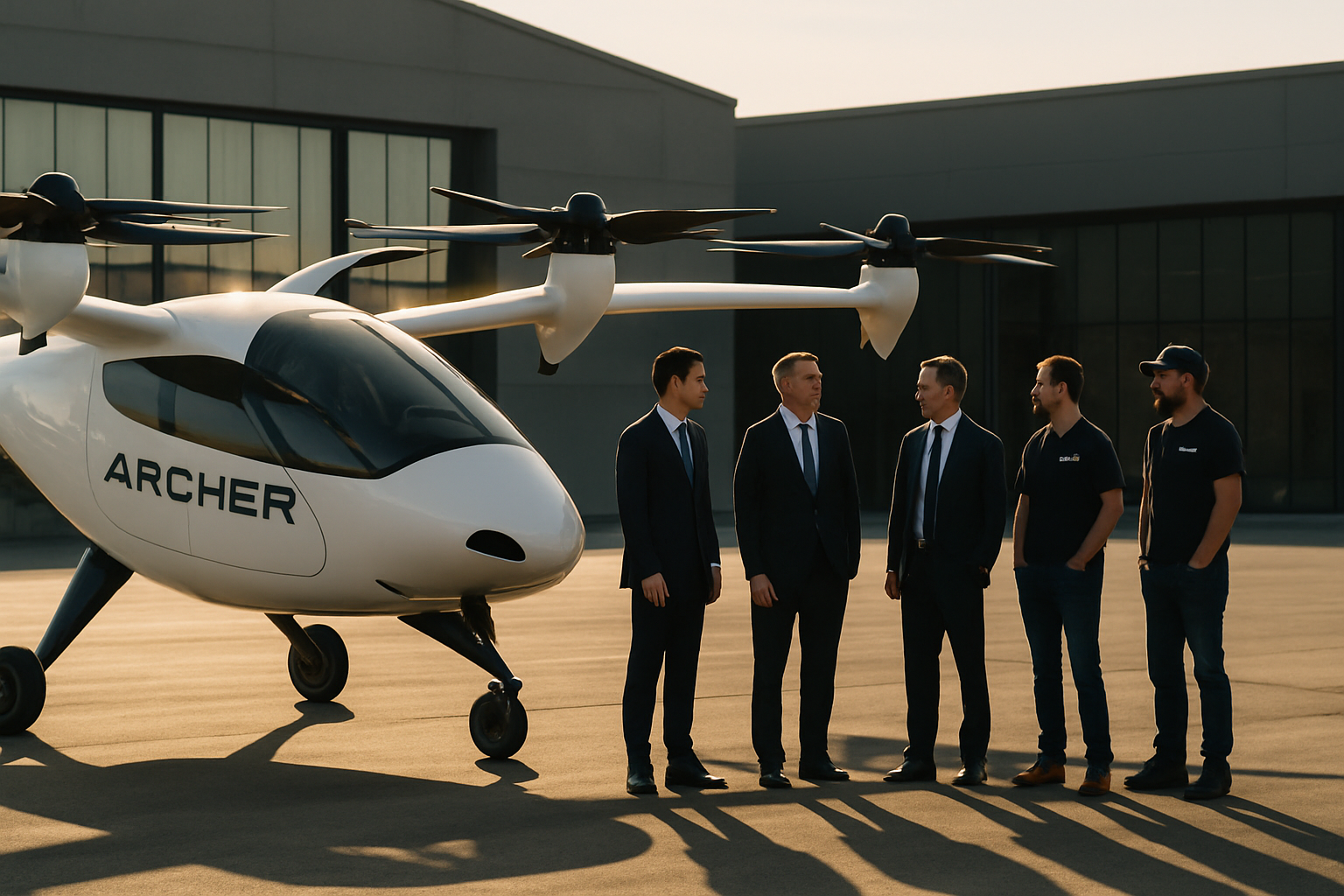
The electric aviation industry reached a significant milestone as three major players—Archer Aviation, BETA Technologies, and Macquarie—announced a comprehensive partnership to build the foundational infrastructure and operational frameworks necessary for commercial eVTOL (electric vertical takeoff and landing) services. This alliance represents a critical step toward transforming electric air mobility from development stage to real-world passenger operations across North America.
The Strategic Alliance: Who’s Who and What They Bring
Archer Aviation, a leading eVTOL aircraft manufacturer backed by significant institutional investment, brings advanced aircraft engineering and certification pathway expertise to the table. The company has been methodically progressing toward FAA certification for its flagship electric air taxi, positioning it as one of the industry’s most promising near-term operators. Archer’s focus on practical, scalable design has distinguished it within a crowded field of emerging manufacturers.
BETA Technologies complements this capability with its proprietary battery and energy management systems specifically engineered for electric aviation. The company’s vertical integration of power solutions addresses one of the critical technical challenges facing the eVTOL sector—developing reliable, efficient energy systems that can support frequent daily flight cycles while maintaining safety margins. BETA’s expertise in charging infrastructure and energy logistics becomes invaluable as operations scale.
Macquarie, a multinational financial services and infrastructure company, brings institutional capital, operational management experience, and financing solutions to the partnership. The bank’s infrastructure investment division has demonstrated sophistication in managing complex, regulated transportation networks, providing crucial business infrastructure expertise that purely aviation-focused partners may lack. Macquarie’s involvement signals growing institutional confidence in the commercial viability of eVTOL services.
Building the Operational Foundation
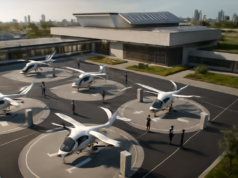
Beyond aircraft and batteries, commercial eVTOL services require sophisticated operational infrastructure that extends far beyond traditional hangar and maintenance facilities. The partnership focuses on developing vertiports—dedicated hub facilities designed specifically for electric aircraft operations. These facilities must integrate seamless passenger processing, vehicle charging systems, maintenance capabilities, and safety protocols that align with emerging regulatory standards.
The three partners are collectively designing operations frameworks that address crucial practical challenges: how to manage frequent flight scheduling across multiple vehicles, how to maintain safety during high-frequency urban air operations, how to integrate eVTOL services with existing ground transportation networks, and how to ensure staff training and certification meets regulatory requirements. These operational playbooks cannot be borrowed directly from commercial aviation or ground transportation—eVTOL operations represent a genuinely novel category requiring purpose-built systems.
Geographic expansion planning forms another critical element of the partnership. Rather than attempting simultaneous launches across numerous markets, the alliance appears focused on methodically establishing operations in select North American regions where regulatory environments are favorable, demand indicators are strong, and infrastructure development timelines are realistic. This measured approach reflects lessons learned from other transportation technology transitions that overextended before operational maturity.
Regulatory and Certification Pathway Clarity
One of the partnership’s most significant contributions may be establishing clearer pathways through regulatory certification and operational approval. The FAA has outlined frameworks for eVTOL certification, but the practical application of these frameworks remains relatively uncharted territory. By working collaboratively across manufacturing, technology, and operations, the partnership can generate real-world test cases that inform both company practices and potentially regulatory refinement.
Macquarie’s institutional relationships and compliance expertise accelerate navigation through complex regulatory environments. The company’s existing experience managing regulated infrastructure assets across multiple jurisdictions provides valuable perspective on managing compliance within different state and local regulatory contexts. As eVTOL services mature, local regulation will become increasingly important, and having institutional partners experienced in multi-jurisdictional compliance becomes strategically valuable.
The partnership’s emphasis on building regulatory foundations reflects broader industry maturation. Early-stage eVTOL companies focused primarily on aircraft development and certification; this alliance demonstrates the sector’s evolution toward addressing the equally complex challenge of establishing sustainable, compliant operational models that can satisfy regulators, investors, and the public simultaneously.
Market Timing and Competitive Positioning
The announcement comes at a crucial inflection point in the eVTOL industry. Multiple manufacturers are progressing toward certification, regulatory frameworks are solidifying, and early investor enthusiasm has been tempered by realistic assessments of commercialization timelines. Within this environment, establishing operational partnerships before market entry becomes a competitive advantage—companies that can demonstrate not just aircraft capability but complete operational readiness will likely secure early market share.
Archer’s partnership with BETA and Macquarie positions the company favorably relative to competitors still focused primarily on aircraft development. By securing reliable partners for energy systems and operations management, Archer can redirect internal resources toward certification acceleration and launch preparation. This focused approach potentially accelerates the company’s path to revenue-generating operations compared to competitors attempting to develop all necessary capabilities internally.
The partnership also signals confidence in the fundamental business case for eVTOL services. Macquarie’s involvement, in particular, suggests institutional investors see sufficient demand indicators and revenue potential to justify infrastructure-scale capital commitments. This confidence may influence broader investor sentiment toward the sector and encourage capital flows toward other credible market participants.
Infrastructure Investment and Economic Implications
Key Takeaways: Electric Aviation’s Operational Maturation
- Infrastructure development and operational management are now equal partners with aircraft engineering in determining eVTOL commercialization success
- Multi-stakeholder partnerships combining manufacturers, technology providers, and financial institutions accelerate realistic pathway to commercial passenger operations
- Macquarie’s involvement legitimizes eVTOL services as an institutional investment-scale opportunity, not merely a speculative venture
The infrastructure requirements for eVTOL operations represent substantial capital commitments. Each major vertiport facility requires not just ground infrastructure but sophisticated electrical systems, safety equipment, and integration with existing transportation networks. By establishing these infrastructure foundations through dedicated partnership frameworks, the alliance distributes capital requirements and risk across institutional partners better positioned to manage them than any single company.
Economic implications extend beyond the partnership itself. Successful eVTOL operations will generate employment in maintenance, operations, and facility management. Communities hosting vertiports gain access to novel transportation modes while potentially attracting associated technology and services companies. The partnership’s focus on North American operations preserves significant economic benefits within the region rather than ceding entire markets to international competitors who may move faster despite less sophisticated operational foundations.
The Archer-BETA-Macquarie partnership demonstrates that the eVTOL industry has matured beyond the “build amazing aircraft” stage into a more complex, realistic phase requiring operational, financial, and institutional sophistication. This evolution, while less dramatic than technological breakthroughs, may ultimately prove more important in determining which companies successfully transition eVTOL from development stage to sustainable commercial operations serving actual passengers.