HIGHLIGHTS
- Shenzhen establishes itself as China’s hardware capital with fully operational drone delivery networks reshaping urban logistics infrastructure.
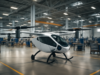
- Robot waiters and autonomous delivery systems work in tandem, creating an integrated ecosystem of personal air mobility and ground-level automation.
- The convergence of EV drone technology with hospitality automation demonstrates commercial viability and mass adoption potential in urban environments.
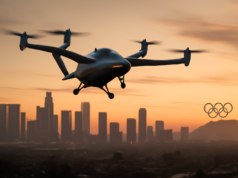
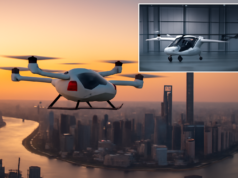
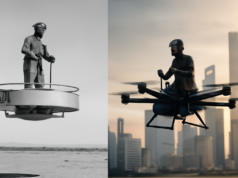
Shenzhen, China’s thriving technology hub, is rapidly transforming into the world’s premier destination for autonomous delivery systems and robotic innovation. The integration of drone delivery networks with robot waiters represents a watershed moment in personal air mobility and urban automation, signaling how future cities will operate when autonomous technologies converge. What was once purely science fiction is now becoming everyday reality in China’s futuristic hardware capital, where cutting-edge infrastructure meets practical commercial implementation.
Shenzhen’s Emergence as the Global Drone Delivery Leader
Shenzhen has long been synonymous with technological innovation, but its latest transformation positions the city as the uncontested leader in drone delivery infrastructure. The city’s perfect combination of tech-forward policy, industrial manufacturing expertise, and urban density has created an ideal testing ground for autonomous aerial systems. Companies operating in Shenzhen benefit from supportive regulations, access to world-class engineering talent, and the financial resources necessary to scale operations rapidly.
The success of drone delivery in Shenzhen stems from decades of investment in hardware manufacturing and supply chain optimization. Unlike Western markets that are still navigating regulatory frameworks, Shenzhen’s local government has actively encouraged autonomous system development as part of broader smart city initiatives. This proactive approach has eliminated years of bureaucratic delays, allowing companies to move from prototype to mass deployment in record time.
The geographic advantages of Shenzhen cannot be overstated. With a population exceeding 12 million people in a relatively compact metropolitan area, the city offers sufficient density for profitable drone operations while maintaining manageable airspace coordination. The surrounding tech ecosystem provides immediate access to component suppliers, software developers, and systems integrators all working within a few kilometers of each other.
The Integration of Aerial and Ground-Level Automation
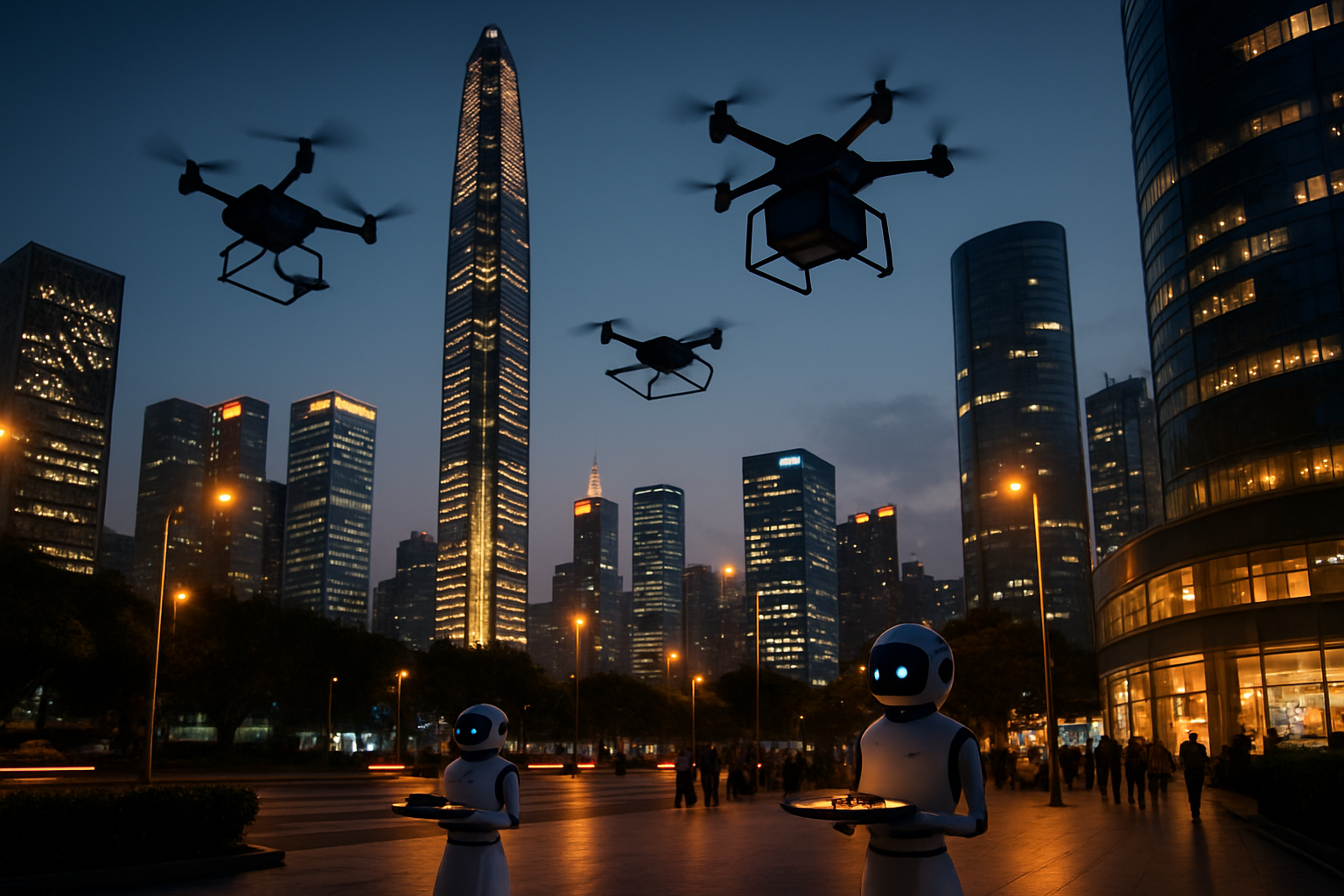
What distinguishes Shenzhen’s autonomous ecosystem is the seamless coordination between aerial delivery drones and ground-level robot systems. Rather than treating these technologies as separate innovations, local operators have created integrated workflows where drones complete the long-distance leg while robots handle final-mile delivery and customer interaction. This hybrid approach maximizes efficiency while minimizing operational costs and environmental impact.
Robot waiters operating in restaurants and hospitality venues complement drone delivery networks by managing the distribution of packages once they arrive at their destination neighborhoods. When a customer orders food or goods, the drone handles rapid transit through three-dimensional airspace while the robot handles ground-level navigation, ensuring last-mile reliability. This division of labor leverages the unique advantages of each technology while compensating for their respective limitations.
The synchronization between these systems requires sophisticated software architecture and real-time communication protocols. Shenzhen’s technology companies have invested heavily in developing the artificial intelligence and routing algorithms necessary to orchestrate thousands of autonomous vehicles operating simultaneously. The result is a transportation network that appears almost organic in how smoothly it adapts to changing demand and environmental conditions.
Commercial Viability and Profitability at Scale
One of the most significant achievements in Shenzhen is demonstrating that autonomous delivery systems can achieve profitability at commercial scale. Previous concerns about whether drone delivery could ever become economically viable have been definitively answered by the operational success of multiple companies in the city. When labor costs are eliminated and routing efficiency reaches optimal levels, the unit economics of autonomous delivery become strongly positive.
The cost structure of drone-based delivery has improved dramatically as manufacturing volumes have increased and battery technology has matured. What began as experimental systems costing millions of dollars to operate now represents a sustainable business model with clear pathways to expanded deployment. Companies in Shenzhen are reporting consistent profitability across multiple delivery verticals including food service, package delivery, and pharmaceutical distribution.
The financial success of Shenzhen’s operators is attracting global investment and spurring rapid expansion to other Chinese cities and international markets. Investors who previously viewed autonomous delivery as a speculative bet are now committing significant capital based on demonstrated operational performance. This influx of funding is accelerating technology improvement and enabling faster network expansion than would otherwise be possible.
Regulatory Framework and Government Support
Shenzhen’s success in autonomous delivery would be impossible without enlightened regulatory policies that encourage innovation while maintaining safety standards. The local government has established airspace corridors specifically designated for drone operations, eliminating conflicts with manned aviation and providing operators with clearly defined operating zones. This regulatory clarity allows companies to plan long-term infrastructure investments with confidence.
The Chinese government’s broader commitment to technological leadership has made autonomous systems development a national priority, with Shenzhen positioned as a flagship demonstration zone. Tax incentives, subsidized research facilities, and direct government investment have created an economic environment where the most ambitious autonomous projects receive enthusiastic support. This policy environment stands in sharp contrast to the regulatory caution prevalent in many Western jurisdictions.
Safety protocols developed in Shenzhen are increasingly being adopted as industry standards across China and beyond. Rather than imposing prescriptive rules that stifle innovation, the regulatory approach emphasizes outcome-based safety metrics that companies must demonstrate their systems can achieve. This flexibility has encouraged rapid iteration and continuous improvement while maintaining public safety.
Key Takeaways from Shenzhen’s Autonomous Ecosystem
- Integrated systems combining aerial drones with ground robots maximize efficiency and prove that autonomous logistics can achieve profitable operations at scale
- Supportive government policy and industrial manufacturing expertise create regulatory and operational conditions unavailable in most Western markets
- Successful commercial deployment in Shenzhen is establishing technological standards and business models that will drive global adoption of autonomous delivery systems
The emergence of Shenzhen as a global leader in autonomous delivery represents a fundamental shift in how urban logistics will operate in the coming decades. By integrating personal air mobility systems with ground-level robotic automation, the city is creating a transportation network that is faster, cleaner, and more cost-effective than traditional human-operated alternatives. The commercial success of these systems proves that autonomous delivery is not a distant technological possibility but a present-day reality that is rapidly expanding. As other cities globally study Shenzhen’s model and begin developing their own autonomous infrastructure, the innovations pioneered in China’s hardware capital will increasingly influence transportation systems worldwide. The future of urban mobility is being built in Shenzhen today, and its impact will resonate through the global economy for decades to come.