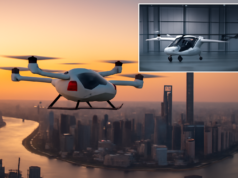

The personal air mobility industry reached a significant milestone in July 2026 when South Korea successfully conducted a full-scale flight test of a privately developed eVTOL prototype. Sambo Motors, a South Korean aerospace company, demonstrated the capabilities of their electric vertical takeoff and landing aircraft, marking an important step forward for urban air mobility in Asia. This achievement represents not only technological progress but also validates the growing momentum of eVTOL development outside traditional Western markets.
South Korea’s Growing Role in eVTOL Development
South Korea has emerged as a significant player in the global eVTOL market, with several companies investing heavily in electric aviation technology. The nation’s strong manufacturing base, advanced semiconductor industry, and government support for green technologies have created an ideal ecosystem for eVTOL innovation. Sambo Motors’ successful flight test demonstrates that Korean companies can compete with established international players in this rapidly evolving sector.
The South Korean government has been actively promoting urban air mobility as part of its broader commitment to carbon neutrality and sustainable transportation. Policy initiatives and funding mechanisms have encouraged private sector investment in eVTOL technology, positioning the country as a potential leader in Asian air mobility markets.
This development signals to investors and manufacturers worldwide that eVTOL innovation is not limited to North America and Europe. Asia-Pacific regions, particularly South Korea, are becoming increasingly important hubs for advanced aviation technology development and commercialization.
Technical Specifications and Design Features
Sambo Motors’ eVTOL prototype incorporates modern design principles essential for safe and efficient urban air operations. The full-scale aircraft represents years of research and development, focusing on battery efficiency, structural integrity, and noise reduction—critical factors for urban deployment.
The prototype’s design likely incorporates multiple electric motors for redundancy and safety, advanced battery management systems, and aerodynamic features optimized for vertical takeoff and transition to forward flight. These technical elements are crucial for meeting regulatory requirements and ensuring passenger safety during operations in urban environments.
Successful flight testing validates the engineering approach and provides valuable data for optimization. Each test iteration generates insights into performance characteristics, flight dynamics, and system reliability that are essential for moving toward certification and eventual commercialization.
Key Technical Achievements
- Successful full-scale prototype flight demonstration
- Validated electric propulsion system performance
- Demonstrated vertical takeoff and landing capabilities
- Confirmed structural integrity and safety systems
- Gathered flight dynamics and handling characteristics data
Path to Commercialization and Regulatory Approval
The successful flight test represents a crucial step toward bringing Sambo Motors’ eVTOL to commercial service. However, the journey from prototype to operational aircraft involves rigorous certification processes, regulatory approvals, and extensive testing protocols. South Korean aviation authorities will likely establish certification frameworks based on international standards while adapting requirements for local operational environments.
Regulatory bodies worldwide are developing certification standards for eVTOL aircraft, drawing from established helicopter and fixed-wing aircraft requirements while addressing unique aspects of electric aviation. Sambo Motors must navigate both national regulations and potentially international standards to access global markets. This regulatory pathway typically spans several years and requires documentation of safety performance across hundreds of test flights.
The company’s progress toward commercialization will likely follow a phased approach, beginning with limited operations in controlled airspace and gradually expanding to more complex urban environments. Partnership with aviation authorities and early adopters in specific operational niches will accelerate the path to broader commercial deployment.
Timeline Considerations
- Continued flight testing and data collection (2026-2027)
- Regulatory certification application and review (2027-2028)
- Limited commercial operations trial periods (2028-2029)
- Full commercial service deployment (2029 and beyond)
- Scaling production capacity for market demand
Market Implications and Industry Impact
Sambo Motors’ achievement strengthens the competitive landscape of the global eVTOL market and demonstrates that multiple viable technologies and approaches can succeed. Rather than creating a single dominant design, the industry is evolving with diverse solutions addressing different operational requirements and market segments. This diversity benefits the entire ecosystem by accelerating innovation and broadening potential applications for electric aviation.
The successful Korean prototype flight will likely attract additional investment to Asian eVTOL companies and manufacturers. Regional players in Japan, Singapore, and other Asia-Pacific nations may accelerate their own development programs, recognizing the market opportunity and competitive advantages of local production. This geographic diversification of eVTOL development reduces concentration risk and creates multiple pathways to commercialization.
For the broader personal air mobility sector, South Korean success validates the viability of electric aviation across different geographic markets and regulatory environments. Airlines, transportation companies, and urban planners across Asia will be watching Sambo Motors’ progress closely, potentially leading to earlier adoption of eVTOL services in the region compared to more conservative Western markets.
Strategic Market Opportunities
- Regional expansion of eVTOL services across Asia-Pacific
- Supply chain development for electric aviation components
- Integration with existing transportation infrastructure
- Premium urban mobility services targeting business travelers
- Cargo and logistics applications for fast delivery networks
Sambo Motors’ successful full-scale eVTOL prototype flight represents a landmark achievement for South Korea and the global personal air mobility industry. As the company progresses toward certification and commercialization, their technology and operational experience will shape how eVTOL services develop across Asia. The achievement demonstrates that electric aviation innovation transcends geographic boundaries, with multiple capable teams worldwide working to bring safe, efficient, and sustainable air mobility to urban centers. As regulatory frameworks mature and production scales increase, we can expect to see commercial eVTOL services emerging from diverse manufacturers in the coming years, with South Korean companies positioned as significant contributors to this transformative transportation revolution.