HIGHLIGHTS
- Tesla’s flying cars face 10-20+ year timelines with major regulatory uncertainty, while NVIDIA-Volvo autonomous ground vehicles could deploy significantly within years using existing infrastructure.
- Ground-based autonomy uses proven technologies (AI, LiDAR, radar) already in development; flying vehicles require breakthrough innovations in battery efficiency, safety redundancy, and new air traffic management systems.
- Both transportation models will likely coexist in the future mobility ecosystem, with autonomous vehicles serving immediate logistics and daily commute needs, while flying vehicles eventually handle premium, high-value routes after 2035-2040.
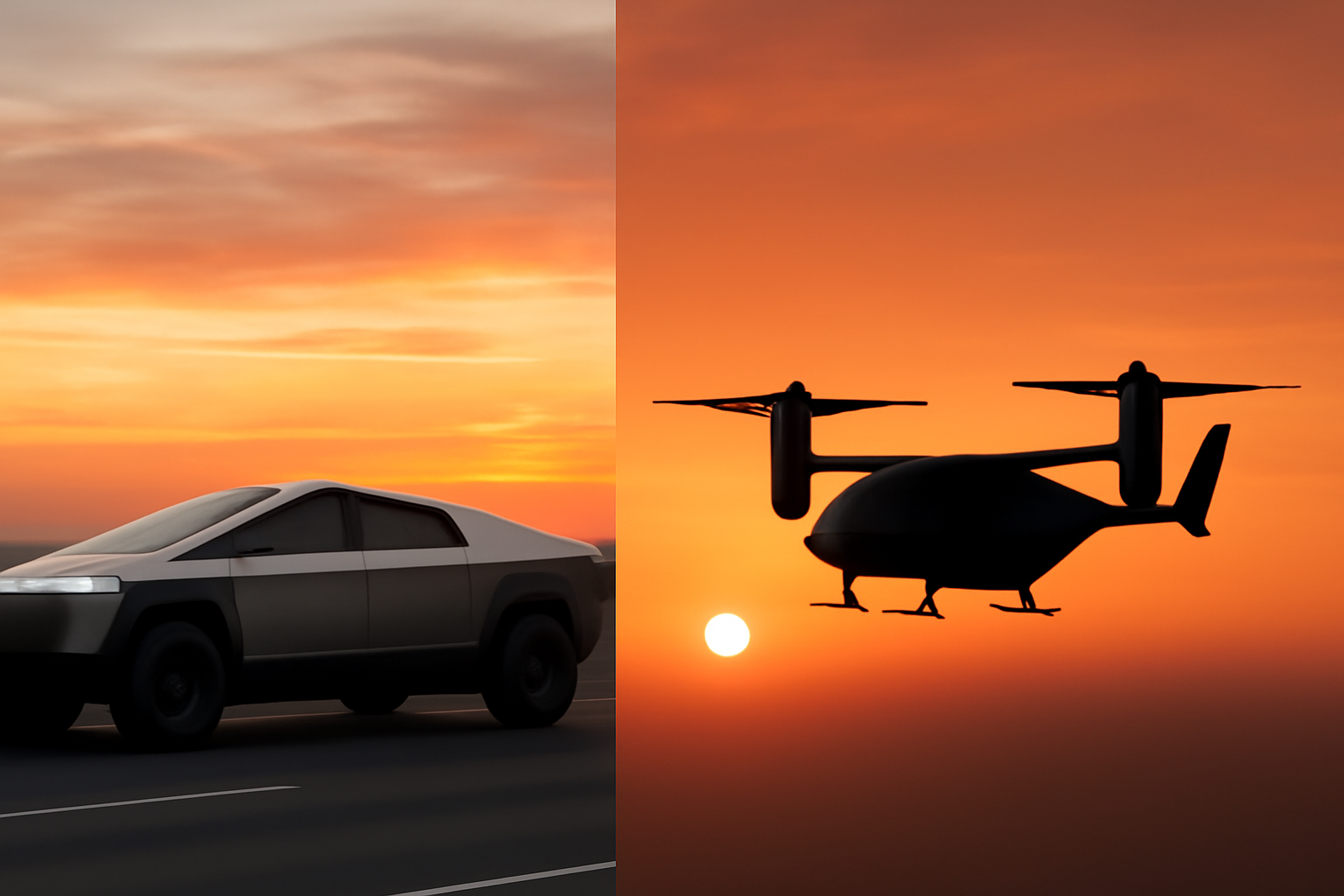
The future of personal transportation is at a crossroads. While Tesla pursues ambitious flying car development, a strategic partnership between NVIDIA and Volvo is advancing self-driving ground vehicles at an unprecedented pace. This fundamental divergence in mobility strategies reveals contrasting philosophies about how humanity will move from point A to point B in the coming decades. Each approach offers distinct advantages, challenges, and potential market implications that could reshape the entire transportation industry.
Tesla’s Flying Car Vision: Reaching for the Sky
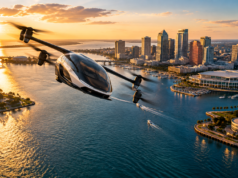
Elon Musk has long championed the idea of flying cars as the ultimate solution to urban congestion and transportation limitations. Tesla’s vision extends beyond electric vehicles—the company has invested in research and development toward personal air mobility solutions that would revolutionize how we conceptualize commuting. The appeal is undeniable: bypass ground-level traffic entirely by taking to the skies, reducing commute times dramatically while offering unprecedented freedom of movement.
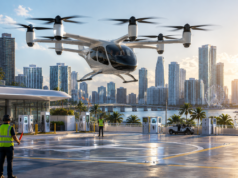
Tesla’s flying car concept draws on the company’s proven expertise in battery technology, autonomous systems, and electric propulsion. By leveraging vertical takeoff and landing (VTOL) capabilities, Tesla’s envisioned aircraft would combine the convenience of a car with the speed and accessibility of aviation. Early concepts suggest compact, efficient designs optimized for urban environments where space constraints make traditional aircraft impractical.
However, regulatory hurdles, infrastructure requirements, and technical complexity present substantial obstacles. Flying cars demand sophisticated air traffic management systems, advanced autonomous control algorithms, and widespread regulatory approval from aviation authorities worldwide. The timeline for commercial viability remains uncertain, with most experts placing practical deployment years or even decades away.
NVIDIA and Volvo’s Self-Driving Strategy: Perfecting Ground-Level Autonomy
In contrast to Tesla’s aerial ambitions, NVIDIA and Volvo are doubling down on autonomous ground vehicles—a more incremental but arguably more near-term viable approach. This partnership leverages NVIDIA’s world-leading AI computing platforms and Volvo’s automotive engineering expertise to create self-driving vehicles that operate on existing infrastructure today.
NVIDIA’s DRIVE platform provides the computational foundation for real-time autonomous perception, planning, and decision-making. Volvo brings decades of automotive safety excellence, manufacturing precision, and regulatory navigation experience. Together, they’re developing sophisticated systems capable of handling diverse traffic scenarios, weather conditions, and edge cases that earlier autonomous vehicles struggled to manage.
This ground-based strategy offers immediate deployment potential. Autonomous trucks, buses, and cars can integrate into existing road networks without requiring new infrastructure investment or entirely new regulatory frameworks. Adoption can happen gradually, starting with controlled environments like highways and delivery routes before expanding to complex urban settings. The path to market is clearer and faster than flying vehicles.
Technological Readiness and Timeline Comparison
Tesla’s flying car vision represents transformative but speculative technology. While the company has made progress on electric powertrains and autonomous systems applicable to VTOL aircraft, flying cars face unresolved engineering challenges—battery weight-to-power ratios, noise reduction, structural redundancy for safety, and weather resistance all demand breakthrough innovations. Most credible timelines suggest commercial flying cars remain 10-20+ years away.
NVIDIA and Volvo’s autonomous ground vehicles represent evolutionary rather than revolutionary technology. The foundational technologies—LiDAR, radar, computer vision, deep learning—already exist and are improving rapidly. Companies are already testing Level 4 autonomous vehicles in controlled conditions. The progression from advanced driver assistance to full autonomy is well-understood, even if implementation remains complex. Deployment timelines are measured in years rather than decades.
From a technological maturity perspective, ground-based autonomy is simply further along the development curve. This doesn’t diminish flying cars’ potential—it merely acknowledges that perfecting autonomous ground vehicles offers society tangible benefits sooner. Both approaches may ultimately coexist, serving different transportation needs in different contexts.
Market Implications and Competitive Landscape
Tesla’s flying car initiative positions the company as a visionary innovator willing to pursue moonshot technologies. This bolsters brand prestige and attracts investors interested in paradigm-shifting breakthroughs. However, it also diverts resources and attention from more immediately profitable markets. The company must balance its long-term flying car ambitions with near-term electric vehicle leadership.
The NVIDIA-Volvo partnership demonstrates a different competitive strategy: dominate the autonomous ground vehicle market, establish industry standards, and capture early-mover advantages before competitors mature equivalent systems. This approach generates revenue and market share faster while building technical moats through proprietary AI algorithms and sensor fusion expertise.
Market analysts are divided on which approach will prove more valuable. Autonomous ground vehicles could become trillion-dollar industries, transforming logistics, ride-sharing, and personal transportation within the decade. Flying cars, if successful, could unlock entirely new markets and redefine urban planning—but only if and when they become practical and affordable. Investors betting on near-term returns favor NVIDIA-Volvo; those with longer horizons may still see Tesla’s vision as ultimately more transformative.
Regulatory and Infrastructure Considerations
Ground-based autonomous vehicles leverage existing regulatory frameworks, albeit with necessary updates. Traffic laws, insurance mechanisms, and liability standards already exist. Regulators can adapt these gradually as self-driving technology matures. Infrastructure adaptation—lane markings, traffic signals, road conditions—can occur incrementally without massive capital investment or societal reorganization.
Flying cars, conversely, require entirely new regulatory paradigms. Aviation authorities must develop certification standards for personal air vehicles, urban air traffic management systems comparable to modern air traffic control, and novel insurance and liability frameworks. Infrastructure needs are staggering: charging stations, landing zones, and air corridors must be established across cities. Policy frameworks are years away from clarity.
These regulatory and infrastructure advantages position ground-based autonomy for faster, more practical implementation. It’s easier to roll out technological change within existing systems than to rebuild systems from scratch, even if flying cars promise more dramatic long-term transformation.
Key Takeaways: The Competing Visions
- Tesla’s flying car vision offers transformative potential but faces 10-20+ year timelines, regulatory uncertainty, and unresolved engineering challenges; NVIDIA-Volvo’s autonomous ground vehicles could reach significant deployment within years using existing infrastructure and clearer regulatory pathways.
- Ground-based autonomy represents incremental innovation building on proven technologies (AI, sensors, real-time computing), while flying cars require breakthrough innovations in battery efficiency, safety redundancy, and air traffic management systems.
- Both approaches will likely coexist in a diversified future transportation ecosystem: autonomous vehicles for ground mobility and logistics within the decade, with personal flying vehicles eventually complementing them for specific high-value use cases after 2035-2040.
The future of personal mobility doesn’t require choosing between flying cars and autonomous ground vehicles—both will likely play important roles in a transformed transportation landscape. Tesla’s flying car vision pushes technological boundaries and inspires confidence in radical innovation. NVIDIA and Volvo’s self-driving partnership delivers practical, near-term solutions that improve lives and economies today. Progress on both fronts accelerates the overall transformation of how humanity moves, connects, and develops. The real question isn’t which vision wins, but how quickly each can be realized and how they’ll integrate into a seamlessly connected mobility ecosystem.