HIGHLIGHTS
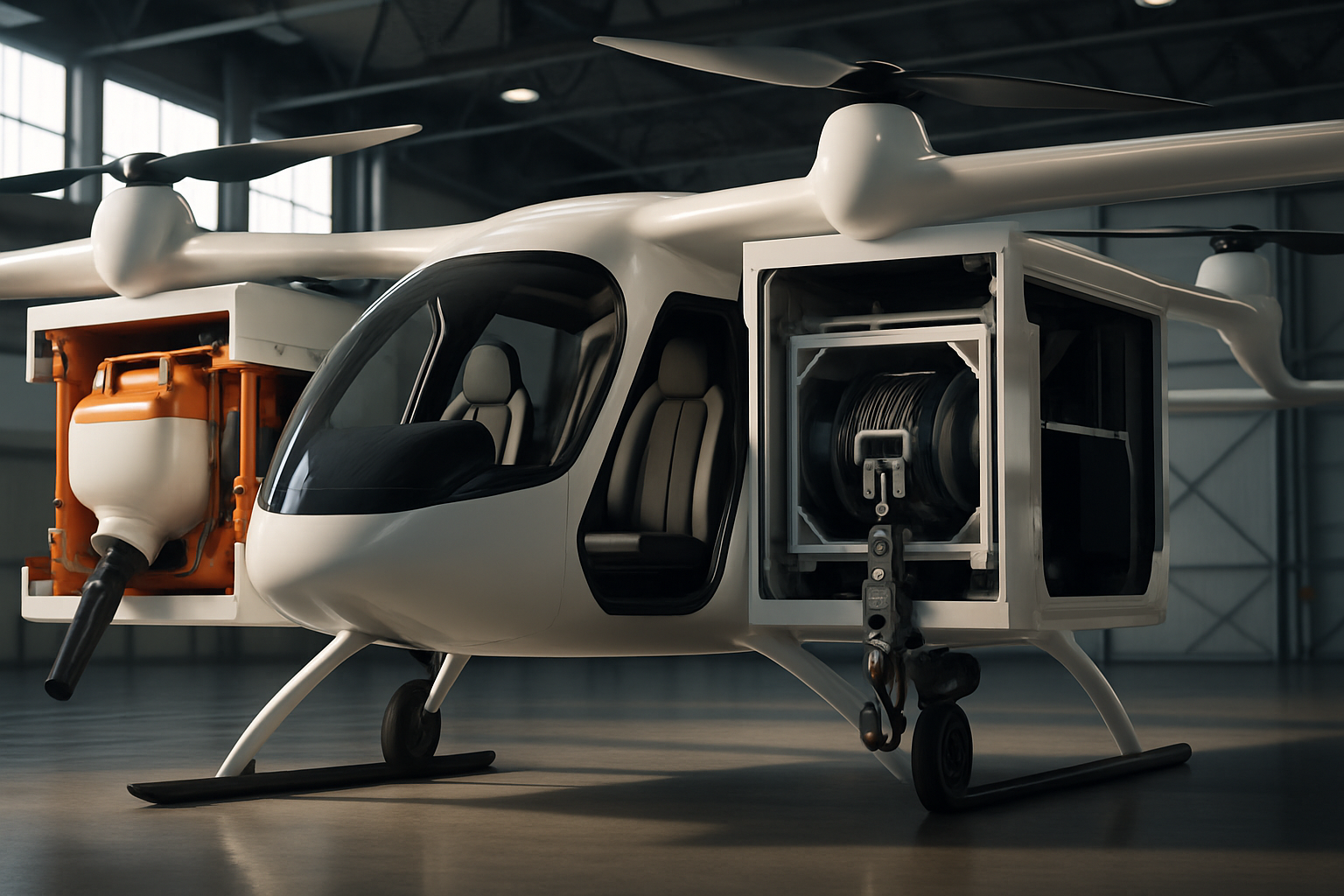
- AutoFlight’s multi-role eVTOL transforms between air-taxi, firefighting, and cargo-hauling modes with modular payload systems
- 5-ton cargo capacity enables commercial freight delivery alongside emergency response and passenger transport applications
- Design signals shift toward versatile, platform-based eVTOL architectures for maximum market penetration across multiple verticals
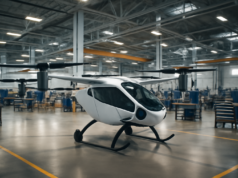
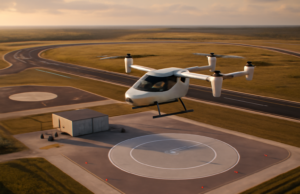
AutoFlight has unveiled one of the most ambitious multi-role designs in the personal air mobility sector: an eVTOL that seamlessly transforms between an air-taxi, a firefighting platform, and a 5-ton cargo hauler. This transformer approach represents a significant departure from single-purpose aircraft design and signals how manufacturers are thinking about maximizing operational flexibility and return on investment in an emerging market still searching for its killer applications.
The Multi-Role Revolution in eVTOL Design
The concept of a single aircraft platform handling multiple missions is not new in traditional aviation, but achieving it in the demanding world of electric vertical takeoff and landing presents unprecedented engineering challenges. AutoFlight’s solution leverages modular payload architecture, allowing operators to swap mission-specific equipment depending on daily operational needs. This versatility dramatically expands the addressable market for a single aircraft type and appeals to operators managing mixed fleets across urban air mobility, emergency services, and logistics.
The shift toward platform-based design reflects lessons learned from traditional helicopter operators, who have long benefited from multi-role airframes. However, eVTOLs add complexity through their reliance on battery-electric propulsion, which creates strict weight and center-of-gravity constraints. AutoFlight’s engineering team clearly invested significant R&D into ensuring that payload swaps don’t compromise flight stability, battery efficiency, or operational safety across these dramatically different use cases.
This approach also addresses a critical pain point for early UAM operators: high capital expenditure. Rather than purchasing separate aircraft for distinct roles, operators can invest in a single platform with interchangeable mission kits, substantially reducing fleet acquisition costs while improving asset utilization rates and overall return on investment.
Air-Taxi Operations and Urban Mobility
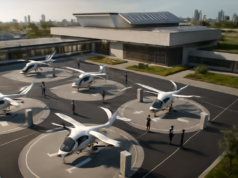
As an air-taxi, AutoFlight’s eVTOL enters a market segment expected to become the primary driver of commercial UAM adoption in the 2030s. The air-taxi configuration likely features optimized seating arrangements, passenger comfort amenities, and aerodynamic tuning to maximize range and efficiency for point-to-point urban flights. This positioning directly challenges established competitors like Joby Aviation, Lilium, and Archer Aerospace, which have pursued single-mission optimization strategies.
Urban air mobility operators have consistently identified passenger comfort and reliability as critical success factors. By leveraging AutoFlight’s modular platform, air-taxi operators can maintain a fleet that also generates revenue from emergency services and cargo contracts on off-peak days, fundamentally changing the unit economics of UAM businesses. Pilots and crew training can also be consolidated around a single aircraft type, reducing operational complexity and training costs.
The Chinese market presents unique advantages for such versatile platforms, as urban density, infrastructure development timelines, and regulatory flexibility allow for faster iteration and deployment. AutoFlight’s location in a market with aggressive eVTOL ambitions suggests this design could achieve operational deployment sooner than Western competitors still navigating slower certification pathways.
Firefighting and Emergency Services Applications
Perhaps the most compelling use case for AutoFlight’s transformer eVTOL is emergency response, particularly firefighting. Remote or difficult-to-access fires could benefit enormously from rapid aerial deployment of water, retardant, or specialized suppression equipment. The 5-ton capacity provides genuine operational payload, enabling the aircraft to carry meaningful amounts of firefighting resources rather than serving purely as reconnaissance platforms.
Firefighting eVTOLs represent a green alternative to traditional helicopter-based fire response, reducing operational costs and carbon emissions while maintaining the speed and reach advantages of aerial deployment. AutoFlight’s design allows fire departments or contracted aerial services to deploy the same platform for reconnaissance, personnel transport, and active suppression, streamlining command structure and logistical support during critical emergency operations.
Integration with existing emergency response infrastructure remains a challenge, but the modular design philosophy simplifies certification and operational protocols. Fire services could quickly swap mission kits between different operational scenarios within a single deployment cycle, maximizing aircraft availability and effectiveness during peak emergency periods.
Cargo Hauling and Logistics Evolution
The 5-ton capacity elevates AutoFlight’s design into genuine commercial freight territory, competing with traditional cargo helicopters and emerging electric cargo drone platforms. This payload enables real supply chain applications: medical deliveries to remote facilities, construction material transport to high-rise building sites, and emergency resupply for disaster areas. The electric propulsion eliminates noise pollution concerns in urban environments where traditional cargo helicopters face operational restrictions.
Logistics companies increasingly face pressure to decarbonize their supply chains, making electric cargo aircraft highly attractive for last-mile and point-to-point deliveries. AutoFlight’s solution captures this demand while maintaining the flexibility to pivot toward passenger or emergency services as market conditions warrant. Operators can intelligently schedule cargo runs during specific time windows while serving air-taxi demand during peak commute periods.
Battery technology improvements expected over the next two to three years will progressively extend the range and payload capacity of eVTOL platforms, potentially unlocking longer-distance cargo applications. AutoFlight’s modular architecture positions it perfectly to retrofit improved power systems and larger payload bays as technological advancement accelerates, extending platform lifespan and competitive advantage.
Key Takeaways and Industry Implications
Strategic Advantages of the Multi-Role Platform
- Modular payload design reduces operator fleet capital requirements while increasing asset utilization across air-taxi, emergency services, and cargo segments
- Single pilot and maintenance training protocols simplify operational scaling compared to managing multiple aircraft types
- Battery-electric propulsion with 5-ton capacity delivers environmental and operational cost advantages over traditional helicopter-based alternatives
- Platform extensibility through modular architecture supports future upgrades as battery technology and regulatory frameworks evolve
- Chinese market deployment provides faster iteration cycles and regulatory flexibility compared to Western certification pathways
AutoFlight’s transformer eVTOL represents a maturation of the personal air mobility market beyond single-purpose concepts toward practical, versatile platforms designed for real-world operational complexity. By proving that a single aircraft can excel across air-taxi, emergency response, and cargo hauling missions, the company has opened a strategic pathway that other manufacturers will almost certainly pursue. The coming years will reveal whether operators prioritize specialized optimization or platform versatility, but AutoFlight’s approach positions it competitively across multiple high-value market segments simultaneously. As certification and deployment timelines accelerate globally, expect modular multi-role eVTOLs to become the dominant architectural paradigm in the industry.