HIGHLIGHTS
- Air India, SkyDrive, and Suzuki Motor establish landmark MOU to develop eVTOL medical air logistics for emergency response across India’s healthcare system.
- Strategic partnership leverages Suzuki’s automotive expertise and manufacturing capability to advance Japan-developed eVTOL technology in the Indian market.
- Initiative addresses critical gaps in emergency medical transportation, positioning India as a key testing ground for advanced air mobility healthcare applications.
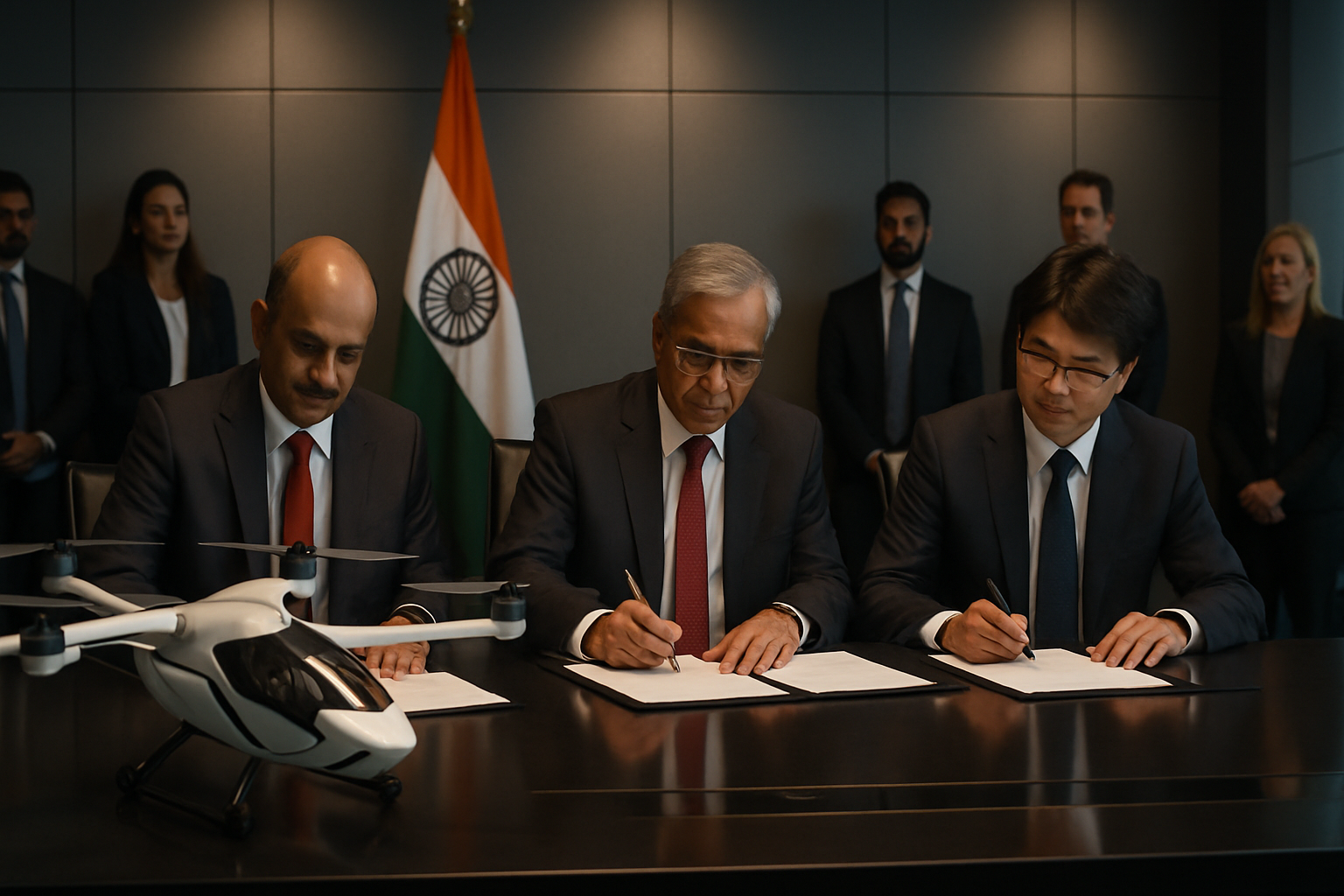
Air India, the nation’s flagship carrier, has joined forces with SkyDrive, Japan’s leading electric vertical takeoff and landing (eVTOL) developer, and automotive manufacturer Suzuki Motor Corporation to establish a groundbreaking memorandum of understanding (MOU) aimed at advancing medical air logistics across India. This strategic partnership, announced on August 2, 2026, represents a pivotal moment in the integration of advanced air mobility technology into India’s healthcare infrastructure, positioning the country as a critical hub for next-generation emergency medical transportation systems.
The Strategic Partnership: Aligning Industry Leaders for Healthcare Innovation
The MOU between Air India, SkyDrive, and Suzuki Motor Corporation marks a significant convergence of expertise spanning aviation, cutting-edge eVTOL technology, and automotive manufacturing. Air India brings decades of operational excellence, regulatory relationships, and network infrastructure across India’s aviation ecosystem. SkyDrive contributes its proprietary electric vertical takeoff and landing platform, developed through years of research and testing in Japan, offering proven engineering solutions for safe and efficient urban air mobility. Suzuki Motor, with its extensive manufacturing footprint and supply chain capabilities in India, provides the industrial backbone necessary to localize production and support long-term operational sustainability.
This trilateral approach differs fundamentally from typical aerospace partnerships, as it combines end-to-end capabilities—from regulatory navigation and operational deployment to vehicle development and manufacturing scale. The collaboration acknowledges that successful eVTOL integration requires not just advanced technology, but also trusted operators with existing safety records, proven maintenance infrastructure, and established relationships with healthcare providers. Air India’s brand credibility and operational networks position it uniquely to pilot medical logistics applications where safety and reliability are paramount.
The partnership structure also reflects the maturation of the eVTOL sector, where standalone manufacturers increasingly recognize the necessity of aligning with established aviation operators and supply chain partners. By combining SkyDrive’s innovation, Suzuki’s manufacturing prowess, and Air India’s operational expertise, the three entities create a comprehensive ecosystem capable of addressing not just the technical challenges of eVTOL deployment, but the regulatory, logistical, and commercial hurdles that have historically slowed adoption in emerging markets.
Medical Air Logistics: Transforming Emergency Healthcare Delivery in India
India’s healthcare system faces significant challenges in delivering time-critical emergency services, particularly in rural and underserved urban areas. Traditional ground-based ambulance systems often struggle with traffic congestion, inadequate road infrastructure, and geographic distances that can mean the difference between patient recovery and critical outcomes. Blood products, organs for transplantation, and emergency medications require rapid delivery to reach patients before therapeutic windows close. Medical air logistics using electric vertical takeoff and landing aircraft address these bottlenecks by enabling point-to-point delivery that bypasses ground-level obstacles and dramatically reduces transport time.
The Air India, SkyDrive, and Suzuki initiative specifically targets medical air logistics applications, including emergency organ and blood product transport, rapid medication delivery, and critical patient evacuation. eVTOL aircraft offer distinct advantages over traditional helicopters: significantly lower operating costs, reduced noise pollution suitable for urban hospital deployments, improved environmental sustainability through zero-emission electric propulsion, and potential for autonomous or remotely piloted operations in the future. For India’s healthcare sector, which must balance cost constraints with the urgent need to upgrade emergency response capabilities, electric vertical takeoff and landing represents a practical leap forward.
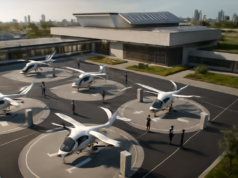
The partnership’s focus on medical applications also strategically positions the initiative within India’s existing regulatory and healthcare frameworks. Medical transport falls under defined regulatory categories with established safety protocols, making it an ideal early-use case for eVTOL technology. Unlike passenger urban air mobility, which requires extensive certification of cities and population-dense corridors, medical logistics can be deployed through point-to-point routes connecting hospitals, blood banks, and transplant centers. This targeted approach allows SkyDrive and Air India to demonstrate operational safety, gather performance data, and build stakeholder confidence while establishing the commercial viability necessary to attract further investment and expansion.
SkyDrive’s Technology: Proven Japanese Innovation Adapted for Indian Operations
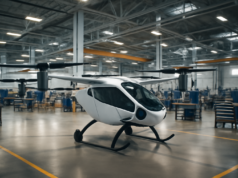
SkyDrive’s eVTOL platform has undergone extensive development and testing in Japan, where the company has already conducted multiple crewed flights and demonstrated autonomous capabilities. The aircraft design prioritizes safety, reliability, and efficiency—critical attributes for medical logistics applications where payload must include fragile, time-sensitive cargo and operational uptime directly impacts patient outcomes. SkyDrive’s vertical takeoff and landing configuration eliminates the need for runway infrastructure, enabling deployment from hospital rooftops, designated urban landing zones, and remote medical facilities where conventional aircraft cannot operate.
The electric propulsion system offers operational advantages crucial for the Indian context. Lower fuel costs reduce the financial burden on India’s healthcare system, which operates under significant budget constraints. Electric powertrains generate substantially less noise than traditional helicopters, addressing concerns about operating in densely populated urban areas near hospitals. The technology’s maturity in Japan provides confidence in reliability—Indian operators will benefit from two decades of Japanese research, testing protocols, and operational lessons learned. Suzuki’s involvement ensures that spare parts, maintenance expertise, and technical support can be localized within India, reducing dependency on overseas logistics and establishing a sustainable operational model.
SkyDrive’s commitment to adapting its platform for Indian environmental conditions—including heat tolerance, monsoon-resistant systems, and high-altitude operation capability for mountainous regions—demonstrates recognition that successful technology transfer requires more than importing vehicles; it demands careful engineering for local operating conditions. The company’s willingness to collaborate with Suzuki on manufacturing represents a strategic pivot toward establishing SkyDrive not merely as a Japanese technology company, but as a truly global actor capable of supporting eVTOL deployment across diverse markets and geographies.
Suzuki Motor’s Manufacturing and Distribution Advantage
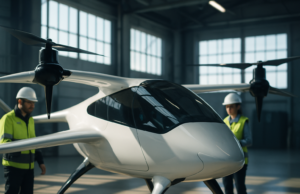
Suzuki Motor Corporation’s presence in India spans decades, with multiple manufacturing facilities, a deeply embedded supply chain network, and established relationships across India’s automotive and industrial sectors. This existing infrastructure provides an enormous advantage for scaling eVTOL production beyond prototype development. Rather than building manufacturing capacity from scratch—a process that could consume years and significant capital—the partnership leverages Suzuki’s existing plants, workforce expertise, and logistics networks. Suzuki’s proven capability to manufacture complex vehicles at scale, maintain quality control, and distribute products throughout India creates a pathway to turning SkyDrive’s technology into operational fleets rather than experimental demonstrations.
Suzuki’s involvement also signals to Indian regulators and healthcare institutions that the initiative represents serious, long-term commitment backed by a major industrial corporation. The company’s track record of reliable automotive manufacturing, customer service infrastructure, and adherence to safety standards provides confidence that eVTOL aircraft will receive the same engineering rigor and maintenance discipline that characterize Suzuki vehicles. Additionally, Suzuki’s existing relationships with Indian government agencies, industry associations, and commercial partners position the MOU within a credible, established business context rather than an experimental venture.
The manufacturing partnership addresses a critical gap in the global eVTOL sector: most developers remain concentrated in North America, Europe, and Japan, with limited production capacity and no meaningful local presence in emerging markets. By positioning India as a manufacturing hub for SkyDrive’s eVTOL platform, the partnership creates economies of scale that reduce per-unit costs, establish India as a center for advanced air mobility technology, and potentially position Indian-manufactured eVTOL aircraft for export to other South Asian and Southeast Asian markets facing similar medical logistics challenges.
Regulatory Pathways and Certification Framework
Key Regulatory and Implementation Considerations
- India’s Directorate General of Civil Aviation (DGCA) must establish or adapt eVTOL certification standards, airspace protocols, and operational safety frameworks to accommodate electric vertical takeoff and landing medical transport operations within existing aviation regulations.
- The partnership must navigate complex healthcare sector regulations, including equipment certification for medical transport, pharmaceutical handling protocols, and coordination with existing emergency medical services infrastructure to ensure seamless integration.
- Environmental assessments, noise impact studies, and urban airspace management plans require development in coordination with municipal authorities, hospital administrations, and local communities before large-scale deployment becomes feasible.
The regulatory environment represents both opportunity and complexity. India’s aviation authority has indicated openness to eVTOL technology, but lacks established certification standards specifically tailored to electric vertical takeoff and landing aircraft. The Air India, SkyDrive, and Suzuki partnership positions itself as a catalyst for developing these standards, working collaboratively with regulators to create frameworks that ensure safety while enabling innovation. Medical logistics applications offer regulatory advantages—operating defined, point-to-point routes between established facilities allows for incremental expansion of operational approval rather than the comprehensive airspace restructuring required for broader urban air mobility.
The timeline for achieving regulatory approval and launching operational services remains uncertain, but the MOU’s establishment signals that the three partners are committed to working through regulatory hurdles systematically. SkyDrive and Air India likely expect initial operations to commence within 2-3 years, following a phased approval process beginning with pilot programs in major metropolitan areas with advanced medical infrastructure—potentially including Delhi, Mumbai, Bangalore, and Hyderabad where hospitals have capacity to serve as logistics hubs and sufficient existing aviation ecosystem exists to support new aircraft operations.
Market Implications and Future Expansion Potential
The Air India, SkyDrive, and Suzuki announcement carries significance far beyond India’s borders. Success in India could establish a replicable model for eVTOL deployment across Southeast Asia, South Asia, and potentially Africa—regions where medical logistics gaps are acute, regulatory environments remain flexible, and demand for innovative healthcare solutions is urgent. India’s large population, geographic diversity, and sophisticated healthcare sector in major cities combined with underserved rural regions create an ideal real-world testbed for advanced air mobility applications. Performance data, operational learnings, and cost structures established through this partnership will inform eVTOL deployment strategies globally.
The partnership also reflects broader trends in aviation and aerospace: established operators increasingly recognize eVTOL technology as integral to future strategic positioning, while Japanese manufacturers, having faced limited opportunities in traditional commercial aircraft development dominated by Boeing and Airbus, pursue opportunities in emerging markets and specialized applications where established aerospace incumbents have limited presence. SkyDrive’s partnership with Air India mirrors similar alliances between eVTOL developers and regional carriers in other markets, suggesting that operator-manufacturer partnerships are becoming the dominant business model for translating eVTOL technology into operational services.
For investors and stakeholders tracking the eVTOL sector, the Air India-SkyDrive-Suzuki alliance represents validation of several critical industry theses: that eVTOL technology has matured sufficiently for deployment in specialized applications with high reliability requirements; that regulatory pathways are becoming feasible in major emerging markets; that manufacturing partnerships between Japanese and Indian companies can scale new technologies rapidly; and that medical logistics represents a commercially viable early market capable of supporting profitable operations while demonstrating safety and building user confidence necessary for broader adoption.
The announcement underscores that the future of personal air mobility extends far beyond wealthy urban markets in North America and Europe. Instead, eVTOL technology increasingly targets global healthcare challenges, emergency services, and logistics applications where speed, reliability, and environmental sustainability create compelling value propositions. As Air India, SkyDrive, and Suzuki Motor work toward deploying electric vertical takeoff and landing aircraft across India’s healthcare network, they are establishing templates that will shape advanced air mobility deployment throughout the world.