China’s low-altitude economy is poised for explosive growth, with projections indicating the sector will surpass 3.5 trillion yuan by 2035. This ambitious forecast represents a monumental shift in how China approaches urban transportation, logistics, and personal air mobility. As electric vertical takeoff and landing (eVTOL) aircraft and drones become increasingly sophisticated, the low-altitude airspace economy stands to become one of the most transformative sectors in the global aviation industry. This article explores the implications of China’s low-altitude economy expansion and what it means for the future of personal air mobility worldwide.
Understanding China’s Low-Altitude Economy
The low-altitude economy encompasses all commercial and operational activities conducted in airspace below 3,000 meters, including delivery drones, air taxi services, surveillance operations, and emergency response systems. China has strategically positioned itself as a leader in this emerging sector, with government support and substantial investment from both public and private entities. The low-altitude airspace represents an untapped resource for economic development, offering opportunities for innovation in transportation, infrastructure inspection, and emergency services.
Unlike traditional aviation, which operates in established flight corridors and requires extensive infrastructure, low-altitude operations can utilize existing urban landscapes and create new economic opportunities in previously underutilized airspace. This democratization of air mobility is particularly attractive for countries like China seeking to address congestion in major metropolitan areas while creating new industries and employment opportunities. The sector integrates advanced technologies including artificial intelligence, autonomous systems, and real-time air traffic management.
The projected growth to 3.5 trillion yuan by 2035 reflects China’s confidence in scaling this sector from niche applications to mainstream transportation infrastructure. This timeline aligns with technological maturation curves and regulatory frameworks development, suggesting that large-scale commercialization of eVTOLs and delivery drones is achievable within this period. The investment required to reach these targets will drive innovation across multiple industries including battery technology, materials science, and autonomous systems.
Key Drivers of Low-Altitude Economy Growth
Several factors are accelerating China’s low-altitude economy expansion. First, China’s massive urban population creates unprecedented demand for last-mile delivery solutions and urban air mobility services. With millions of residents in megacities like Beijing, Shanghai, and Shenzhen, drone delivery and air taxi services could significantly reduce ground traffic congestion and improve logistics efficiency. The environmental benefits of electric aircraft align perfectly with China’s carbon neutrality targets and green development initiatives.
Government support has been instrumental in fostering this ecosystem. Chinese authorities have established low-altitude airspace management systems and are progressively relaxing regulations that previously restricted drone operations and eVTOL testing. These regulatory reforms create a favorable environment for companies to develop and deploy innovative air mobility solutions. Investment from both state-owned enterprises and private companies demonstrates strong institutional commitment to the sector’s development.
Technological advancement represents another crucial driver. Chinese manufacturers have established themselves as leaders in drone production, with companies like DJI dominating global commercial drone markets. This expertise extends naturally into eVTOL development and autonomous air vehicle systems. Battery technology improvements, particularly in energy density and charging speeds, make electric aircraft increasingly viable for commercial operations. The convergence of mature drone technology, advancing battery capabilities, and autonomous systems creates a perfect storm for rapid sector growth.
Applications Transforming Urban Mobility
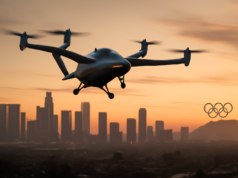
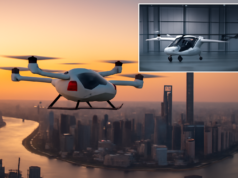
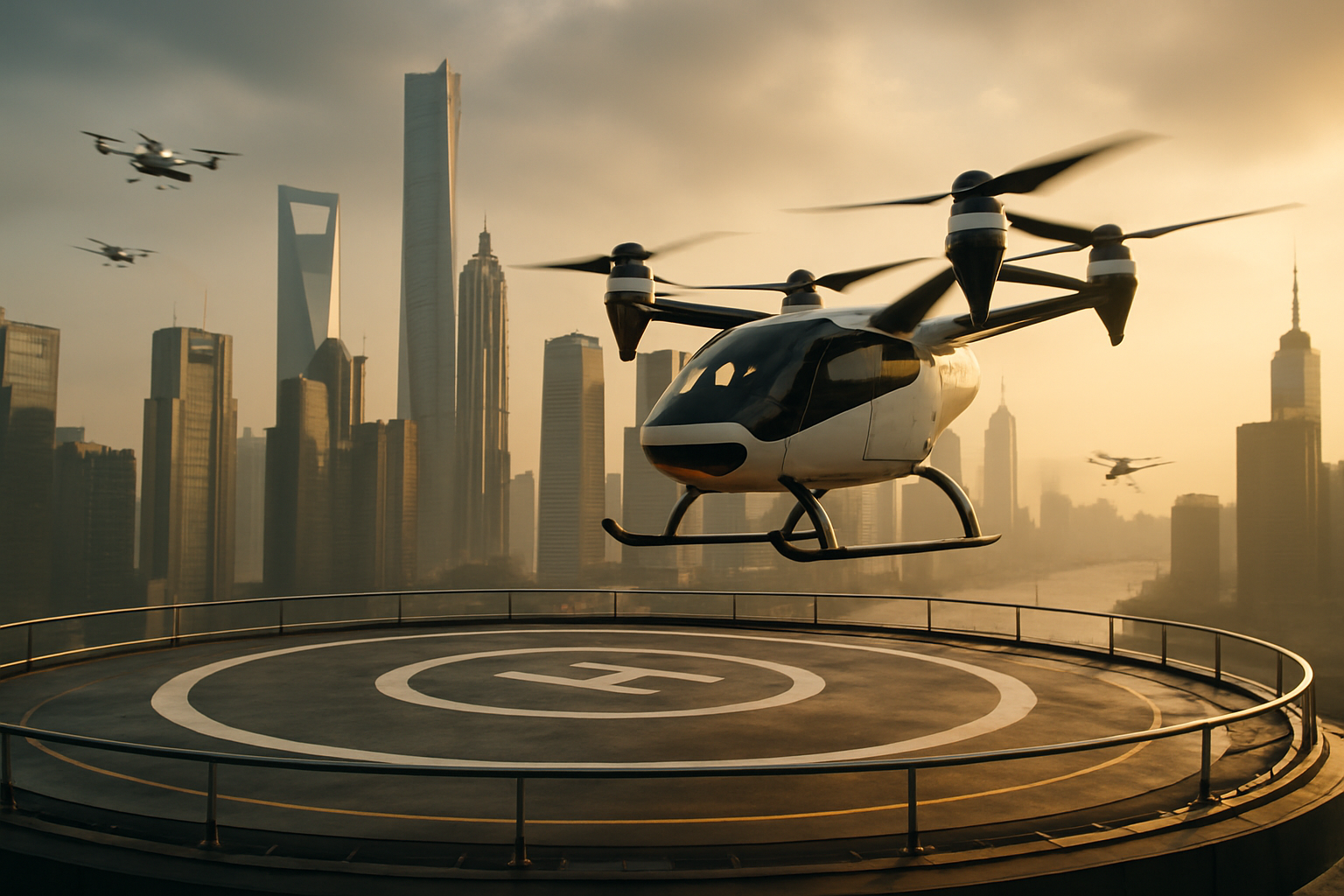
Personal air mobility represents just one component of China’s low-altitude economy vision. Electric air taxi services promise to revolutionize how people navigate congested urban centers, potentially reducing commute times from hours to minutes. Companies are actively developing passenger-grade eVTOLs capable of carrying individuals across cities, with initial deployment in major metropolitan areas expected within the next few years. These services would operate from distributed vertiport networks, reducing dependence on traditional ground-based transportation infrastructure.
Autonomous cargo drones are already demonstrating commercial viability in delivery networks. Low-altitude drone corridors enable rapid goods delivery in urban and rural areas, bypassing ground traffic entirely. This capability particularly benefits e-commerce logistics, where speed and efficiency directly impact customer satisfaction. Emergency response applications including medical supply delivery and disaster relief operations showcase additional high-value use cases for low-altitude aircraft.
Infrastructure inspection and maintenance represents another significant application area. Power lines, telecommunications infrastructure, and buildings can be efficiently inspected using autonomous aerial vehicles, reducing costs and improving safety compared to traditional methods. Agricultural applications in rural areas leverage drones for crop monitoring, pest control, and precision farming operations. The diversity of applications ensures sustained demand across multiple economic sectors throughout the projection period.
Regulatory Framework and Safety Considerations
Successful development of China’s low-altitude economy requires robust regulatory frameworks that balance innovation with safety. Chinese authorities are actively developing air traffic management systems capable of handling thousands of simultaneous aircraft operations in shared airspace. These systems must integrate with existing aviation infrastructure while accommodating the unique characteristics of low-altitude operations, including unpredictable weather patterns and complex urban environments.
Safety standards for eVTOL aircraft and autonomous drones must meet stringent requirements to gain public acceptance and insurance coverage. Certification processes, pilot training requirements, and maintenance protocols must evolve to accommodate new aircraft types and operational models. Privacy considerations also require careful attention, as widespread drone operations raise questions about surveillance and data collection in urban environments.
International coordination becomes increasingly important as low-altitude aircraft operations cross borders and integrate with global supply chains. China’s leadership in developing low-altitude regulatory frameworks positions the country to establish international standards, similar to how aviation regulations have historically been shaped by leading aviation nations. These standards will significantly influence how other countries develop their own low-altitude economies.
Global Implications and Competitive Landscape
China’s ambitious low-altitude economy projections have profound implications for global markets and international competition. As China scales production of eVTOL aircraft and autonomous systems, economies of scale will drive down costs, making advanced air mobility technologies accessible to developing nations. This technological democratization could accelerate the worldwide transition to low-altitude transportation infrastructure.
Western companies including Joby Aviation, Archer Aviation, and Lilium have significant eVTOL development programs, but Chinese manufacturers’ cost advantages and integration with existing drone supply chains provide considerable competitive advantages. The competition between Chinese and Western approaches to low-altitude mobility will drive rapid innovation and accelerate commercialization timelines. International partnerships and technology exchange will become increasingly important as companies seek to capture emerging market opportunities.
The success of China’s low-altitude economy will influence investment patterns globally, with venture capital and strategic investors watching Chinese deployments closely for lessons applicable to other markets. Regulatory frameworks developed in China may serve as templates or cautionary examples for other nations, shaping how countries worldwide approach low-altitude airspace management and vehicle certification.
Key Takeaways
- China’s low-altitude economy is projected to exceed 3.5 trillion yuan by 2035, representing massive growth in eVTOL and drone sectors
- Government support, urban congestion, and technological maturity are driving rapid expansion of low-altitude commercial operations
- Applications span passenger air taxi services, cargo delivery, infrastructure inspection, and emergency response operations
- Regulatory frameworks and safety standards are critical for sustainable sector development and public acceptance
- China’s competitive advantages position the country as a global leader in low-altitude economy commercialization
- International markets will be significantly influenced by China’s successful deployment of low-altitude technologies and standards
China’s projection of a 3.5 trillion yuan low-altitude economy by 2035 signals a fundamental transformation in transportation, logistics, and urban mobility. The convergence of technological capability, regulatory support, and market demand creates unprecedented opportunity for innovation in personal air mobility and autonomous systems. As China moves forward with aggressive commercialization of eVTOL aircraft and drone networks, global markets will experience ripple effects that reshape aviation, logistics, and urban planning industries. The coming decade will be critical in determining whether these ambitious projections materialize and how international competitors respond to China’s leadership in low-altitude economy development. For stakeholders in personal air mobility, watching China’s progress provides essential insights into the future trajectory of global aviation transformation.