HIGHLIGHTS
- Archer Aviation’s eVTOL technology targets urban air mobility, offering point-to-point flights, while Ford’s EV portfolio focuses on ground-based personal transportation with established infrastructure.
- Market maturity differs significantly: Ford EVs are production-ready and scaling, while Archer awaits regulatory certification and commercial deployment timelines.
- Investment comparison reveals different risk-reward profiles—Ford offers near-term revenue stability, while Archer presents higher-growth potential with regulatory and commercialization uncertainties.
The race for sustainable transportation in 2026 presents investors and consumers with a critical choice: embrace the future of personal air mobility with electric vertical takeoff and landing (eVTOL) aircraft, or stick with proven ground-based electric vehicles? This comparison between Archer Aviation, a leading innovator in urban air mobility, and Ford Motor Company, the legacy automotive powerhouse transitioning to electrification, reveals fundamental differences in technology maturity, market timing, and investment potential. As both companies race to capture the future of transportation, understanding their respective strengths and challenges becomes essential for anyone evaluating transportation trends in the coming years.
The eVTOL Revolution: Archer Aviation’s Vision for Urban Mobility
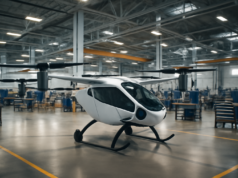
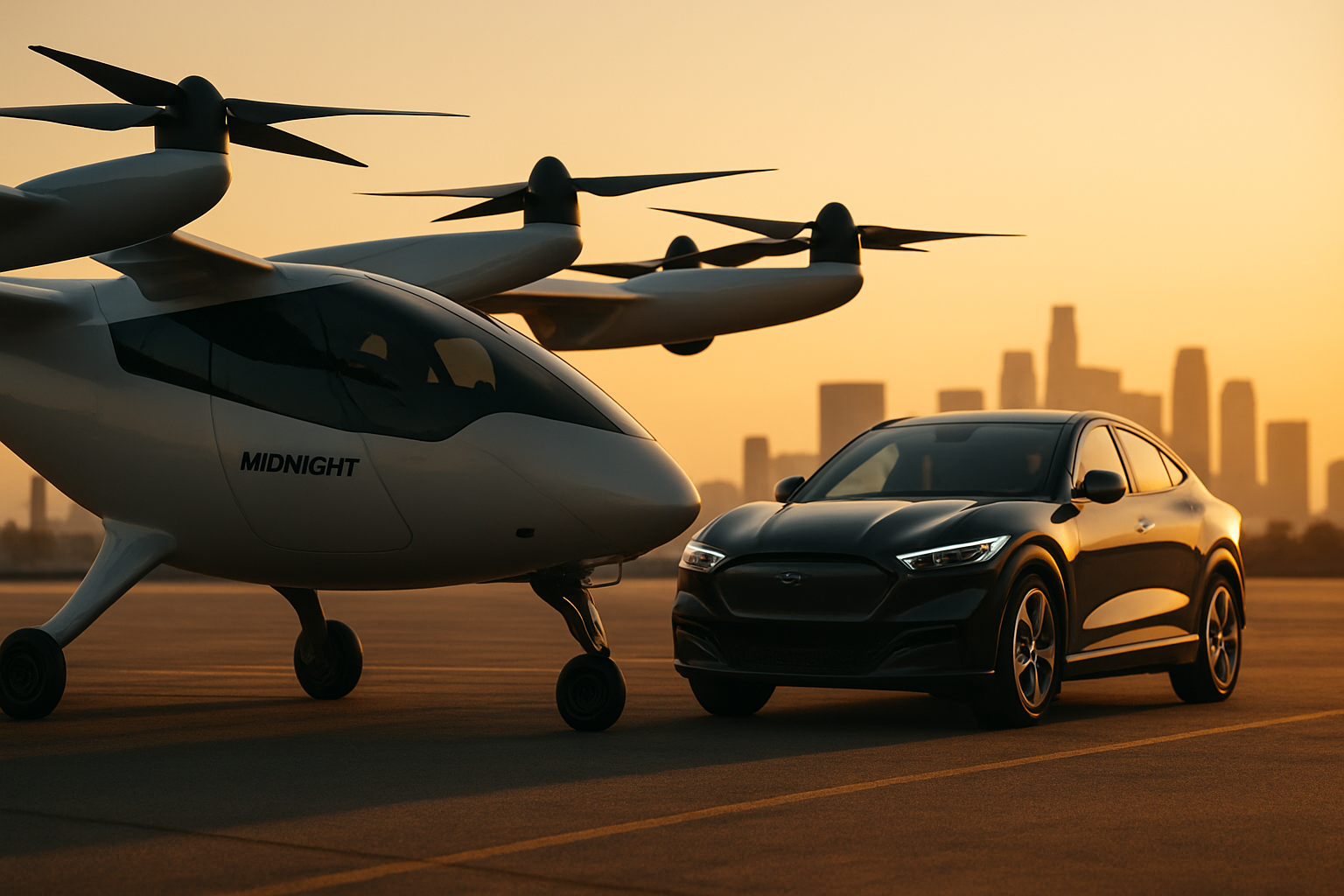
Archer Aviation represents a new generation of aerospace companies reimagining how people move within and between cities. The company’s Midnight aircraft, a four-passenger electric vertical takeoff and landing vehicle, promises to revolutionize urban commuting by eliminating ground traffic congestion. Unlike traditional helicopters, which generate significant noise pollution and require expensive infrastructure, Archer’s electric propulsion system operates quietly and efficiently, making it viable for urban environments. The company has secured strategic partnerships with major operators and regulatory agencies, positioning itself as a frontrunner in the emerging eVTOL market.
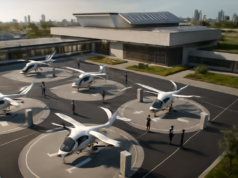
The technological advantages of Archer’s approach extend beyond simple convenience. Electric propulsion offers superior efficiency compared to combustion engines, while distributed electric motor systems enhance safety through redundancy. The Midnight aircraft is designed to operate from existing vertiports and require minimal ground infrastructure, potentially transforming urban landscapes. Archer’s focus on electric propulsion aligns perfectly with global sustainability goals, offering a zero-emission alternative for point-to-point air travel. The company’s development trajectory suggests commercial operations could commence within the next 1-2 years, pending regulatory approvals from the Federal Aviation Administration.
However, Archer faces significant challenges in reaching widespread adoption. Current pricing models suggest fares will exceed $4-5 per mile initially, making eVTOL accessible only to premium passengers. Battery technology, while improving rapidly, still presents constraints on range and payload capacity. Regulatory uncertainty, though declining, remains a substantial hurdle—certification processes are unprecedented for commercial eVTOL operations. Additionally, building the ecosystem of vertiports, maintenance facilities, and trained personnel requires massive capital investment and coordination across multiple stakeholders, creating barriers to rapid scaling that traditional automotive companies have already overcome.
Ford’s Electrification Strategy: Proven Scale and Market Presence
Ford Motor Company has committed to a comprehensive electrification strategy, with multiple all-electric vehicles already in production and available for immediate purchase. The Ford Mustang Mach-E, F-150 Lightning, and expanding lineup of battery electric vehicles demonstrate the company’s ability to manufacture vehicles at scale while leveraging existing distribution, service, and charging networks. Unlike Archer’s speculative future, Ford’s EV portfolio generates revenue today, with thousands of units delivered monthly to consumers across North America. The company benefits from a century of automotive expertise, established supply chains, and proven manufacturing prowess that eVTOL startups cannot match.
The advantages of Ford’s approach rest on tangible market infrastructure. America’s road networks, charging station networks (rapidly expanding), and consumer familiarity with automotive ownership create immediate demand for Ford EVs. Residual value, warranty support, financing options, and used-vehicle markets already exist for Ford’s offerings—none of which exist for eVTOL aircraft. Consumers can purchase a Mustang Mach-E today and drive it tomorrow; Archer passengers face multiyear timelines for regulatory approval and vertiport development. Additionally, Ford’s scale-based manufacturing reduces per-unit costs, making EVs increasingly competitive with internal combustion engines, a pricing advantage eVTOL operators will struggle to replicate for decades.
Yet Ford’s strategy carries its own complexities. The company faces intense competition from Tesla, Chinese EV manufacturers, and traditional automakers also pursuing electrification. Profit margins on EVs remain constrained by battery costs and capital-intensive production facilities. Consumer adoption, while growing, still depends on continued government incentives and charging infrastructure expansion. Ford’s massive existing investment in traditional vehicle platforms represents both an asset and a liability, as the company must simultaneously manage legacy operations while transitioning to new technology. The company’s stock performance increasingly reflects investor concerns about electrification profitability rather than growth enthusiasm.
Market Maturity and Commercialization Timeline Comparison
The commercialization timelines for Archer and Ford diverge dramatically, presenting different investment profiles. Ford’s EVs are commercially available now, with established production rates, service networks, and consumer purchasing patterns. The company’s Q2 2026 results likely reflect accelerating EV sales as new models launch and charging infrastructure expands. For investors seeking current returns and proven business models, Ford’s near-term revenue growth and profitability from EV operations provide tangible metrics for valuation. The risk profile is moderate: execution challenges, competitive pressure, and raw material costs present known, manageable risks that traditional automotive analysts can evaluate.
Archer’s timeline extends into the future with less certainty but potentially higher upside. Regulatory certification pathways for eVTOL aircraft remain novel, with timelines subject to testing results, policy changes, and political considerations. Commercial operations may commence in 2027-2028, but scaling to profitability will require 5-10 additional years. For investors, this means waiting through extended development and infrastructure-building phases before revenues materialize significantly. The uncertainty is substantial: technological breakthroughs could accelerate timelines, while regulatory setbacks could extend them indefinitely. This risk-reward profile appeals to venture-focused investors but alienates those seeking near-term financial returns.
The practical reality suggests a portfolio approach rather than either-or decision-making. Ford provides stable, proven revenue and lower immediate risk; Archer offers speculative but potentially transformative growth. Institutional investors increasingly hedge their transportation bets across both categories, recognizing that personal mobility’s future will likely include both advanced ground-based and aerial options serving different use cases and customer segments. The timeline comparison underscores a fundamental truth: established automotive companies maintain near-term advantages, while emerging aviation technology companies control longer-term optionality.
Investment Fundamentals and Financial Comparison
From a pure financial perspective, Ford and Archer occupy different valuation universes reflecting their distinct market positions. Ford trades as an established industrial company with mature cash flows, dividend history, and market capitalization exceeding $40 billion. The company generates revenue across multiple vehicle categories, geographic markets, and business segments, providing diversification that reduces financial risk. Ford’s stock valuation incorporates conservative assumptions about EV transition rates and regulatory environments. Analysts debate whether Ford’s EV investments justify current valuations, but the company’s balance sheet and cash generation provide financial flexibility to invest in new technologies while maintaining shareholder returns.
Archer, by contrast, represents a pre-revenue or early-revenue growth company valuing itself based on market potential rather than current earnings. The company’s valuation reflects expected future revenues from commercial operations, vertiport networks, and international expansion—all uncertain. Archer’s path to profitability requires achieving regulatory certification, establishing viable business models at various price points, and scaling operations to commercially meaningful volumes. The company’s financial performance depends on external factors including regulatory approvals, pilot training pipeline development, insurance industry evolution, and consumer adoption patterns. For equity investors, Archer represents a high-risk/high-reward opportunity with decade-long time horizons before financial returns materialize significantly.
Dividends and traditional shareholder returns differ markedly between the two companies. Ford currently pays a dividend, returning capital to shareholders while reinvesting in electrification and vehicle development. Archer prioritizes cash retention for operations, infrastructure development, and regulatory compliance—typical for high-growth technology companies. Investors seeking current income gravitationally favor Ford; investors prioritizing capital appreciation and long-term positioning favor Archer. Neither company represents a “better buy” universally; the optimal choice depends entirely on individual investment objectives, time horizons, and risk tolerance. A 30-year-old growth-focused investor might allocate to Archer; a retiree needing income would choose Ford.
Key Takeaways: Archer vs. Ford in 2026
- Archer Aviation’s eVTOL technology offers transformative long-term potential but operates in an unproven regulatory and commercial environment with 5-10 year timelines to profitability and substantial execution risk across certification, vertiport infrastructure, and consumer adoption.
- Ford’s EV portfolio delivers immediate market presence, established revenue streams, proven manufacturing capability, and lower financial risk, though growth may be constrained by competitive dynamics and lower-than-traditional margins in battery electric vehicles.
- Investment decision between companies reflects different time horizons and risk appetites: Ford suits near-term value and stability seekers, while Archer appeals to long-term growth investors willing to accept significant uncertainty for potential paradigm-shifting returns.
The comparison between Archer Aviation and Ford Motor Company ultimately reflects broader transportation industry dynamics playing out in 2026. Ford represents established automotive excellence applied to electric propulsion—proven technology, proven markets, proven business models. Archer represents disruptive innovation challenging fundamental assumptions about urban mobility—unproven technology, emerging markets, experimental business models. Neither company is objectively “better”; rather, each serves different market segments and investor profiles. Smart investors may allocate to both, benefiting from Ford’s near-term stability while maintaining exposure to Archer’s transformative potential. The future of personal transportation will likely accommodate both ground-based and aerial options, suggesting that competition between these companies reflects complementary rather than mutually exclusive visions of mobility. As regulations clarify, vertiport networks materialize, and consumer adoption accelerates, both Archer and Ford will shape how people move in 2026 and beyond.