HIGHLIGHTS
- Archer Aviation’s stock has plummeted 55% over the past year, dragging valuation down to $3.7 billion and positioning it as a potential acquisition target.
- Strategic buyers from aerospace, automotive, and technology sectors are eyeing distressed eVTOL companies as consolidation accelerates across the personal air mobility industry.
- Industry consolidation reflects broader eVTOL sector challenges including regulatory delays, high development costs, and investor skepticism about near-term commercialization timelines.
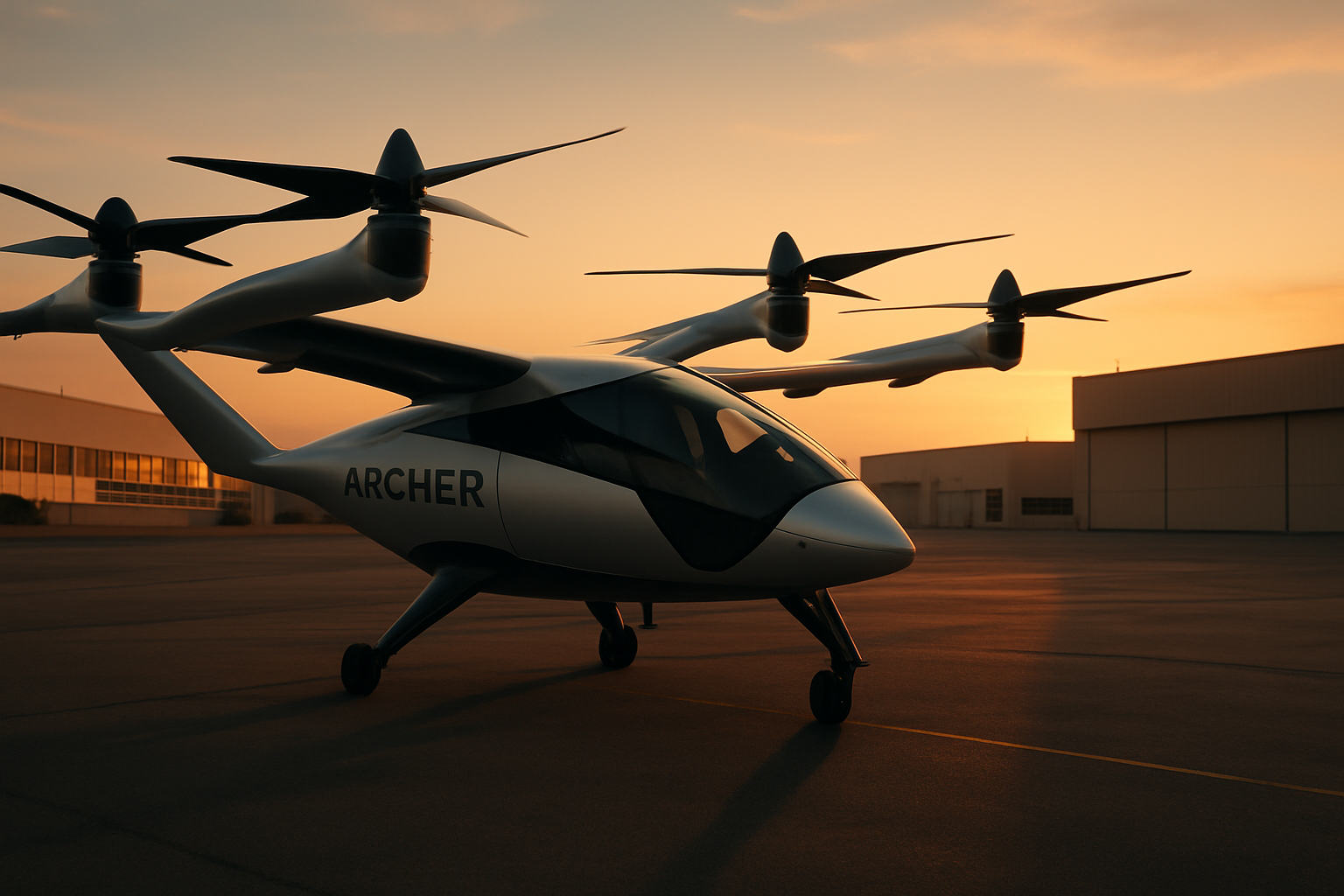
Archer Aviation, once hailed as a leading contender in the crowded electric vertical takeoff and landing (eVTOL) market, is now facing significant headwinds that have made the company an attractive target for strategic acquisition. With its stock price down 55% over the past year and a current valuation hovering around $3.7 billion, the company exemplifies the mounting pressures facing even well-funded aerospace innovators in the personal air mobility sector.
The Fall from Grace: Archer Aviation’s Market Decline
Archer Aviation’s dramatic stock decline reflects a broader crisis of confidence in the eVTOL sector. What began as a euphoric investment wave, fueled by blank-check companies and tech-sector enthusiasm, has given way to a more sobering reality. Investors are increasingly questioning whether the companies developing these aircraft can achieve profitability before their capital runs out, and whether regulatory approval will arrive quickly enough to justify current valuations.
The company’s 55% one-year decline isn’t unique—multiple eVTOL manufacturers have seen similar or worse erosion in shareholder value. However, Archer’s specific circumstances, including its partnerships with aircraft manufacturers and planned operations with major airlines, make it a particularly intriguing acquisition target. The company possesses tangible assets, proven engineering talent, and valuable certification progress that could be worth more to a strategic buyer than to standalone investors.
The $3.7 billion valuation, while still substantial, is a significant discount from Archer’s peak valuations during the SPAC boom of 2021-2022. This valuation gap represents an opportunity window for well-capitalized strategic buyers to acquire a functional eVTOL program at a fraction of what it would cost to develop one from scratch.
Strategic Buyers Circling the eVTOL Market
Several categories of potential acquirers have emerged as likely candidates to scoop up distressed eVTOL darlings like Archer Aviation. Major aerospace contractors such as Boeing, Airbus, and Textron have the capital, manufacturing expertise, and customer relationships to absorb and scale eVTOL programs. These giants view personal air mobility as a strategic growth market, even if the timeline to profitability remains uncertain.
Automotive manufacturers represent another crucial group of potential acquirers. Companies like Joby Aviation’s early investor Ford, along with others exploring mobility-as-a-service ecosystems, recognize that eVTOLs could become integral to urban transportation networks. For automotive OEMs, acquiring an eVTOL platform allows them to diversify beyond ground-based vehicles and position themselves in the nascent urban air mobility (UAM) economy.
Technology and infrastructure companies with deep pockets and long-term investment horizons also view eVTOL acquisitions as strategic. These buyers can absorb near-term losses while waiting for regulatory approval and market development, something traditional aerospace firms might struggle to justify to shareholders. Chinese conglomerates and sovereign wealth funds have also shown interest in eVTOL technology, viewing it as critical infrastructure for future smart cities.
Regulatory and Operational Hurdles Driving Consolidation
The eVTOL industry faces formidable regulatory barriers that are extending timelines and draining cash reserves. The Federal Aviation Administration (FAA) in the United States, along with European regulators, are carefully evaluating certification pathways for these novel aircraft. Unlike conventional helicopters or airplanes, eVTOLs represent an entirely new category of aircraft, requiring new standards and procedures that take years to develop.
Smaller, independent eVTOL companies struggle with the cost of certification and the extended timeline to commercial operations. Large strategic buyers can absorb these costs more easily, particularly if they can integrate eVTOL development into existing government contracts or certification relationships. For companies like Archer, being acquired by an aerospace titan could accelerate regulatory approval by leveraging parent company expertise and relationships.
Operational challenges also favor consolidation. Operating commercial eVTOL services requires infrastructure investment, including ground support equipment, pilot training, insurance, and customer acquisition. Standalone companies find it increasingly difficult to fund these parallel investments while also completing aircraft development and certification. Strategic buyers with existing transportation networks or logistics infrastructure can deploy eVTOLs more efficiently.
The Path Forward: What Acquisition Could Mean
If Archer Aviation is acquired by a strategic buyer, several outcomes are possible. A major aerospace contractor acquisition would likely result in integration of Archer’s technology into the parent company’s broader urban air mobility strategy. A technology or automotive company acquisition might position Archer’s aircraft as the centerpiece of a larger mobility-as-a-service platform. In either scenario, the standalone eVTOL company would cease to exist as an independent entity, though its technology and talent would be preserved.
Strategic acquisition could actually accelerate Archer’s path to commercial operations by providing the resources and regulatory relationships necessary to achieve certification. The company’s current partnerships with airlines would likely be maintained or enhanced, as a well-capitalized parent could guarantee orders and operations support. Customers seeking to operate Archer aircraft might actually view acquisition positively, knowing that a larger parent company can ensure long-term support and compliance.
However, acquisition also carries risks for stakeholders. Small investors who purchased shares at peak prices could face total losses, though acquisition prices are typically higher than distressed market prices. Employees might face integration challenges, though core engineering teams would likely be retained. The company’s startup culture and entrepreneurial mission could be diluted by integration into a larger, more bureaucratic organization.
Key Takeaways for eVTOL Market Investors and Observers
- Industry consolidation is accelerating as capital-intensive eVTOL development exceeds the financial capacity of standalone companies to reach certification and profitability.
- Strategic buyers are acquiring eVTOL programs at distressed valuations that represent significant discounts from peak SPAC-era prices, but still reflect valuable technology and engineering talent.
- Regulatory uncertainty and extended certification timelines are the primary drivers of consolidation, as only companies with deep resources and patient capital can afford to wait for FAA approval and commercial operation.
Archer Aviation’s precarious position, reflected in its 55% stock decline and $3.7 billion valuation, signals that the eVTOL sector is entering a critical consolidation phase. The days of standalone, venture-backed eVTOL companies operating independently are likely numbered. Strategic buyers with aerospace expertise, manufacturing scale, and deep capital reserves are positioning themselves to acquire proven technology and talented teams at attractive valuations. For the eVTOL industry, this consolidation could ultimately accelerate the path to commercial operations and mature markets, even as it eliminates the entrepreneurial independence that characterized the sector’s early years.