
HIGHLIGHTS
- Vertical Aerospace’s chief engineer emphasizes eVTOL’s transformative potential for underserved rural and regional communities with limited traditional transport infrastructure.
- Electric vertical takeoff and landing technology offers an economically viable solution to bridge connectivity gaps and unlock new economic opportunities in remote areas.
- Industry leaders recognize that eVTOL adoption in regional markets could redefine last-mile connectivity and enable critical services in previously isolated communities.
Vertical Aerospace’s chief engineer has articulated a compelling vision for how electric vertical takeoff and landing (eVTOL) technology can fundamentally transform connectivity and economic opportunity in rural and regional communities. As the personal air mobility industry accelerates toward commercialization, industry leaders are increasingly recognizing that eVTOL aircraft represent far more than urban air mobility solutions—they are powerful tools for bridging geographic and economic divides in underserved areas worldwide.
The Rural Connectivity Challenge
Rural and regional communities across the globe face persistent challenges in accessing reliable, timely transportation. Traditional ground-based infrastructure—roads, railways, and mass transit systems—often remains prohibitively expensive to build and maintain in sparsely populated areas. These connectivity gaps translate directly into economic disadvantages: reduced access to healthcare, education, employment opportunities, and markets for goods and services.
For decades, helicopters have offered a solution to extreme cases, but their high operating costs, noise levels, and carbon emissions limit practical deployment for routine connectivity needs. The emergence of eVTOL technology addresses these fundamental limitations by offering quiet, sustainable, and cost-effective vertical mobility that can operate from minimal infrastructure requirements.
Vertical Aerospace’s perspective highlights a critical shift in how the aviation industry views the market opportunity. Rather than focusing exclusively on congested urban centers, forward-thinking companies recognize that rural and regional markets represent an underserved segment with urgent mobility needs and substantial long-term potential.
eVTOL’s Unique Advantages for Regional Markets
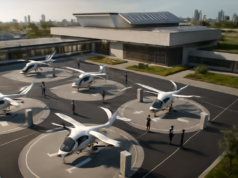
Electric vertical takeoff and landing aircraft offer several distinct advantages that make them particularly well-suited for rural and regional deployment. First, eVTOLs require significantly less ground infrastructure than traditional airports or helipads, potentially operating from small clearings, parking areas, or purpose-built vertiports with minimal environmental disruption. This flexibility eliminates a major barrier to air service expansion in remote areas.
Second, the operational economics of eVTOL vehicles are fundamentally more favorable than helicopter operations. Electric propulsion dramatically reduces fuel costs, maintenance requirements, and environmental footprint. As battery technology improves and eVTOL designs mature toward Series production, operating costs per seat-mile are projected to become competitive with ground transport in many regional corridors.
Third, eVTOLs operate with substantially lower noise signatures than traditional rotorcraft, addressing a major concern in communities where helicopter noise creates quality-of-life challenges. This enables more frequent operations without disrupting rural communities, making eVTOL-based air services genuinely sustainable and acceptable to local populations.
Unlocking Economic Opportunity in Underserved Communities
Vertical Aerospace’s chief engineer emphasizes that eVTOL deployment in rural areas can catalyze broader economic transformation. Improved connectivity enables healthcare providers in regional hubs to reach distant patients more efficiently. Critical medical evacuations that currently require dangerous ground transport or expensive helicopter rescue can become routine air ambulance missions with eVTOL platforms.
Beyond emergency services, eVTOL connectivity opens new possibilities for commercial activities. Rural enterprises gain faster, more reliable access to regional markets and supply chains. Tourism and leisure travel to remote destinations become more feasible. Business professionals can access regional opportunities without extended travel times that currently discourage rural-based economic activity.
Furthermore, eVTOL manufacturing, maintenance, and operations create new employment opportunities within rural and regional economies. Vertiport development, pilot training, maintenance technician roles, and customer service positions represent direct jobs that remain within local communities, supporting economic diversification beyond traditional agriculture and resource extraction.
Industry-Wide Recognition of Regional eVTOL Potential
Vertical Aerospace is not alone in recognizing the strategic importance of rural and regional markets. Leading eVTOL manufacturers, operators, and technology providers increasingly emphasize their commitment to serving communities beyond major metropolitan areas. This represents a maturation of the industry beyond initial hype centered exclusively on urban congestion solutions.
Regulatory frameworks in Europe, North America, and beyond are being designed with sufficient flexibility to accommodate regional and rural operations. Aviation authorities recognize that sustainable growth of the eVTOL industry depends on serving diverse markets and use cases, not concentrating all early services in a handful of saturated urban corridors.
Investment in regional eVTOL operations requires building customer confidence, regulatory approval, and operational infrastructure simultaneously. Companies like Vertical Aerospace that actively articulate the value proposition for rural markets are positioning themselves to capture first-mover advantage in these emerging segments, building loyalty and operational experience that will prove valuable as the industry scales.
Key Takeaways for eVTOL Development in Rural Regions
- Minimal infrastructure requirements enable rapid deployment of eVTOL services in remote areas without massive ground investment
- Economic viability improves substantially through lower operating costs, reduced maintenance, and electric power advantages
- Regulatory progress and industry commitment create near-term opportunities for regional eVTOL operators to establish services
- Healthcare, emergency response, and commercial connectivity represent immediate high-value use cases for rural eVTOL deployment
- First-mover operators building rural air services establish competitive advantages and operational expertise for future expansion
Vertical Aerospace’s emphasis on rural and regional value represents important validation that the eVTOL industry is maturing beyond urban-centric visioning toward practical, economically sustainable deployment in diverse communities. As the technology continues advancing toward commercial maturity, the ability to serve underserved markets may prove as important to industry success as dominance in competitive metropolitan corridors. The next chapter of personal air mobility’s development will likely be written not just in major cities, but in the rural communities that gain transformative connectivity from this emerging technology.