HIGHLIGHTS
- China is manufacturing affordable personal UFO aircraft priced at ~$110,000, significantly undercutting Western eVTOL competitors and potentially enabling mass-market adoption.
- The futuristic disc-shaped design and lower price point target the underserved personal aircraft segment ahead of air taxi competitors, positioning China for early market dominance.
- Successful commercialization of affordable personal vehicles will accelerate global regulatory framework development and infrastructure investment across urban air mobility ecosystems.
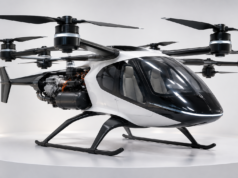
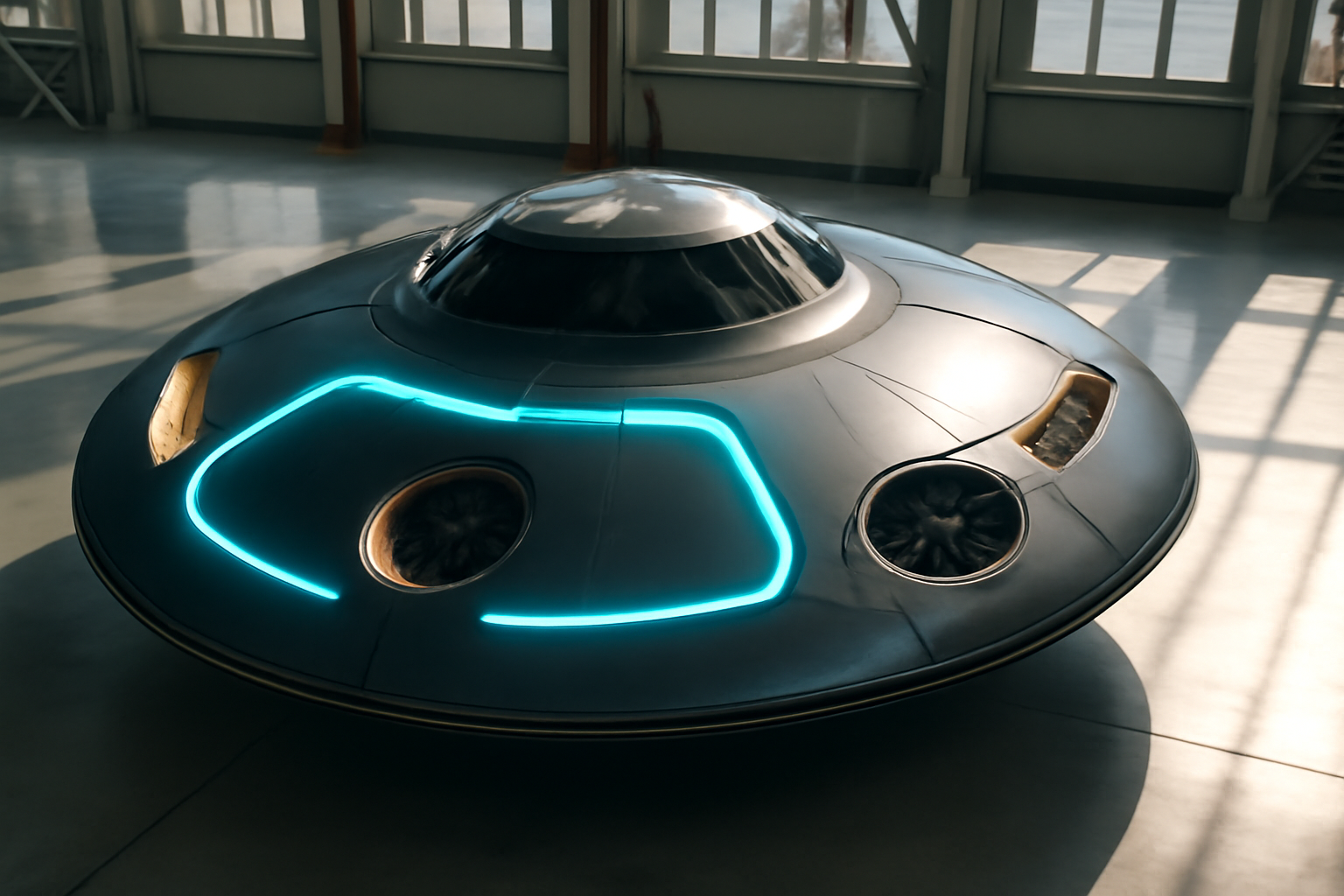
The personal air mobility revolution is accelerating faster than many industry experts anticipated. According to recent reports, China is reportedly manufacturing personal UFO-styled aircraft with price points around $110,000 each—a development that could fundamentally reshape how consumers view ownership of advanced aerial vehicles. This breakthrough represents a critical inflection point in the transition from experimental aerospace concepts to commercially viable personal aircraft systems.
China’s Entry into Personal Air Mobility
China’s aerospace sector has long been recognized for rapid prototyping and manufacturing scalability. The introduction of affordable personal UFO aircraft demonstrates the country’s commitment to capturing market share in the emerging personal air mobility space before Western competitors establish dominance. With price points significantly lower than comparable eVTOL aircraft and advanced air taxi concepts currently in development globally, these Chinese-manufactured vehicles could accelerate mainstream adoption timelines.
The reported $110,000 price point is particularly noteworthy because it sits within reach of affluent consumers and early adopters while remaining more accessible than traditional light aircraft or premium helicopter options. This pricing strategy suggests manufacturers are targeting a middle market that extends beyond ultra-wealthy enthusiasts—potentially opening the door to a much larger addressable market.
Chinese manufacturers have historically demonstrated expertise in rapid iteration and cost-efficient production methods that allow them to bring consumer-grade technology to market faster than competitors. If these personal UFO vehicles meet safety standards and regulatory requirements, they could represent a watershed moment for the personal air mobility industry, similar to how smartphones revolutionized mobile computing through affordability and accessibility.
Design Philosophy and Technology Integration
The UFO aesthetic and design approach reflect a deliberate marketing strategy to differentiate these vehicles from traditional aircraft silhouettes. Rather than mimicking fixed-wing or conventional helicopter designs, the flying disc form factor appeals to the sci-fi imagination of consumers and positions these vehicles as distinctly futuristic technology rather than mere derivatives of existing aviation concepts.
Personal UFO aircraft would integrate advanced autonomous flight systems, electric propulsion technology, and sophisticated navigation infrastructure to operate safely in urban and suburban environments. These systems require integration of real-time obstacle detection, weather monitoring, and communication protocols compatible with existing air traffic management frameworks—or new frameworks being developed specifically for low-altitude urban operations.
The manufacturing approach employed in China likely emphasizes modular design, composite materials, and simplified assembly processes that reduce production costs without compromising safety certifications. This manufacturing philosophy has proven successful in adjacent industries like consumer drones and electric scooters, where Chinese manufacturers captured dominant global market share through superior price-to-performance ratios.
Regulatory and Safety Considerations
Any personal aircraft, regardless of its UFO styling or advanced capabilities, must navigate complex regulatory environments in every jurisdiction where it operates. China’s Civil Aviation Administration (CAAC) has established preliminary certification pathways for low-altitude aircraft and unmanned aerial systems, suggesting the government is actively facilitating innovation in this space rather than imposing restrictive barriers.
International regulatory bodies including the FAA in the United States and EASA in Europe are still developing comprehensive frameworks for certifying and operating personal eVTOL aircraft and similar advanced aerial vehicles. The emergence of affordable Chinese-manufactured options may accelerate regulatory discussions globally, as policymakers recognize the commercial viability and consumer demand for these technologies.
Safety certification for personal aircraft involves rigorous testing of structural integrity, propulsion systems, emergency procedures, and pilot training protocols. Early adopters will require comprehensive training programs and potentially new licensing categories that distinguish personal advanced aircraft from traditional general aviation categories. Insurance frameworks must also evolve to accommodate these novel vehicle types and usage patterns.
Market Implications and Competitive Landscape
The introduction of $110,000 personal UFO aircraft fundamentally alters competitive dynamics in the personal air mobility space. Companies like Joby Aviation, Lilium, and Archer Aviation have focused on larger air taxi platforms and regional transportation systems, leaving the personal aircraft segment comparatively underserved by Western manufacturers. Chinese entrants capturing this segment could establish significant brand loyalty and market presence before international competitors respond.
Consumer demand for personal air vehicles has been validated through numerous surveys and market research indicating substantial interest in reducing commute times and accessing three-dimensional transportation networks. The affordability barrier has been the primary limiting factor preventing mass adoption—a barrier these Chinese manufacturers appear determined to eliminate through manufacturing innovation and economies of scale.
Global aerospace suppliers and component manufacturers may experience increased demand for electric propulsion systems, battery technologies, advanced materials, and avionics suited for personal aircraft applications. This could stimulate investment and innovation across the supply chain, accelerating technology maturation and cost reduction cycles that benefit the entire ecosystem.
Future Prospects for Personal Air Mobility
If China successfully brings affordable personal UFO aircraft to market with appropriate regulatory approvals, the implications extend far beyond individual vehicle sales. Urban planning, real estate development, and infrastructure investment decisions may increasingly account for vertical mobility as a transportation option. Cities may begin integrating vertiports, charging infrastructure, and air traffic management systems to accommodate growing volumes of personal aircraft operations.
The personal air mobility segment represents the most direct path toward widespread adoption of electric vertical takeoff and landing technology, as it eliminates the need for operators to accumulate passengers or cargo—the economic justification for larger air taxi platforms. Individual ownership and operation could proliferate faster than shared air taxi services, creating network effects that drive infrastructure investment and regulatory development.
Technological advancements driven by high-volume personal aircraft production could generate innovations beneficial to the broader aerospace industry. Lightweight materials, efficient electric propulsion systems, advanced battery technologies, and autonomous flight systems developed for affordable personal UFOs could be adapted for commercial applications spanning air taxis, cargo drones, and emergency response vehicles.
Key Takeaways from China’s Personal UFO Initiative
- China is manufacturing personal UFO-styled aircraft at approximately $110,000 per unit, significantly lower than competing eVTOL platforms and potentially opening mass-market adoption pathways.
- The affordability and futuristic design approach position these vehicles to capture the underserved personal aircraft market segment ahead of Western competitors focused on larger air taxi platforms.
- Successful commercialization of affordable personal aircraft will likely accelerate regulatory framework development, infrastructure investment, and technological innovation across the entire personal air mobility ecosystem globally.
The emergence of China’s personal UFO aircraft at $110,000 price points represents a pivotal moment in the aviation industry’s transition toward electrified, autonomous personal transportation. As manufacturing capabilities mature and regulatory frameworks crystallize, affordable personal air vehicles could transition from science fiction concepts to practical consumer technology within the coming decade. The global aerospace industry must recognize this shift and adapt supply chains, regulatory processes, and competitive strategies accordingly to remain relevant in an increasingly crowded personal air mobility landscape.