HIGHLIGHTS
- India’s Aviation Minister Ram Mohan Naidu publicly endorses air taxis as critical solution for urban congestion in major Indian cities, marking significant government-level support for eVTOL commercialization.
- The DGCA is rapidly developing certification and operational guidelines for eVTOL aircraft, establishing regulatory clarity that attracts both domestic and international manufacturers to India.
- India’s 300+ million middle class, year-round flying weather, competitive manufacturing costs, and strategic geographic positioning create optimal conditions for rapid eVTOL market deployment within 2-4 years.
India is positioning itself as a key player in the global personal air mobility revolution. Aviation Minister Ram Mohan Naidu recently highlighted what he calls a “huge requirement” for air taxi services across major Indian cities, signaling strong government support for the eVTOL industry in the region. This statement comes as India grapples with unprecedented urban congestion and seeks innovative transportation solutions to keep pace with rapid economic growth and urbanization.
India’s Urban Congestion Crisis
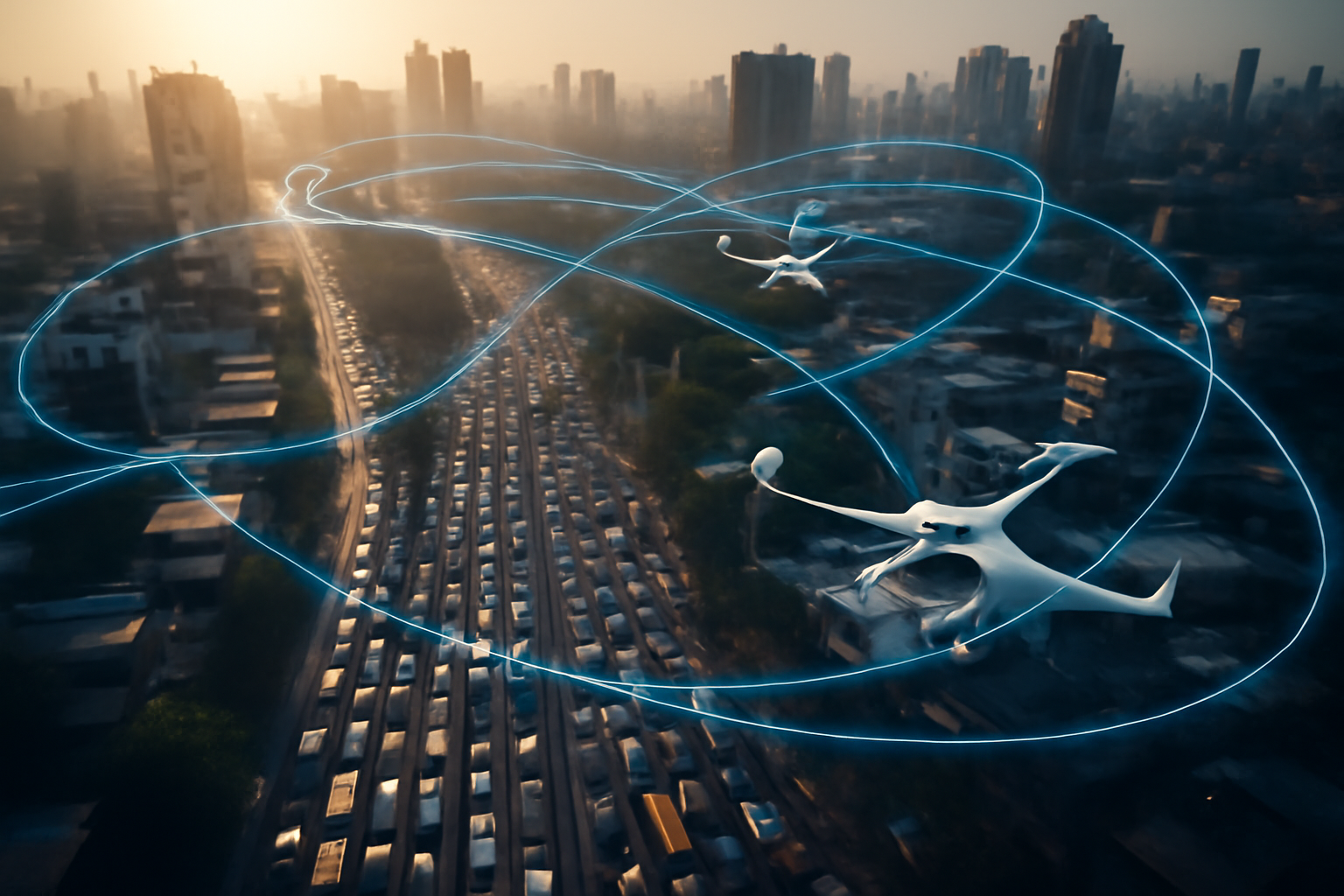
Major Indian cities including Delhi, Mumbai, Bangalore, and Hyderabad face severe traffic congestion that costs the economy billions annually in lost productivity. Traditional road infrastructure has failed to keep pace with population growth, creating gridlock during peak hours. Air taxi services represent a transformative alternative that could bypass ground traffic entirely, offering swift point-to-point connectivity between key urban centers.
The Ministry of Civil Aviation recognizes that conventional transportation expansion—building new roads and metro systems—cannot meet the mobility demands of India’s rapidly growing urban population. Air taxis could complement existing transit systems and provide express commute options for time-sensitive travelers. Minister Naidu’s emphasis on the “huge requirement” reflects a pragmatic acknowledgment that India needs disruptive solutions to its transportation challenges.
Cities like Mumbai, with a population exceeding 20 million, are particularly suited for air taxi operations. The vast distances between commercial, residential, and industrial zones make short-haul air commutes economically viable. Early adoption of eVTOL services could position India as a leader in urban air mobility across the Global South.
Government Support and Regulatory Framework
Minister Naidu’s public advocacy for air taxis signals the Indian government’s commitment to establishing a regulatory environment conducive to eVTOL operations. The Directorate General of Civil Aviation (DGCA) is actively developing certification standards and operational guidelines for electric vertical takeoff and landing aircraft. This regulatory clarity is essential for attracting domestic and international eVTOL manufacturers to establish operations in India.
The government has begun identifying potential vertiport locations in major metropolitan areas and exploring partnerships with real estate developers and transportation authorities. Strategic placement of vertiports near major business districts, airports, and transit hubs will be critical to the commercial viability of air taxi services. India’s proactive approach contrasts with some other countries where regulatory uncertainty has slowed eVTOL deployment.
Naidu’s ministerial backing also opens doors for collaboration with international eVTOL companies seeking to expand beyond North America and Europe. India’s large engineering talent pool, competitive manufacturing costs, and growing venture capital ecosystem create favorable conditions for attracting investment in air mobility infrastructure and technology development.
Opportunities for eVTOL Operators and Manufacturers
The Indian air taxi market represents enormous untapped potential. With a middle class exceeding 300 million people and rapidly expanding wealth concentration in tier-one cities, demand for premium mobility services continues to grow. Air taxi operators could target business executives, high-net-worth individuals, and travelers seeking time-critical transportation alternatives to helicopters and commercial flights.
eVTOL manufacturers from companies like Joby Aviation, Lilium, Archer Aviation, and others are evaluating India as a manufacturing and operational hub. The cost advantage of Indian manufacturing could reduce aircraft and service costs, making air taxis accessible to broader demographics than in Western markets. Additionally, India’s year-round flying weather in many regions supports consistent operational schedules.
First-mover operators in India could establish market dominance before international competitors enter. Building partnerships with ride-sharing platforms like Uber and local mobility companies could accelerate market adoption. The convergence of government support, market demand, and favorable economics creates a compelling opportunity window for eVTOL entrepreneurs.
Challenges and Timeline for Implementation
Despite ministerial enthusiasm, significant obstacles remain before air taxis become operational in Indian cities. Developing robust charging and maintenance infrastructure, training specialized pilots and technicians, and addressing public safety concerns require substantial investment and time. Air space management in densely populated cities with existing helicopter traffic and restricted military zones adds operational complexity.
Environmental and noise impact assessments must be completed to secure public acceptance. While eVTOLs produce minimal emissions compared to helicopters, noise levels remain a concern in residential areas. Local communities near proposed vertiports will require transparent communication about safety standards and environmental safeguards before services launch.
The timeline for functional air taxi operations in India likely spans 2-4 years, dependent on regulatory approval speeds and infrastructure development. Initial services will probably launch in pilot cities with favorable geographic and regulatory conditions. Successful demonstration projects will be crucial to building confidence and accelerating broader rollout across Indian urban centers.
Key Takeaways
- India’s Aviation Minister Ram Mohan Naidu has publicly endorsed air taxi services as essential infrastructure for addressing critical urban congestion in major Indian cities, signaling strong government support for eVTOL commercialization.
- The DGCA is actively developing regulatory frameworks and certifications for eVTOL operations, creating a clear pathway for domestic and international manufacturers to enter the Indian market.
- India’s combination of government backing, massive urban populations, growing middle class, competitive manufacturing advantages, and year-round flying weather positions the nation as a high-potential eVTOL deployment market with accelerating timelines.
India’s emergence as a proactive supporter of air taxi services marks a significant moment for the global eVTOL industry. With government endorsement, regulatory progress, and compelling market fundamentals, Indian cities could become showcases for how urban air mobility transforms transportation in emerging economies. Minister Naidu’s “huge requirement” statement is not merely political rhetoric—it reflects a genuine recognition that traditional solutions cannot meet 21st-century mobility demands. As eVTOL technology matures and regulatory frameworks solidify, India stands poised to become a major hub for both air taxi operations and advanced manufacturing, accelerating the worldwide transition to sustainable urban air transportation.